Mistral CEO rebuts Pope Leo on AI in warfare
▼ Summary
– Mistral CEO Arthur Mensch directly rebutted Pope Leo XIV’s call to “disarm AI,” arguing Europe cannot afford restraint while adversaries actively use the technology.
– The Pope’s encyclical, Magnifica Humanitas, calls for AI disarmament, binding requirements on autonomous weapons, and rejects “just war” theory, allowing force only for strict self-defense.
– Both Mensch and the Pope agree on the legitimacy of self-defense but diverge on what it requires in 2026, with Mensch arguing Europe cannot match adversaries under higher thresholds.
– Mistral has built a defense-AI portfolio since early 2025, including a partnership with Helsing for AI in combat jets and drones, making Mensch’s response a defense of an existing business line.
– The Vatican’s moral influence on AI policy is growing, with tech leaders and the European Commission engaging, while EU policy remains contradictory—moving toward frameworks but expanding defense-AI procurement.
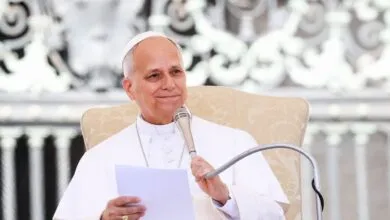
Three days after the Vatican urged a global disarmament of artificial intelligence, the CEO of French startup Mistral directly challenged the Pope’s position, insisting Europe cannot afford to unilaterally hold back on defence-AI development while adversaries press ahead.
Arthur Mensch responded on Thursday to Pope Leo XIV’s first encyclical, Magnifica Humanitas, which was published on 25 May. His remarks represent one of the most pointed corporate reactions to what has become the Catholic Church’s most significant intervention yet in the debate over military AI.
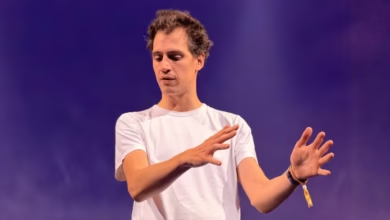
“We’re all for peace,” Mensch said. “But if you look at our rivals and adversaries in the world, they’re using artificial intelligence. As long as we have adversaries that are threatening, and they are threatening, we do need to have our own capabilities.”
The Mistral chief’s stance echoes the structural argument the European tech sector has been refining since the Ukraine war, but his decision to frame it as an explicit rebuttal of a sitting Pope makes Thursday’s comments stand out.
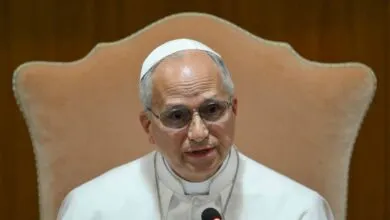
The encyclical itself is the document Mensch is pushing back against. Magnifica Humanitas, a 42,300-word text, calls for the disarmament of AI, demands three binding conditions for any deployment of autonomous weapons , traceability of decisions, meaningful human control over lethal action, and international rules to slow the technological arms race , and explicitly rejects the traditional “just war” theory as “outdated.”
The Pope argued that military force can be justified only in “self-defence in the strictest sense.” The encyclical is the most direct papal intervention in tech regulation in decades.
Interestingly, Mensch’s position contains a theological parallel. The Pope’s “self-defence in the strictest sense” and Mensch’s “adversaries are threatening, so we need our own capabilities” are not inherently contradictory. Both accept the legitimacy of self-defence; both reject offensive use. Where they diverge is on what self-defence demands in 2026. Leo believes the threshold for introducing lethal AI is higher than any state has so far articulated. Mensch argues Europe cannot match credible adversaries while operating under that threshold when those adversaries do not.
The commercial context is crucial. Mistral has been visibly expanding its defence-AI portfolio since early 2025. A partnership with Helsing, announced at the Paris AI Action Summit in February 2025, produced joint work on vision-language-action models for “a new generation of defence systems.” Helsing has already deployed AI in Eurofighter combat jets, battlefield simulations, and Ukraine drone operations. Mistral has also been independently pitching for defence contracts with multiple European governments.
Mensch’s public push-back against the Pope is therefore not a hypothetical stance; it is a defence of an existing business line now under formal moral censure from the Vatican.
The Pope’s influence on the AI policy debate, however, has grown far beyond what most expected six months ago. Anthropic co-founder Christopher Olah appeared at the encyclical’s launch, lending Silicon Valley validation. The European Commission welcomed the document on Monday evening, and OpenAI, Google, and Microsoft issued formal expressions of respect.
The Vatican is not a regulatory authority over AI development. What it has produced with Magnifica Humanitas is a moral vocabulary that legislators and policymakers can use. Mensch’s rebuttal, by its very existence, acknowledges how much that vocabulary now matters.
The clean rhetorical contrast obscures a quieter European-policy reality. Brussels is moving toward enforceable AI warfare frameworks but has not yet codified the kind of binding restrictions the encyclical calls for. Member-state governments are simultaneously expanding their defence-AI procurement budgets. The contradiction is real, and the next year of EU AI Act enforcement, member-state defence spending, and Vatican-aligned policy advocacy will indicate which side prevails.
Mensch, based on Thursday’s evidence, has chosen to bet his company’s public posture on the defence-procurement side of that argument.
(Source: The Next Web)