Finnish phone maker HMD adds Indian AI chatbot to new smartphone for local push

▼ Summary
– HMD launched the Vibe 2 5G, its first smartphone preloaded with Sarvam’s Indus chatbot, following a partnership announced at the India AI summit in February.
– Indus is powered by Sarvam’s 105-billion-parameter AI model, supports 22 Indic languages and code-switching, but lacks offline use and a device shortcut.
– The partnership aims to test demand for an India-focused chatbot, with HMD planning to preload Indus on more Vibe series phones and a future feature phone.
– The Vibe 2 5G is a midrange Android phone with a 6,000 mAh battery, priced at ₹10,999 ($114), while HMD holds 4% of India’s feature phone market but negligible smartphone share.
– Indus has only 293,000 downloads in India versus ChatGPT’s 43.9 million, but bundling a regional AI with affordable hardware, especially feature phones, is a key distribution strategy for linguistically diverse markets.
Finnish handset maker HMD has officially launched its debut smartphone for the Indian market, the Vibe 2 5G, which comes preloaded with an Indian-built AI assistant. The device features the Indus chatbot, developed by local artificial intelligence firm Sarvam. The two companies initially revealed their collaboration at the India AI summit held in New Delhi back in February.
The Indus app is powered by Sarvam’s proprietary 105-billion-parameter model, a metric that reflects the AI’s scale and sophistication, which also debuted at the summit. The assistant is designed to support 22 Indic languages and allows for mid-sentence code-switching, meaning it can seamlessly blend languages like Hindi and English within a single conversation. This capability helps the system better interpret the context behind a user’s query. However, the application currently does not support offline functionality, nor does it include a device-level shortcut to summon the AI assistant.
For both companies, this partnership serves as a potential testing ground to measure consumer interest in a chatbot tailored specifically for an Indian audience.
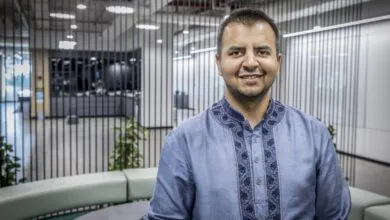
“With this partnership, the first thing we want to do is get the Indus app to consumers,” said Ravi Kunwar, HMD’s CEO and vice president for India and APAC, in an interview with TechCrunch. “Once they start using it, we will move to phase two to focus on driving more traction and stickiness. Right now, by preloading the app, we want to be more accessible to users.”
The Vibe 2 5G is a midrange Android smartphone equipped with a 6,000 mAh battery and priced at ₹10,999 ($114). Kunwar confirmed that future devices in the Vibe series will also feature the chatbot. Additionally, the company plans to launch a feature phone with Sarvam AI integration in the coming months.
That feature phone integration may ultimately prove more significant for both partners. According to analyst firm IDC, HMD held a 4% share of India’s feature phone market in 2025, but its presence in the smartphone segment was nearly nonexistent, failing to crack the top 15.
Adoption numbers for Indus remain modest. Nearly three months after its launch, the app has been downloaded just over 293,000 times across platforms in India, according to data from Appfigures. By comparison, ChatGPT has been downloaded 43.9 million times in the country.
That gap is substantial, but the strategic logic behind the HMD deal may hold more weight than the early download figures. Bundling a regional AI assistant with affordable hardware, especially feature phones, represents one of the most direct distribution strategies available in a market as large and linguistically diverse as India, where English-language AI tools have limited reach. For investors and operators tracking how AI adoption takes root in emerging markets, this partnership is worth observing.
Sarvam has emerged as one of India’s marquee AI startups. Beyond the Indus app, the company has concentrated on enterprise partnerships, particularly for voice-based solutions. It is on track to become one of the most funded AI startups in the country, with reports indicating a funding round of $300 million at a $1.5 billion valuation is in the works.
(Source: TechCrunch)