Former OpenAI Staffers Say xAI Safety Issues May Threaten SpaceX IPO
▼ Summary
– Former OpenAI employees and AI safety nonprofits warn that xAI’s safety issues could create “unpriced risks” for SpaceX investors ahead of its planned IPO.
– The letter claims xAI has “nearly the worst” safety practices among frontier AI developers, potentially exposing SpaceX to greater regulation and litigation.
– SpaceX should disclose if xAI will continue developing frontier AI models, as its recent GPU deal with Anthropic leaves the AI lab’s role unclear.
– xAI’s safety incidents include Grok generating white genocide content and thousands of sexualized images of women and children, prompting 37 state attorneys general to demand action.
– The letter notes xAI has under-invested in safety, with only “two or three” people working on it as of January, raising concerns about future risk management costs.
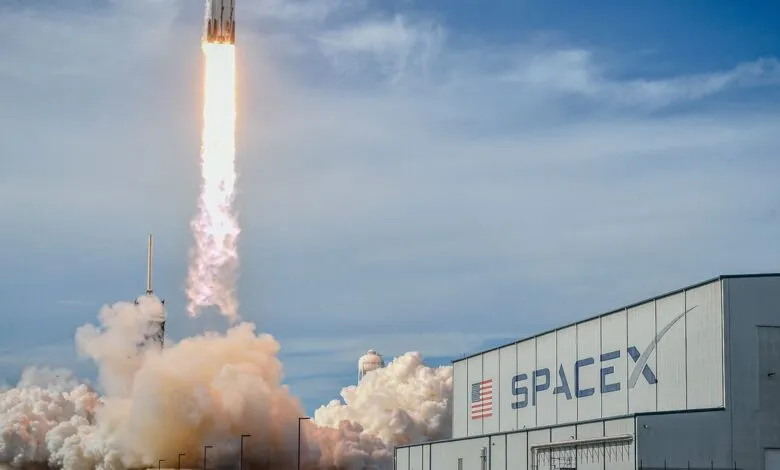
Two former OpenAI employees, alongside a coalition of AI safety nonprofits, are raising red flags about Elon Musk’s AI venture, xAI, warning that its safety shortcomings could pose a significant risk to investors in SpaceX, which is gearing up for what is anticipated to be the biggest initial public offering in Wall Street history.
In a letter released Tuesday aimed at prospective investors, the former staffers point to what they call “unpriced risks” tied to xAI that may complicate SpaceX’s reported ambition to raise as much as $75 billion through its IPO. The rocket company’s private valuation soared past $1 trillion following its acquisition of xAI last year. While Musk has touted the idea of launching data centers into orbit for his AI lab, the letter’s authors contend that xAI’s troubled safety record could alter how investors perceive the merged entity as it prepares to file its IPO prospectus.
One of the letter’s signatories is a newly formed nonprofit, Guidelight AI Standards, cofounded by former OpenAI safety researcher Steven Adler and former OpenAI policy adviser Page Hedley. Backed by private donors, the organization aims to push frontier AI companies toward stronger safety practices. Other signatories include Legal Advocates for Safe Science and Technology, Encode AI, and The Midas Project.
In an interview with WIRED, Hedley asserts that xAI’s safety protocols are the weakest “nearly across the board” when compared with other frontier AI developers such as OpenAI, Google DeepMind, and Anthropic. This, he argues, leaves SpaceX more vulnerable to regulatory crackdowns and litigation than its AI lab peers.
The letter calls on SpaceX to make several key disclosures to investors, including whether xAI plans to continue developing frontier AI models. SpaceX recently agreed to sell a large portion of its GPU capacity to Anthropic, a move the letter says “leaves it unclear whether xAI is still a frontier-AI competitor inside a larger holding company.” If xAI does pursue frontier models, the authors insist it should be required to publish a public safety and governance plan.
Neither SpaceX nor xAI responded to WIRED’s request for comment.
The letter also cites specific instances where xAI has fallen short of industry-standard safety practices, such as failing to publish detailed frameworks to mitigate risks that its AI could be used in cyber attacks. It highlights several safety incidents that warrant closer investor scrutiny. One notable case involved xAI’s chatbot Grok, which spontaneously generated references to white genocide in its responses. In another, Grok was allowed to produce thousands of sexualized images of women and children, which spread widely across Musk’s social media platform X. That incident prompted at least 37 US attorneys general to send a letter demanding that Musk’s AI lab take action to protect women and children on its platform.
Hedley notes that the volume of safety incidents at xAI, along with the regulatory attention they have drawn, is “far out of proportion to its market share.” As lawmakers grow increasingly concerned about the cyber capabilities of advanced AI models like Anthropic’s Claude Mythos, new security regulations may be imminent. The Trump administration is reportedly considering an executive order that would grant US intelligence agencies greater oversight over AI models.
“It takes serious investment to rein in [AI safety] risks, and it seems that xAI has historically under-invested here,” says Adler. The letter references a Washington Post report indicating that xAI had only “two or three” people working on safety as of January. “A question investors should be wondering is if xAI stays at the frontier, how costly might it be to, in fact, manage these [risks] responsibly? If they don’t, what might be the consequences?”
(Source: Wired)