Light Phone partners with Andrew Yang’s Noble Mobile that pays you to stop doomscrolling
▼ Summary
– The Light Phone III is now available immediately through a partnership with Noble Mobile, requiring a two-year, $50-per-month plan ($1,200 total), rather than the usual $699 upfront cost with a wait until September.
– Noble Mobile, founded by Andrew Yang, offers a data rebate: users get $1 back for each GB under 20 GB they use per month, aligning with the Light Phone’s minimalist design.
– The Light Phone III includes an OLED screen, cameras, and basic apps like directions, but lacks RCS texting support, relying on SMS with compression and no encryption.
– Light Phone co-founders designed the camera to avoid sharing features, using a physical shutter button and no AI enhancements to encourage intentional, nostalgic photography.
– The company has shipped 20,000 Light Phone III units since last spring, and users often adapt the phone as a primary device or alongside a smartphone without a SIM card for occasional needs.
If you’ve been searching for a reason to finally ditch your smartphone for a simpler device, a new partnership might just be the push you need. Minimalist phone maker Light Phone has teamed up with Noble Mobile, a carrier founded by entrepreneur and former presidential candidate Andrew Yang, that actually pays you to use less data.
Starting Tuesday, 500 units of the Light Phone III will be available to ship immediately through Noble Mobile. The trade-off? You’ll need to commit to a two-year Noble Mobile plan at $50 per month, totaling $1,200 over the contract period.
For anyone who has followed the Light Phone’s journey, this marks a significant milestone. It’s the first time the Light Phone III is available for instant purchase without paying the full $699 upfront. Without the Noble Mobile plan, the company estimates you wouldn’t receive your device until September.
“I think what’s exciting about the Noble launch is not just that the barrier to entry is lower. It’s the first time that we’ve ever had the Light Phone III available for an immediate purchase,” Light co-founder Joe Hollier told TechCrunch.
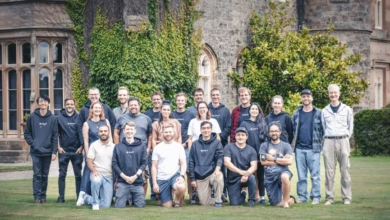
Hollier and co-founder Kaiwei Tang first met in 2014 at Google’s 30 Weeks incubator, a program designed for artists and designers. Their creation, the Light Phone, has sparked curiosity for over a decade by offering a middle ground between a hyperconnected iPhone and a clunky flip phone with a T-9 keypad. It appeals to a growing audience of people who feel trapped in a parasitic relationship with their smartphones.
But as a small startup competing against giants like Samsung and Apple, Light Phone has struggled to ship devices affordably without long wait times. The ongoing RAM shortage hasn’t helped either. Since the Light Phone III launched last spring, the company has shipped 20,000 devices.
What might seem like a “catch” to some could actually be a benefit for others. A $50 monthly plan with unlimited talk, text, and data is reasonable. But the real draw of Noble Mobile is its unique incentive: if you use less than 20 GB of data in a month, you get a dollar back for each unused gigabyte. So if you use 11 GB, you’d receive $9 back from your $50 payment. You can take that as cash or use it like credit card points for future rewards.
“The Light Phone is designed to be used as little as possible, so it’s on brand with Noble,” Hollier said.
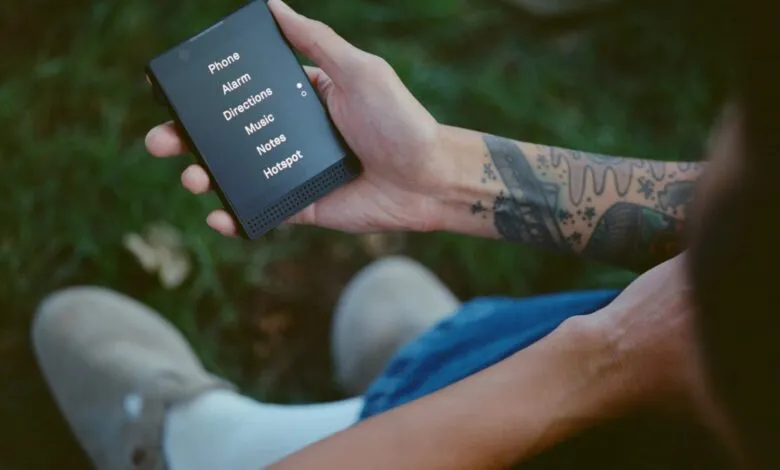
So how does the Light Phone actually work? The Light Phone III covers the basics: calls, texts, and a few essential tools. Its creators acknowledge that modern life makes it hard to be a complete Luddite, so the device includes a directions app and a directory app. One Reddit user described using the phone’s limited functionality to find a towing company after a breakdown, writing, “thanks to the lightphone I was able to intentionally ponder on all my life decisions up to this point while waiting 45 minutes.”
The biggest challenge for Light Phone has been figuring out exactly how much minimalism customers want. Is supporting rideshare apps a safety feature or a concession to big tech? What about messaging international relatives on WhatsApp?
Hollier noted that while most customers use the Light Phone as their primary device, some keep an old smartphone without a SIM card, relying on the Light Phone’s hotspot when needed. That compromise makes sense, but carrying two phones in the name of minimalism might turn off some users.
“It’s really interesting to see how people fit [Light Phone] into their lives… Some people are actively switching between two phones, and we’ve seen a new trend of users actually getting two phone numbers, kind of like a work phone, home phone balance,” Hollier said. “It’s been really cool to see all the different ways that people fit the Light Phone in, because it’s not really a one-size-fits-all situation.”
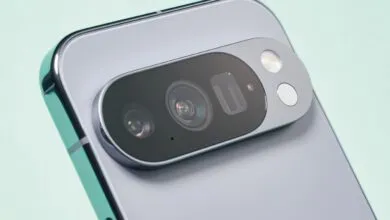
Unlike earlier models, the newest Light Phone features an OLED screen instead of e-ink, along with front- and back-facing cameras. Those cameras will soon support video calls. But the founders hesitated before adding a camera. Both Hollier and Tang are film photographers who appreciate how smartphones expand access to photography, but they’ve seen how the maximalist nature of smartphone photography can drain the joy and intentionality from the art form.
“We talked to people who are like, I took 27,000 iPhone photos last year, and I’ve looked at them zero times, because it’s like, 10 of one meal,” Tang told TechCrunch. “I can tell you how many film photos I took last year.”
Ultimately, they decided a camera is necessary but designed it their way. “We just tried to design our camera by taking out what we felt like was the culprit of people actually falling out of the moment, which is sharing, and then waiting for this dopamine hit of reactions,” Hollier said. “On our camera, we added a physical shutter button, and you can open it with one touch, and you can half-press to start to focus … We wanted it to be fun, sort of nostalgic. It’s not doing any sort of AI sharpening or covering your blemishes. It’s just exactly like an old point-and-shoot camera.”
The Light Phone still has notable drawbacks. It doesn’t support RCS texting, relying instead on basic, insecure SMS. That means clunky group chats, no end-to-end encryption, and compressed photos and videos. But the target audience likely doesn’t care if their texts look weird to iPhone-wielding friends. They’re probably excited about the mission behind Noble Mobile.
“It’s not about asking people to [either] give up their technology, or use this AI 6G smartphone,” Tang said. “There’s a middle ground of having the right technology tools that design without the attention and advertising layer of it.”
(Source: TechCrunch)