Your empty teacup could help capture carbon
▼ Summary
– The article explores the concept of upcycling waste polystyrene into a structural component for solid amine-based carbon-capture materials.
– Amines act like a sponge for CO2, grabbing it from the air and releasing it when heated or depressurized, and solid amines are energy-efficient for carbon capture.
– Currently, both the amine groups and their structural support in carbon-capture systems are derived from fossil fuels.
– Polystyrene, widely used in products like Styrofoam and CD cases, has a very low recycling rate, under 1% in the US and 10% in Europe.
– The upcycling process involves two chemical steps: attaching bromine atoms to polystyrene, then replacing them with amine groups using a copper catalyst.
Humanity has filled the atmosphere with carbon dioxide from fossil fuels, altering the planet’s climate. At the same time, we are discarding massive amounts of carbon in the form of plastics into landfills and the environment around and inside us. What if tackling one of these crises could help solve the other?
A new study led by Ruth Ebenbauer at Aarhus University explores this possibility by upcycling discarded polystyrene into a key component of materials used in carbon-capture systems. The research focuses on converting waste plastic into a solid amine-based material that acts like a sponge for CO₂.
Amines are a simple chemical group that naturally binds to CO₂ molecules when exposed. They release the captured CO₂ when heated or depressurized, making them reusable. Early carbon capture systems used amines dissolved in water, but solid amines now dominate because they require less energy. These solids, often formed into granules similar to activated carbon in water filters, have high surface area and porosity, allowing amines to efficiently latch onto CO₂.
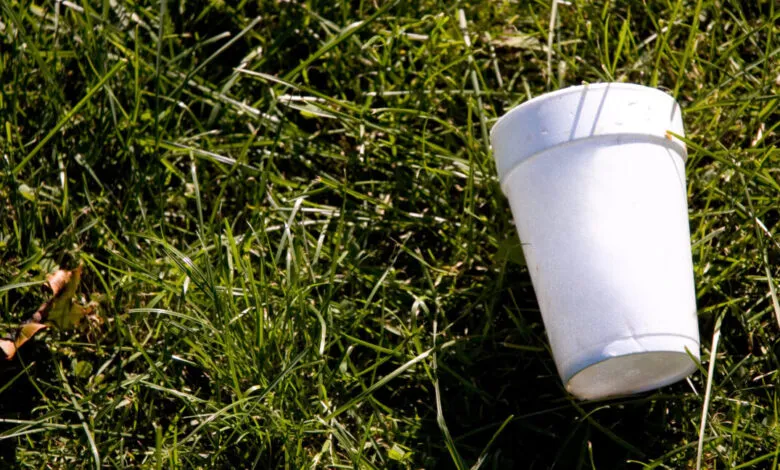
Currently, all such materials come from fossil fuels. They consist of two parts: the amine groups themselves and a structural support. The team proposed that polystyrene could serve as that support. Polystyrene is used in Styrofoam, utensils, and clear CD cases, yet less than 1 percent is recycled in the U. S., while Europe recycles a slightly better 10 percent.
The upcycling process involves two chemical steps. First, bromine atoms attach to aromatic rings in the polystyrene, using gold as a catalyst. Second, a two-carbon amine (common in many products) and a copper catalyst swap the amine groups into where the bromine atoms were. This transforms waste plastic into a material ready to help capture carbon from the air or industrial emissions.
(Source: Ars Technica)