Reid Hoffman: Let AI Give Doctors a Second Opinion
▼ Summary
– Reid Hoffman’s startup Manas AI aims to use AI to accelerate drug discovery for cancers from a decade to a few years.
– Hoffman believes doctors should use frontier AI models as a second opinion, stating not doing so borders on malpractice.
– He argues AI serves as an additional information source to prevent misdiagnosis, not a replacement for critical thinking.
– Hoffman proposes a free AI medical assistant on smartphones to address healthcare shortages and long waiting lists.
– Manas AI initially focuses on cancer but sees AI drug discovery expanding to chronic and rare diseases within a decade.
After spending more than three decades shaping some of Silicon Valley’s most influential companies,cofounding LinkedIn and serving on the boards of PayPal and OpenAI,Reid Hoffman has now set his sights on health care innovation. His latest venture, Manas AI, is developing an artificial intelligence engine designed to dramatically accelerate the traditionally slow and costly process of drug discovery, with an initial focus on various cancers. The company, inspired by a dinner conversation with renowned oncologist Siddhartha Mukherjee, who serves as its cofounder and CEO, aims to “shift drug discovery from a decade-long process to one that takes a few years.”
Yet Hoffman’s vision for generative AI extends well beyond identifying novel drug targets and small molecules. He argues that frontier models,the most advanced, large-scale AI systems available today from companies like OpenAI and Anthropic,should become a standard tool in everyday medical practice.
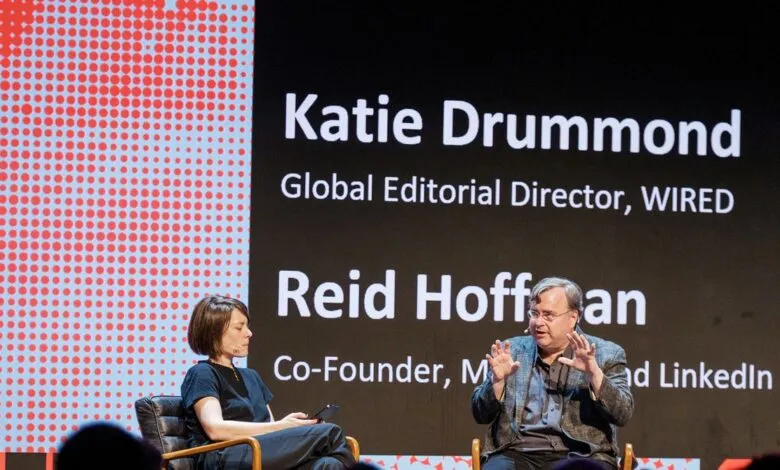
“If as a doctor, you’re not using one or more frontier models as a second opinion, my belief is you’re bordering on committing malpractice,” Hoffman stated during his talk at WIRED Health in London on April 16. “These AI systems, even though many of them are not specifically trained for medicine, have ingested trillion-plus words of information. As a second opinion, it is bringing superpowers that no human being has.”
Such a bold claim is likely to unsettle many physicians. Earlier this year, a major study concluded that large language models pose risks to the general public when used for medical advice, citing their tendency to produce inaccurate and inconsistent information. Hoffman, however, maintains that the technology should not replace human judgment but rather supplement it. He believes these models can help prevent misdiagnosis by offering an additional perspective. He says he personally uses frontier models to vet his own health concerns and has instructed his personal concierge doctors to do the same.
“You could very well go, ‘No, I think you’re wrong, I think it’s this,’” Hoffman told the audience. “But if you’re not using this as a second opinion, you’re making a mistake, both as a doctor and as a patient.”
Given the mounting pressures on the UK’s National Health Service,plagued by long waiting lists, workforce shortages, and a chronic lack of family doctors,Hoffman sees an urgent need for a free AI-powered medical assistant available on every smartphone. Such a tool, he suggests, could also serve as an early triage system, helping patients decide whether they need to see a human doctor at all.
“We just don’t have enough doctors, most people don’t have access, and when you think about, ‘How should the NHS be redesigned?’ everyone should be interacting with this medical assistant,” he said.
While Hoffman has a clear vested interest as an entrepreneur in drug discovery, he also advocates for AI to play a broader role in supporting regulators like the FDA. He envisions a future where AI helps evaluate emerging medicines and fast-tracks the most promising treatments to patients.
“As a Silicon Valley person, I would love to get to a point where the FDA was also running tests with biological models, going, ‘Oh, we should fast-track this one, because the likelihood of negative consequences is lower,’” he said. “Do I think that’s anytime soon? Unfortunately, no.”
At Manas AI, human oversight remains central. Mukherjee personally reviews the AI engine’s proposals, filtering out the genuinely promising candidates from what Hoffman describes as the “bonkers stupid.” While the company’s initial efforts are focused on cancer, Hoffman believes the potential of AI discovery engines is far broader. They could identify drug candidates for chronic diseases and even extremely rare conditions that have historically been economically unattractive for pharmaceutical companies to pursue.
“I think in 10 years, every major disease will have target molecules that could at least make a serious difference,” Hoffman predicted.
(Source: Wired)