Andrew Ng-backed IrisGo aims to be your AI desktop companion
▼ Summary
– IrisGo is building a proactive AI desktop companion that learns a user’s workflows and automates them with minimal prompting, after closing a $2.8 million seed round led by Andrew Ng’s AI Fund.
– Co-founded by former Apple engineer Jeffrey Lai, the system remembers processes after a single demonstration, such as placing an online coffee order.
– The AI automates business tasks like email drafting and invoice processing through a built-in “skills” library, while also learning from desktop behavior to suggest new actions.
– Iris includes a coding assistant for developers and targets knowledge workers, aiming to automate clerical tasks so humans focus on high-level work.
– The app processes data on-device for privacy, with cloud processing only when authorized and encrypted, and has beta versions for macOS and Windows plus a preinstall deal with Acer.
The next frontier in artificial intelligence, according to industry experts, lies in proactive systems,intelligent agents that can anticipate and fulfill a user’s needs before the user even realizes them. One startup racing to turn this vision into reality is IrisGo, a company developing a desktop companion for PCs that learns daily workflows and automates them with minimal human input. Earlier this year, IrisGo closed a $2.8 million seed round led by Andrew Ng’s AI Fund.
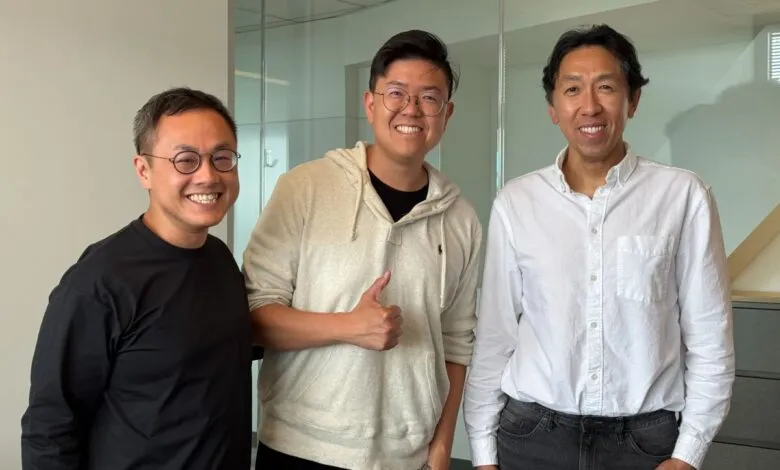
The company was co-founded by Jeffrey Lai, a former Apple engineer who helped build the Chinese language version of Siri. (In a clever nod, Iris is Siri spelled backwards.) The core premise is straightforward: show Iris a task once, and it remembers the process for future automated execution,no repeated instructions required.
During a demo for TechCrunch, Lai illustrated this capability by having Iris record the steps to place a coffee order online. The system captured the sequence: selecting a latte from Philz Coffee, filling out credit card details, and hitting purchase. When Lai then asked Iris to repeat the order autonomously, the agent complied without hesitation.
Coffee ordering is just a proof of concept. The real ambition is to automate a broader range of business-related tasks. Iris comes equipped with a built-in skills library that includes email drafting, invoice processing, report building, document summarization, and other ready-made workflows. Simultaneously, the system observes a user’s desktop behavior and automatically adds new tasks to its potential action list. The application also features a coding assistant,comparable to OpenAI’s Codex or Anthropic’s Claude Code,designed to support developers in their work.
“Our target audience is knowledge workers,white collar companies,” Lai explained. He noted that despite the power of today’s frontier models, AI-assisted office work often remains manual and repetitive. Iris aims to shift toward a fully autonomous workflow, where humans focus on high-level conceptual work while agentic systems handle clerical tasks in the background.
A standout feature is Iris’s ability to process a significant amount of data on-device, offering stronger privacy protections than cloud-reliant alternatives. Lai described the system as a hybrid architecture,larger, complex tasks are still processed through the cloud, but only when explicitly authorized by the user, and with end-to-end encryption in place.
Building credibility has been a key part of IrisGo’s strategy. Support from Andrew Ng, co-founder of the formative Google Brain team, has been instrumental. Lai secured a meeting with Ng through a shared connection,both are Carnegie Mellon University alumni. After a demo, Ng’s AI Fund led the seed round, with additional backing from Nvidia and Google.
IrisGo recently launched beta versions of its macOS and Windows apps and is pursuing deals with laptop manufacturers to preinstall the software on new devices. The company has already struck a deal with Acer, and Lai expressed hope for similar partnerships with other device makers in the near future.
(Source: TechCrunch)