Anthropic Rejects AI Liability Bill Supported by OpenAI
▼ Summary
– Anthropic opposes an Illinois bill (SB 3444) that would shield AI labs from liability for large-scale harms caused by misuse of their systems.
– The bill has created a regulatory dispute between Anthropic and OpenAI, highlighting their differing approaches as both increase lobbying.
– Anthropic is lobbying Illinois lawmakers to significantly alter or kill the bill, seeking future legislation that pairs transparency with accountability.
– The core disagreement centers on liability for AI-enabled disasters, with the bill protecting labs if they publish a safety framework, even if their model is misused.
– Critics argue the bill would dangerously weaken existing liability laws that incentivize AI companies to mitigate foreseeable risks.
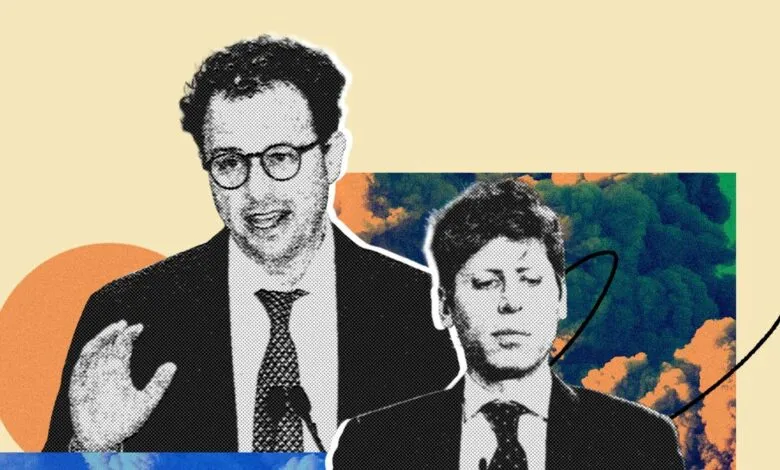
A significant rift has emerged between two leading artificial intelligence developers over proposed state legislation that would dramatically limit their legal accountability. Anthropic has publicly opposed Illinois bill SB 3444, which is supported by OpenAI and would grant AI labs a broad liability shield if their systems are used to cause catastrophic harm, such as mass casualties or property damage exceeding one billion dollars. This legislative fight highlights a deepening political division between the rival firms as they expand their lobbying efforts nationwide.
While policy analysts consider the bill’s chances of becoming law to be slim, it has become a focal point for debate on foundational regulatory principles. Anthropic has been actively lobbying the bill’s sponsor, State Senator Bill Cunningham, and other Illinois lawmakers, pushing for substantial amendments or the bill’s defeat. The company confirmed its opposition and stated it has engaged in what it calls promising discussions with Cunningham about using the legislation as a foundation for future, more robust AI policy.
Anthropic’s head of US state and local government relations, Cesar Fernandez, articulated the company’s stance clearly. “We are opposed to this bill,” Fernandez stated. “Good transparency legislation needs to ensure public safety and accountability for the companies developing this powerful technology, not provide a get-out-of-jail-free card against all liability.” He expressed confidence in working with Senator Cunningham on alternatives that would pair transparency with “real accountability” for mitigating the severe potential harms of frontier AI systems.
The core disagreement centers on a critical question: who bears responsibility in a nightmare scenario where AI enables a disaster? Under the proposed law, an AI company would avoid liability if a malicious actor used its model to, for instance, engineer a deadly bioweapon, provided the company had drafted and publicly posted its own safety framework. OpenAI defends this approach, arguing SB 3444 would help mitigate serious risks while still allowing Illinois residents and businesses, large and small, to benefit from the technology.
OpenAI, which has pursued similar regulatory efforts in states like New York and California, advocates for a harmonized state-level approach in the absence of federal legislation. “We hope these state laws will inform a national framework that will help ensure the US continues to lead,” said OpenAI spokesperson Liz Bourgeois.
In contrast, Anthropic contends that developers of powerful AI must retain at least partial responsibility if their technology is leveraged to inflict widespread societal damage. This view finds support from some policy experts who warn the bill would undermine existing legal deterrents. Thomas Woodside, cofounder of the Secure AI Project, argues that current liability under common law provides a crucial incentive for companies to manage foreseeable risks. “SB 3444 would take the extreme step of nearly eliminating liability for severe harms,” Woodside notes. “But it’s a bad idea to weaken liability, which in most states is the most significant form of legal accountability for AI companies that’s already in place.”
The office of Illinois Governor JB Pritzker has also signaled skepticism toward the proposal. A spokesperson stated that while the governor’s office will review various AI bills, Governor Pritzker “does not believe big tech companies should ever be given a full shield that evades responsibilities they should have to protect the public interest.” This emerging debate in Illinois underscores the complex and high-stakes battle taking shape over who is ultimately accountable for the powerful technologies being unleashed.
(Source: Wired)