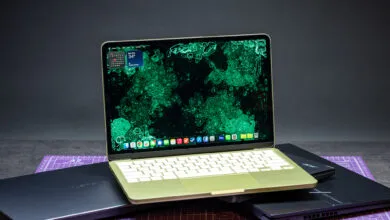
MacBook Neo Boosts Windows Compatibility

▼ Summary
– Microsoft has a history of responding to competitive threats from Apple and other companies.
– The MacBook Air prompted Microsoft and Intel to create the Ultrabook category of laptops.
– The iPad’s success led Microsoft to develop its own tablet hardware.
– Chromebooks pushed Microsoft to create simplified, secure Windows versions in S mode.
– Apple’s new MacBook Neo is expected to force significant improvements to the Windows operating system.
Having reported on Microsoft for over two decades, one pattern is unmistakable: the company consistently reacts to significant market challenges. The rise of Apple’s MacBook Air directly spurred the development of the Ultrabook initiative, a partnership between Microsoft and Intel to create thinner, lighter Windows laptops. Similarly, the iPad’s dominance prompted Microsoft to enter the tablet hardware arena, while the popularity of Chromebooks led to the creation of Windows S mode, an attempt to replicate ChromeOS’s security and streamlined experience.
Given this established pattern of competitive response, the recent launch of Apple’s $599 MacBook Neo is poised to trigger another major shift. This affordable new MacBook presents a direct challenge that will likely compel Microsoft to enact substantial improvements within the Windows ecosystem. Based on industry history and internal sources, we can anticipate a series of imminent changes as Microsoft formulates its strategic countermove.
(Source: The Verge)