Questions to Ask AI Vendors Before Signing a Contract
▼ Summary
– Over-privileged user access and weak workflow controls are a major underestimated threat because they cause gradual, unnoticed data loss.
– Legal privilege protections can hinder collective defense when firms over-classify data, slowing down crucial threat intelligence sharing.
– Companies must manage fourth-party vendor risk by integrating vendors into their supply chain and enforcing continuous security standards.
– Before adopting AI-native tools, firms must rigorously question data handling, jurisdiction, model training, and audit controls.
– Security should be a core business function owned at the board level, measured consistently and backed by independent assurance.
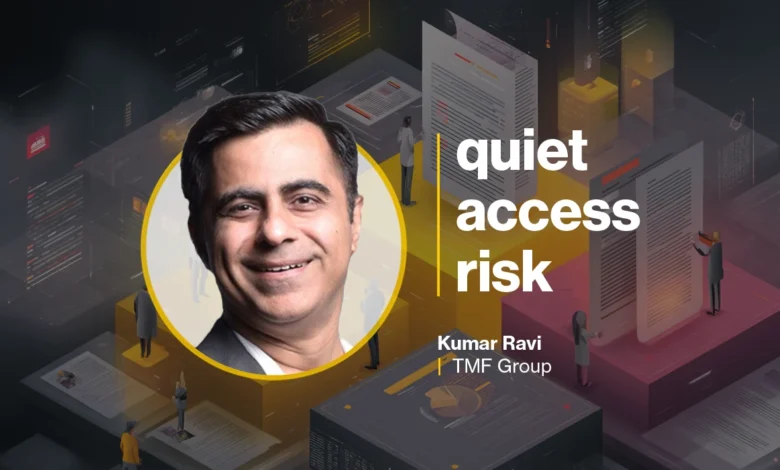
While ransomware grabs headlines, the most significant threats to professional services firms often develop silently. According to Kumar Ravi, Chief Security & Resilience Officer at TMF Group, the real danger lies in over-privileged access and weak workflow controls. These issues accumulate gradually, eroding data protection and creating openings for both insider and external threats without triggering immediate alarms. Because they manifest as minor policy violations rather than explosive crises, they frequently go unaddressed until it is too late.
The problem stems from a lack of centralized governance. When no single entity is responsible for overseeing access rights and procedural controls, vulnerabilities multiply across teams and systems. The solution requires placing data governance at the core of operations and implementing identity and access management by design. This proactive approach is essential for preventing risks and ensuring readiness for mitigation.
A significant barrier to collective defense is the tension between necessary confidentiality and the need for timely threat intelligence. Legal privilege is critical, but an overly broad interpretation can hinder information sharing. Companies must strike a balance, developing a strategy that allows for the swift exchange of actionable insights with regulators and peers. This enhances ecosystem resilience without undermining legal protections.
Risk management must also extend deep into the supply chain. Vendors and their subcontractors should be viewed as an integrated part of a firm’s operations, not as external entities. Third-party risk demands continuous oversight, including maintaining a live inventory of all partners handling sensitive data and classifying their access levels. Contracts must explicitly define security obligations, incident notification timelines, and the right to audit. Due diligence should be an ongoing process, not a one-time checklist. Accountability for protecting client data can never be outsourced.
The rapid adoption of AI-native tools in legal and financial technology introduces new complexities. Onboarding these systems should be approached with the same rigor as granting a new employee access to confidential information. Key questions for vendors must address data jurisdiction, model training practices, information retention policies, and deletion procedures. Independent assessments, such as audit reports and penetration test summaries, are non-negotiable for verification. Contracts must clearly outline accountability, including specific security controls, breach notification protocols, and liability for failures.
Ultimately, a structural shift is needed to build predictable resilience. Security must be treated as a core business control, owned at the board level and measured through consistent, independently assured metrics. This change would reduce points of failure, accelerate containment, and improve transparency, creating a more secure foundation for the entire professional services industry.
(Source: Help Net Security)