Samsung Galaxy S26 vs. Google Pixel 10: Key Differences
▼ Summary
– Samsung launched the Galaxy S26 with a larger battery than its predecessor but increased its starting price by $100 to $899.
– The Google Pixel 10 now matches the Galaxy S26’s triple-camera versatility and undercuts its price by $100, though it starts with only 128GB of storage.
– In design, the Galaxy S26 is lighter with thinner bezels, while the Pixel 10 has a brighter display for better outdoor visibility.
– The Galaxy S26 has a more efficient chipset and slightly better battery performance, making it more suitable for intensive tasks like gaming.
– The software differs, with the Galaxy S26 offering a highly customizable One UI and the Pixel 10 providing a cleaner, core Android experience.
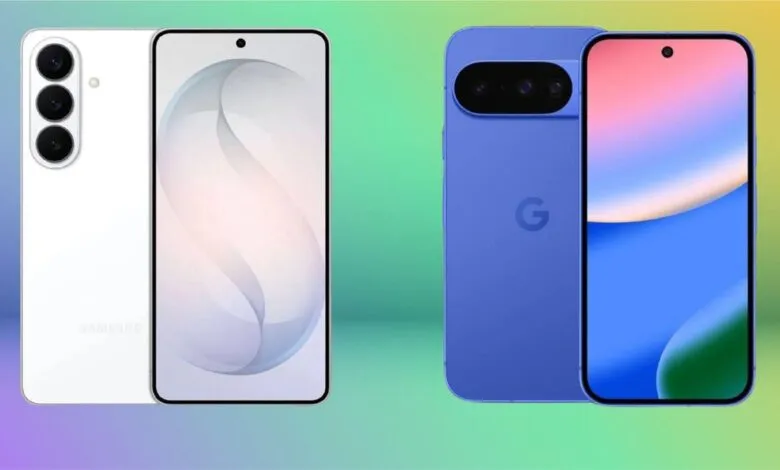
Choosing between the Samsung Galaxy S26 and the Google Pixel 10 presents a classic Android dilemma: premium polish versus pure software. Announced in February, the Galaxy S26 starts at $899, a $100 increase over its predecessor, while offering a larger battery. Google’s Pixel 10, priced at $799, narrows the gap with its own hardware upgrades, including a new telephoto lens. Both feature 6.3-inch displays, triple rear cameras, and the latest Android 16 features, but their approaches diverge significantly.
The design and build quality are strong on both, with IP68 ratings and Gorilla Glass Victus 2. The Galaxy S26 feels more immersive due to its thinner bezels and is notably lighter at 167 grams, compared to the Pixel 10’s 204 grams. For screen performance, the Pixel 10 takes the lead in brightness, reaching 3,000 nits peak brightness for superior outdoor visibility versus the S26’s 2,600 nits. Both have 120Hz refresh rates, but Samsung’s display is more power-efficient, dynamically scaling down to 1Hz. A notable omission on the S26 is the hardware-based Privacy Display, reserved for the Ultra model. The Pixel 10 includes built-in magnets for accessories, a convenience that requires a special case on the Samsung device.
Regarding camera systems, both phones deliver excellent results. The Galaxy S26 uses a 50MP wide, 12MP ultrawide, and 10MP 3x telephoto setup. Google equips the Pixel 10 with a 48MP wide, 13MP ultrawide, and a 10.8MP 5x telephoto camera. Daylight shots are sharp with great dynamic range on both. Samsung introduces a standout feature with gimbal-like stabilization, called Horizontal Lock, for incredibly steady video. Its AI suite also offers robust editing tools. The Pixel 10’s AI features, like Magic Eraser, are useful, though some feel more like novelty additions. Its 5x telephoto can sometimes lack fine detail compared to the competition.
For battery and performance, both models see capacity increases. The S26 has a 4,300mAh battery, while the Pixel 10 packs a larger 4,970mAh cell. In real-world use, the S26’s more efficient Qualcomm Snapdragon 8 Elite Gen 5 chipset often gives it a slight endurance edge. A YouTube streaming test showed the S26 at 85% after three hours, with the Pixel 10 at 82%. Performance benchmarks favor the Samsung phone significantly, making it the better choice for intensive tasks like 3D gaming. The Pixel 10’s Tensor G5 chip is capable for daily use but doesn’t match the raw power of the Snapdragon.
The $100 price difference is nuanced. The Pixel 10’s lower entry cost comes with only 128GB of storage. Upgrading to 256GB brings its price to $899, matching the Galaxy S26 which includes 256GB standard. Given the high-quality media these phones capture, 256GB of storage is a practical necessity for most users in 2026, which diminishes Google’s initial price advantage.
Software experience is a major differentiator. Both run Android 16 with a promise of seven years of OS updates. The Pixel 10 offers a clean, bloat-free Pixel UI. The Galaxy S26 uses Samsung’s highly customizable One UI. Personal preference plays a huge role here. One UI allows for deep personalization through apps like Good Lock, enabling gesture shortcuts and transparent widgets that enhance productivity. The Pixel UI feels straightforward, and features like Magic Cue provide helpful contextual information. However, in daily use, the S26 feels faster and more fluid, with AI features processing more swiftly than on the Pixel 10.
Ultimately, the Galaxy S26 justifies its higher starting price with more base storage, superior performance, a lighter design, and unique features like advanced video stabilization. The Pixel 10 appeals with its brighter display, cleaner software, and built-in magnetic accessories. Your choice hinges on whether you value customization and power or a streamlined interface and initial cost savings, keeping in mind the storage caveat.
(Source: CNET)