Decentraland Expands to Epic Games Store and Android
▼ Summary
– Decentraland has launched on the Epic Games Store and released an Android app, shifting its strategy to reach users on existing popular platforms.
– The Epic Games Store launch is strategically significant due to its massive user base, aiming to solve Decentraland’s distribution and user traffic challenges.
– A concurrent mobile launch targets the dominant social gaming market on phones, seeking to lower the barrier to access the virtual world.
– This expansion contrasts with Meta’s retreat from its metaverse focus, as Decentraland positions itself as a persistent, community-governed alternative.
– The platform’s viability questions remain, citing modest but growing user metrics and a significant drop in its native token’s value from its peak.
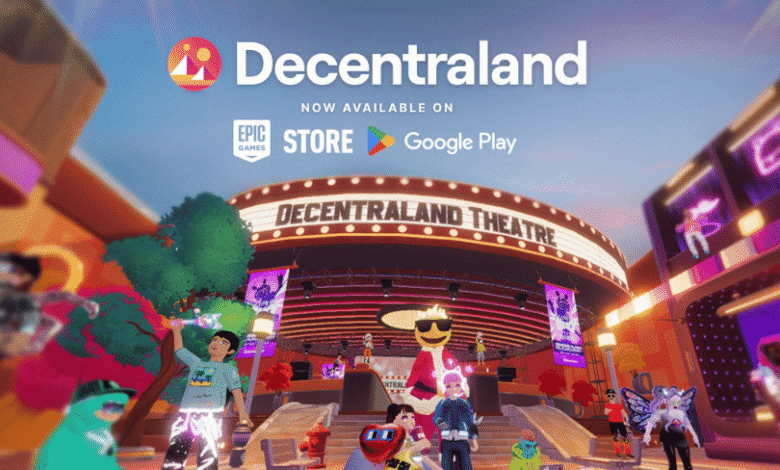
The original vision of a self-contained metaverse, accessed through dedicated hardware, has given way to a more pragmatic reality. Decentraland, a pioneer in decentralized virtual worlds, is now bringing its platform directly to users on the platforms they already frequent. This week marked a strategic expansion with a launch on the Epic Games Store and the release of an Android application, signaling a fundamental shift in distribution strategy for the project.
Securing a listing on the Epic Games Store is a particularly significant move. Epic’s platform reported 317 million registered PC users in 2025, with monthly active users reaching a record 78 million last December. Third-party spending on the store grew 57% year-over-year, exceeding $400 million. For Decentraland, a platform that has often faced scrutiny over user activity levels, positioning itself alongside mainstream titles like Fortnite on such a high-traffic storefront is a direct attempt to solve a core distribution problem. This challenge is one that its underlying blockchain technology alone could not address.
Yemel Jardi, Decentraland’s executive director, emphasized this strategic rationale. He noted that Epic has become a primary discovery channel for desktop experiences, and being present there fundamentally improves how people find and access the virtual world. This is described as part of a broader initiative to meet users on their own terms, with plans to expand to additional digital storefronts in the future.
The parallel mobile launch follows identical logic. The Android app is now available on Google Play, with an iOS version imminent. The project points to industry data showing mobile devices command over 71% of the social gaming market, with the average internet user spending nearly four hours daily on their phone. Furthermore, cross-platform play engagement involves 61% of gamers. According to Gino Cingolani of DCL Regenesis Labs, the goal is to drastically reduce the barrier to access, enabling spontaneous visits from a smartphone rather than requiring a planned desktop session.
This expansion arrives at a pivotal moment for the broader metaverse sector. Meta, which rebranded and invested an estimated $70 billion into its metaverse division, Reality Labs, has since dramatically scaled back. The company announced the shutdown of its Horizon Worlds VR platform in March, a decision partially reversed after user feedback, though the platform’s future is unclear. In January of this year, Meta cut 1,500 Reality Labs jobs, closed internal game studios, and reduced its metaverse budget by 30%. The firm that popularized the term has largely pivoted toward AI and wearables.
Decentraland positions this retreat as a strategic opportunity. It contrasts its own community-governed, decentralized model, operated by a non-profit foundation, with Meta’s proprietary, corporate-controlled approach. In Decentraland, users truly own their virtual land and avatars as tokens on the Ethereum blockchain. Governance occurs through transparent community votes, creating a structure where no single company can unilaterally shut down the world, a vulnerability starkly revealed by Meta’s actions.
The persistent question surrounds Decentraland’s own economic sustainability. Its native MANA token currently trades around $0.08, a steep decline from its peak above $5 in 2021. Measuring active users has been historically contentious, with external analytics sometimes reporting very low figures that the foundation disputes for not capturing all visitor activity. Decentraland’s internal metrics for late 2025 cite roughly 847,000 monthly unique visitors to its web client, with daily unique visitors growing 23% since mid-2025 following a client upgrade. The platform reports hosting 312 community events in January 2026 alone.
While these numbers are modest for the mainstream gaming industry, they represent resilience in a sector that has cooled considerably. Secondary market sales of virtual LAND parcels reached $4.2 million in Q4 2025, a 31% quarterly increase. Founded in 2015, the project has outlasted many of its early competitors.
The Epic Games Store launch includes a promotional incentive: an exclusive wearable called the Epic Arrival Shield for new users. This small gesture acknowledges the need to compete for attention in a crowded digital marketplace and to meet the expectations of users accustomed to platform rewards. Epic’s ecosystem, which distributed 662 million free game copies in 2025, has conditioned its audience to expect immediate value.
To celebrate the dual launch, Decentraland will host an in-world event on April 2, featuring performances accessible from desktop, mobile, and via a Twitch stream. This cross-platform event itself embodies the new strategy. The virtual world is the core product, but app stores and digital marketplaces are now its essential gateways.
The ultimate success of this approach is still uncertain. The metaverse narrative has been weakened by Meta’s pivot, a massive industry shift toward AI investment, and a broader crypto market downturn. Yet Decentraland’s foundational bet remains that the concept of a persistent, user-owned virtual space for events, socialization, and creation does not require a corporate titan to survive. It simply needs a compelling reason to log in and an accessible path to get there. With its latest expansion, it has just opened hundreds of millions of new potential front doors.
(Source: The Next Web)