Mastodon’s revamp simplifies its decentralized social network
▼ Summary
– Mastodon is redesigning user profiles to make its decentralized platform more appealing and easier to use, especially for mainstream users.
– The platform’s decentralized nature, which prevents single-company control, became more attractive after Elon Musk acquired Twitter, but its complexity has hindered user growth.
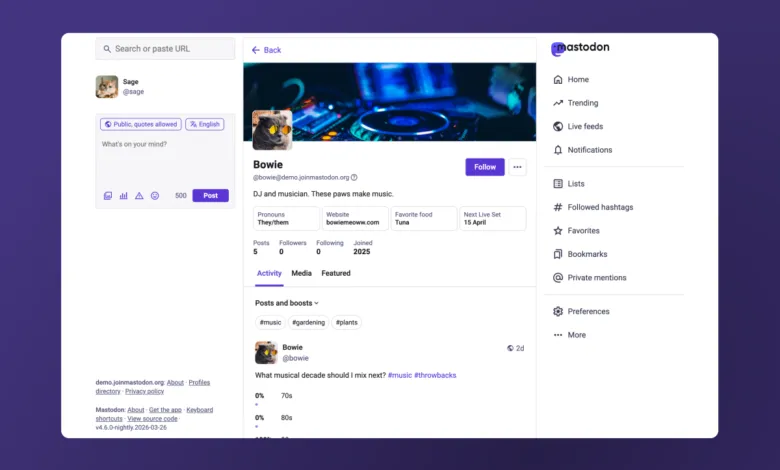
– Key profile changes include a simplified single “Activity” tab, relocated hashtags for filtering, and the removal of the pinned posts carousel.
– New features explain Mastodon’s two-part handle format and give users more control to hide profile tabs or modify custom fields from mobile apps.
– The update also makes link verification more visible and centralizes profile editing, with changes rolling out first to select servers.
In a move aimed at broadening its user base, the decentralized social network Mastodon is rolling out a significant profile redesign. The update seeks to streamline the platform’s interface, making it more intuitive for newcomers and organizations seeking alternatives to centralized services like X or Threads. While Mastodon gained significant attention following Elon Musk’s acquisition of Twitter, its unique structure has also presented a learning curve. Users must select a specific server to join and navigate distinct local and federated timelines, a process that has historically deterred more mainstream adoption. This complexity is reflected in user numbers, which have settled at approximately 800,000 monthly active users, a decline from the peak of one million during the initial Twitter exodus.
The latest changes focus on overhauling user profiles, a core part of the experience. A key simplification replaces the previous dual-view option for posts with a single, unified Activity tab. This tab includes a dropdown menu, allowing users to customize their feed by toggling the visibility of replies and boosts, which are Mastodon’s equivalent of reposts. Hashtags now appear prominently at the top of this tab, enabling visitors to instantly filter an account’s content by topic.
Addressing user feedback, the platform has removed the often-criticized pinned posts carousel. Instead, profiles will feature one primary pinned post, with additional pinned content accessible via a new “View all pinned posts” button. To demystify the platform for new users, an informational pop-up now explains the Mastodon handle format, which includes both an account name and a server name, unlike the simpler @username conventions on X or Threads.
The redesign grants users greater control over their profile’s appearance. Options now exist to hide the Media or Featured tabs entirely or to exclude replies from the Media tab to better showcase original work. Custom profile fields for links and pronouns are displayed side-by-side, creating a cleaner layout with more vertical space, and these fields can now be edited directly from iOS and Android apps. Other visual tweaks reduce clutter, such as removing the “following you” badge and relocating the optional personal note to an overflow menu.
Profile management has been centralized within account settings, where users can now handle all edits in one place. This includes managing featured hashtags, a process aided by Mastodon’s new suggestion feature. Importantly, link verification, the platform’s tool for establishing user credibility without centralized authority or payment, is no longer buried in settings. Users also gain the ability to crop and add alt text to their profile and cover photos directly.
These updates will first be available on the mastodon.social server and others running the nightly build, with a broader rollout expected for all servers with the upcoming Mastodon 4.6 software release in the coming weeks.
(Source: TechCrunch)