Ex-Apple Team Launches Acme Weather: A New Forecast Experience
▼ Summary
– The creators of the popular Dark Sky app have launched a new consumer app called Acme Weather, which they claim offers a better and more reliable forecast.
– A key feature is its presentation of multiple forecast possibilities as gray lines on graphs, showing alternate outcomes to help users understand prediction certainty.
– The app is a $25 per year subscription service that uses its own forecast system, leveraging various weather models and data sources to create maps and predictions.
– It includes unique notification experiments for events like rainbows and beautiful sunsets, alongside standard alerts for rain, lightning, and severe weather.
– The team, which is bootstrapped and includes former Dark Sky co-founders, chose to build an independent app to freely experiment with new ideas, which is currently available on iOS with an Android version planned.
The team behind the beloved Dark Sky weather app, which was acquired by Apple, has returned to the market with a fresh and innovative forecast tool. Acme Weather is their new consumer-focused application, promising a more reliable and transparent prediction experience than its predecessor. This subscription-based service introduces a novel approach by showing users not just a single forecast, but a range of possible weather outcomes, helping them understand the certainty behind each prediction.
Founder Adam Grossman explains that the app’s core strength lies in its proprietary forecasting engine. It synthesizes data from multiple numerical weather models, satellite feeds, ground stations, and radar to generate its primary forecast. However, the standout feature is the presentation of alternate possibilities as faint gray lines on the app’s graphs. This visual method immediately communicates whether different models agree on an outcome or if there is significant uncertainty, such as a storm potentially bringing snow or rain.
Grossman emphasizes that this transparency addresses a major frustration with conventional weather apps. Most services offer only a single “best guess” without any indication of confidence. Seeing the spectrum of possibilities empowers users, especially when planning important events. For instance, viewing a timeline where half the models predict a morning snowstorm and half suggest an afternoon rain event allows for much more informed decision-making.
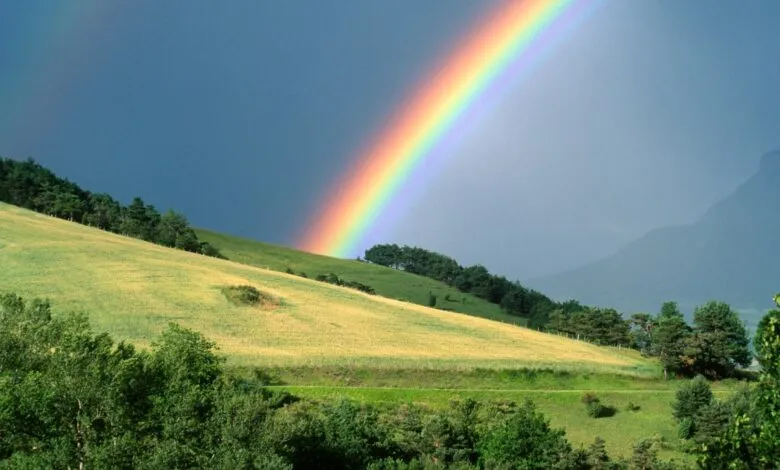
Operating as a bootstrapped, independent company allows the Acme team to experiment in ways that were challenging within a large corporation like Apple. The $25 annual subscription fee supports the significant costs of accessing diverse weather data sources and building custom maps. This independence fuels innovation, including a special “Acme Labs” section for testing unique notification ideas. Beyond standard alerts for rain or severe weather, the team plans to cautiously trial fun predictions, like alerts for potential rainbows or particularly stunning sunsets.
The app launches with a comprehensive suite of map layers, including radar, lightning strikes, precipitation totals, wind, temperature, and hurricane tracking. A “Community Reports” feature lets users contribute real-time condition updates, enhancing local accuracy. While the team successfully built Apple’s WeatherKit developer platform after the Dark Sky sale, they have not yet decided if a public API will be part of Acme Weather’s future. For now, the focus remains squarely on the consumer experience.
Currently available on iOS with an Android version in development, Acme Weather represents a return to the team’s roots. They aim to recapture the predictive precision that made Dark Sky famous while pushing the boundaries of how weather information is communicated and understood.
(Source: TechCrunch)