How a squirrel dad built 2026’s hottest camera app
▼ Summary
– Derrick Downey Jr., known for viral squirrel videos, created the app DualShot Recorder to solve the challenge of simultaneously capturing vertical and horizontal video footage.
– The app uses Apple’s camera API to access the full sensor, allowing it to save both aspect ratio crops from a single recording without losing resolution.
– Downey, who is not a software developer, built the app using AI tools, primarily Claude, after initial attempts with ChatGPT and Google’s Antigravity failed.
– DualShot Recorder became the number-one paid app on the App Store within 12 hours of its release, priced at $6.99, and remained in the top spot for eight days.
– The app collects no user data, videos stay on the device, and it offers granular controls, but the lack of data collection has made bug fixing more difficult.
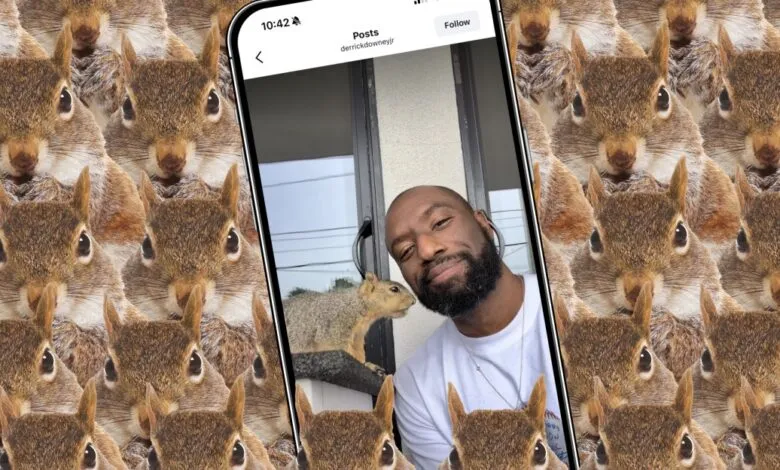
Calling DualShot Recorder an overnight success isn’t just accurate; it’s the kind of story that feels almost too good to be true. Within just 12 hours of hitting the App Store, it soared to the number-one spot among paid apps. But the truly remarkable part isn’t just the app’s rapid rise. It’s how a man known for feeding squirrels on his patio ended up building one of the hottest tools for content creators in 2026.
Derrick Downey Jr. has spent years building a massive following by filming his interactions with the squirrels that visit his Los Angeles patio. His Instagram and TikTok accounts each boast over a million followers who tune in for regulars like Maxine, Richard, and the occasional guest star like Hoodrat Raymond. Downey provides them with nuts, custom shelters, and even emergency vet visits. It’s wholesome content that feels like a digital sanctuary.
But when he wanted to expand to YouTube, he hit a wall. Shooting vertical and horizontal video at the same time is a common pain point for creators. Some use a rig with two phones. Others crop footage in post, which has a major downside: the iPhone already crops the sensor when recording video, so taking a vertical 16:9 crop from that already-cropped frame means you’re working with a tiny slice of the sensor. Resolution suffers, and framing options become severely limited. “I tried going out and buying different devices and rigs and gimbals, and additional phones to set up to accommodate for that… but it became too taxing,” Downey says. “The editing… all of that was too much.”
Last year, he had an idea: build an app to solve the problem. He’s not a software developer, so he turned to ChatGPT to try and vibe-code something. It didn’t work, and he shelved the project. But earlier this year, something pulled him back. “I went into the code and the camera activated. And I said okay, we possibly got something here.”
He dug into Apple’s camera API, which allows third-party apps to access footage from the entire sensor. Other developers have used this before, but Downey saw a specific opportunity: save both horizontal and vertical crops from that full sensor readout without losing resolution. After three or four months of intense prompt engineering, he had a working app.
The process wasn’t smooth. He started with ChatGPT and tried Google’s Antigravity, but he says Claude was the tool that made it possible. Still, working with AI comes with quirks. “You would think that because you’re giving the prompts to this machine that it would give you accurate data. But I found that not to be the case,” he explains. “I understand the product that I’m trying to create, I understand the functionality and what I’m looking for, and there have been moments when the response wasn’t accurate.” He now double checks and triple audits everything he asks the AI to do.
Once the app was ready, he priced it at a one-time cost of $6.99 and submitted it to the App Store. Within 12 hours, DualShot Recorder hit number one. It stayed there for eight days and remains in the top 20. The price has since increased to $9.99, but there’s no subscription, no user data collection, and videos stay on your device. The app also offers granular controls over quality and resolution and allows recording from two different cameras on the same device simultaneously. It’s a clean, straightforward value proposition.
Downey says avoiding automatic data collection was important, but it has made bug fixes harder. He’s working on adding a troubleshooting feature so users can send error reports when something goes wrong.
The sudden success has been overwhelming but energizing. “I’ve been losing a lot of sleep, which I don’t mind, really,” he says. “I’m all about balance, but when something is fueling you, sometimes you lose sleep over it. And that’s what’s been going on.” He describes the venture as exciting and says it has given him a new sense of purpose. But he knows maintaining a successful app may require a pivot. “It’s a lot of new things coming up, and I’m embracing that.”
Downey is open with his followers about his mental health, and he credits his squirrel friends with helping him through dark times. When his channel goes quiet, he shares that he’s not in the right space to create. His community responds with support. “They’re like oh, take your time. We’re not going anywhere. We’ll be here.”
No matter where this new chapter takes him, one thing remains constant: his time with the squirrels. With the initial “chaos” of the app launch settling down, he’s back to caring for Richard, Maxine, and the others. “They met me in a space when I was going through depression. And that’s family. So even if I really haven’t been able to show up online like I usually do, I’m still taking care of them.”
(Source: The Verge)