The Truth About USB Video Capture Devices
▼ Summary
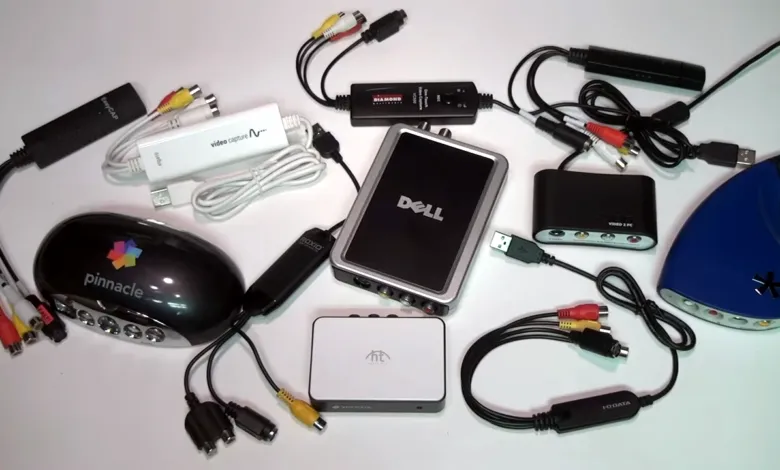
– Most USB video capture devices from the early 2000s produced universally bad results with unpleasant artifacts when digitizing VHS tapes.
– The Sony Digital Video Media Converter (DVMC), a 1998 device, was a clear exception and outperformed all other tested hardware.
– Its superior performance is due to a built-in time base corrector that stabilizes analog video signals to prevent issues like jitter.
– The DVMC is user-friendly, requiring no special drivers, defaulting to analog input, and being powered over USB.
– The main drawback is that it requires a FireWire port, not USB, but it remains a highly recommended, affordable option for analog digitization.
Digitizing old VHS tapes can be a surprisingly frustrating experience for anyone hoping to preserve their analog memories. Many affordable USB video capture devices, particularly those from the early 2000s, produce disappointing results with noticeable artifacts and quality issues. While the source material itself may not be perfect, the conversion process often introduces additional problems that degrade the final digital file. This leaves many wondering if there is a reliable and cost-effective solution for this common archival task.
A notable exception exists in the form of the Sony Digital Video Media Converter (DVMC), a piece of hardware originally released in 1998. In comparative testing, this older device consistently outperformed a wide array of modern USB capture gadgets. Its superior performance stems from a key internal component typically absent from budget options: a built-in time base corrector. This feature stabilizes the analog video signal by buffering it and correcting timing errors that commonly cause visual problems like jitter or image drift in the final capture.
Acquiring this hardware is surprisingly accessible. These Sony units frequently appear on online auction sites like eBay, often available for around twenty dollars. The device offers both composite and S-Video inputs, providing flexibility for connecting various analog sources. For a product of its age, the setup and operation are remarkably straightforward. It requires no special drivers, defaults to the correct analog input mode, and draws power directly from a USB connection, eliminating the need for a separate, potentially hard-to-find power adapter.
There is, however, one significant technical consideration. Despite its USB power connection, the DVMC is not a true USB video device for data transfer. It actually requires a FireWire port, also known as IEEE-1394, to output the captured digital video signal to a computer. This means a compatible FireWire card or port is necessary for the system to function. For users who can accommodate this requirement, the device offers exceptional value and quality for basic analog video digitization projects.
For those undertaking more serious archival work, experts suggest that the highest quality method involves capturing the raw RF signal directly from the tape heads inside the VCR itself, bypassing the machine’s internal video processing. This advanced technique demands specialized equipment and technical knowledge. For the vast majority of people looking to convert a box of old home movies, the vintage Sony converter presents a compelling balance of performance, simplicity, and cost.
(Source: Hack A Day)