Unlock Creativity: Read the Treatise on Spacing Out
▼ Summary
– The author frequently spaces out and was criticized for it, but argues that letting the mind wander is essential and a luxury in our hyperconnected age.
– Manoush Zomorodi’s book, *Bored and Brilliant*, expands on her podcast series, using expert voices and studies to advocate for the benefits of boredom and digital detox.
– The book effectively ties together concepts like the addictive design of phones and the creative value of daydreaming, with Zomorodi sharing her own struggles with technology.
– It details negative impacts of constant connectivity, such as choice paralysis, diminished memory from phone photography, and how phones hinder social interaction.
– Instead of chastising, the book offers practical challenges to reduce tech use and provides a scientifically backed, approachable case for occasionally unplugging.
My mind has a habit of drifting away, a frequent occurrence whether I’m gazing through the window on a train or pausing during the workday to focus on a patch of empty wall rather than my computer monitor. In my youth, people often labeled me a daydreamer or dismissed me as simply distracted. While excessive absent-mindedness can be problematic, Manoush Zomorodi’s book Bored and Brilliant presents a compelling argument that letting your thoughts wander is not just beneficial, but a crucial luxury we often neglect in our constantly connected world.
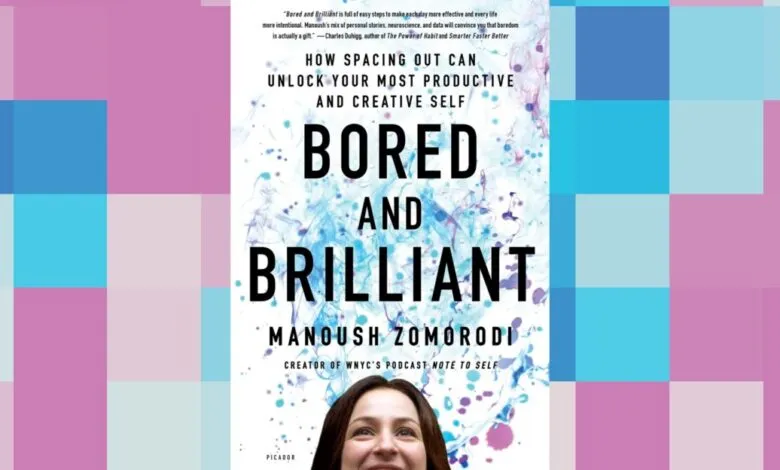
Zomorodi, who now hosts NPR’s TED Radio Hour, previously led WNYC’s Note to Self podcast. Back in 2015, she created a series for that show examining digital distractions and the unexpected advantages of boredom. That exploration later evolved into her 2017 publication. The book, Bored and Brilliant: How Spacing Out Can Unlock Your Most Productive and Creative Self, expands on her podcast work by incorporating fresh expert commentary, scientific research, and personal stories from both Zomorodi and her audience about their attempts at digital detoxification.
Certain insights Zomorodi shares might seem obvious today, like the intentionally addictive design of smartphones. Others feel intuitively true, such as the value of daydreaming, even if we lack the data to prove it. The real strength of Bored and Brilliant lies in how effectively Zomorodi weaves these different ideas together, positioning herself not as a distant expert but as a fellow traveler on the same journey as her readers.
She opens by recounting the exhausting experience of walking her newborn for hours, the only way the baby would sleep. Initially, she resented it. Over time, she found a rhythm and began to value having no particular destination. This kind of forced idleness carries a dual sense of unease and attraction that’s hard to recognize. We often treat these in-between mental states with suspicion, even framing them as unsettling in modern horror stories. Yet accepting this liminal space can be deeply refreshing and a powerful catalyst for original thought.
Zomorodi openly reflects on her own habits: checking Twitter during her commute, playing mobile games before sleep, and constantly tweaking her schedule. She captures the core issue of our tech saturation with a sharp observation: “My brain was always occupied, but my mind wasn’t doing anything with all the information coming in.”
The book addresses common modern struggles, like choice paralysis, a familiar feeling for anyone who has spent an evening browsing streaming services without actually watching anything. She also details the subtle impact a smartphone’s mere presence has on face-to-face conversations, even when the device isn’t in active use. Research is cited showing that using a phone to photograph an experience, rather than simply living it, can actually weaken our memory of the event.
This isn’t a book that scolds readers for their technology use. Zomorodi is transparent about her own challenges, joking at one point that her epitaph might read, “she clicked links and saved lots of articles to read another time and never actually read them.” It’s a sentiment that feels personally resonant for many.
More importantly, she provides a practical path forward. Every chapter concludes with a challenge from the original podcast series, tasks like meticulously tracking phone usage, avoiding photography for a full day, or deleting a major time-wasting app. Zomorodi supplements these with insights from her own experiments and feedback from listeners who participated.
Reading Bored and Brilliant won’t instantly transform you into a phone-free creative visionary. What it does offer is an accessible, research-supported rationale for occasionally disconnecting, paired with tangible steps to help you gradually step back from the digital edge.
You can purchase the ebook from most online retailers. However, I strongly suggest visiting a local independent bookstore for a physical copy. One good reason is to step away from your screen and jot down notes directly in the margins. Alternatively, borrow it from your public library, grab a notebook, and practice the lost art of writing your thoughts by hand.
(Source: The Verge)