UAE’s Rashid Rover 2 Set for 2026 Moon Mission
▼ Summary
– The Mohammed Bin Rashid Space Center has completed development and testing of the Rashid Rover 2 for the Emirates Lunar Mission.
– The rover has been sent to the United States to begin launch preparations with Firefly Aerospace for a 2026 mission to the Moon’s far side.
– MBRSC strengthened its partnership with the French space agency CNES, which will provide cameras and a CASPEX module for the rover.
– The mission is funded by the UAE’s ICT Fund, demonstrating the country’s commitment to space research and international collaboration.
– MBRSC leadership emphasized that this milestone advances the UAE’s lunar exploration ambitions and scientific capabilities.
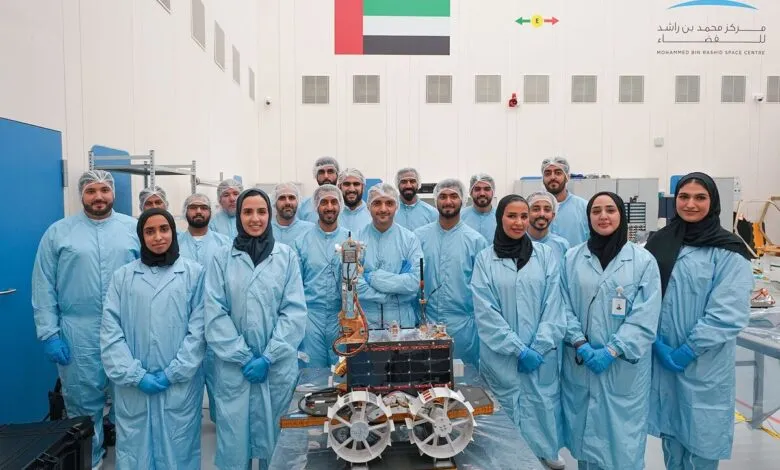
The Mohammed Bin Rashid Space Centre (MBRSC) has successfully completed the development of the Emirates Lunar Mission’s Rashid Rover 2, marking a major milestone in the UAE’s ambitious space exploration program. Following an exhaustive series of environmental and functional tests conducted within the UAE, the rover is now en route to the United States. There, it will enter the next stage of preparations in partnership with Firefly Aerospace, gearing up for its scheduled launch to the far side of the Moon in 2026.
This significant progress follows a strategic agreement signed earlier this year between MBRSC and Firefly Aerospace, which was witnessed by H.H. Sheikh Hamdan bin Mohammed bin Rashid Al Maktoum, Crown Prince of Dubai and President of MBRSC. The agreement confirms that a lunar lander provided by Firefly will transport Rashid Rover 2 to the lunar surface.
Hamad Obaid AlMansoori, Chairman of MBRSC, emphasized that this development milestone powerfully demonstrates the nation’s growing expertise in space science and technology. He noted that each achievement brings the UAE closer to building a sustainable, knowledge-focused future in space for coming generations.
Salem Humaid AlMarri, Director General of MBRSC, described the completion of Rashid Rover 2 as a decisive step forward for the UAE’s lunar exploration goals. He stated that the mission is propelled by a commitment to new scientific discovery and a determination to expand the boundaries of what is achievable.
According to Dr. Hamad AlMarzooqi, Project Manager for the Emirates Lunar Mission, the final round of testing was a critical phase to confirm the rover’s ability to endure the demanding journey ahead and to verify its readiness for upcoming preparation stages.
The Emirates Lunar Mission receives its financial backing from the ICT Fund of the Telecommunications and Digital Government Regulatory Authority (TDRA), highlighting the UAE’s strong dedication to research, development, and international cooperation in the field of space science.
In a parallel development, MBRSC recently reinforced its strategic partnership with the French space agency, CNES, as preparations for the 2026 mission intensify. This collaboration builds upon the successful groundwork laid during the first Rashid Rover mission. Under the renewed agreement, CNES will supply MBRSC with two advanced cameras and a CASPEX module, equipment with a proven track record from earlier space missions, for integration onto Rashid Rover 2. These cameras are designed to capture high-resolution images on the lunar surface, directly supporting the mission’s scientific objectives. The partnership also includes French specialists assisting with image processing, ensuring the highest quality of data is obtained to drive forward lunar research initiatives.
(Source: Economy Middle East)