Crimson Desert’s Combat: Fighting Game Flair in Fantasy
▼ Summary
– Crimson Desert’s combat system allows for complex moves through button combinations, inspired by retro fighting games like Samurai Showdown and Final Fight.
– The game features a deep ability tree and diverse combat options, including magic, wrestling moves, and environmental interactions, without forcing specific strategies.
– Players can use various mounts and gear, from horses and bears to dinosaurs and mechs, which expand combat capabilities but are balanced by limitations like fuel gauges.
– The combat design focuses on player freedom, avoiding on-screen prompts and strict counters, so any attack method is valid and mastering Kliff’s abilities reduces difficulty.
– Despite appearing as a typical open-world game, Crimson Desert’s combat is unique, blending traditional elements with unconventional moves and a Street Fighter-like mastery approach.
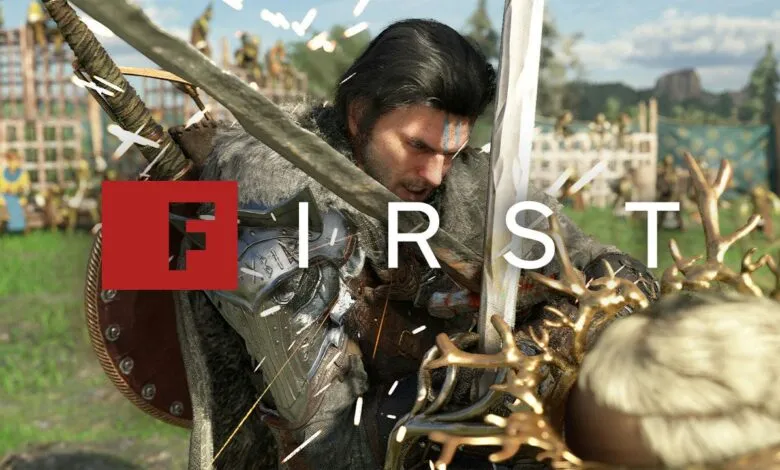
At first glance, Crimson Desert might appear to be just another fantasy action title where players mindlessly hack through foes. While you can certainly play that way, the combat system reveals surprising depth for those willing to explore its mechanics. By combining different controller inputs, protagonist Kliff executes complex maneuvers far beyond simple attacks. Pressing two face buttons together initiates a forward lunge, while simultaneously hitting light and heavy attack transitions into a magic-infused overhead slam. This philosophy of versatile, multi-input actions applies to every tool in your arsenal.
Aiming a bow can seamlessly flow into a dodge roll, triggering a brief slow-motion effect ideal for lining up precise headshots. Casting spells at the peak of a jump propels Kliff skyward, using the magical recoil to gain altitude, chain this maneuver repeatedly to scale impressive heights. One of the most entertaining examples involves holding specific buttons while manipulating the left analog stick to unleash an array of wrestling moves, ranging from basic grapples to spectacular human hammer throws.
The development team at Pearl Abyss drew unexpected inspiration from retro arcade fighting games such as Samurai Shodown, Final Fight, and King of Fighters. This influence clarifies the game’s emphasis on multi-button combinations and linked abilities. However, the studio’s primary goal wasn’t to copy fighting game combos directly. Instead, they focused on replicating the powerful sense of impact from each strike, a quality evident in both the visceral visuals and the satisfying, crunch-heavy sound design, which takes cues from Capcom’s acclaimed work.
Across numerous boss encounters and open-world skirmishes, it becomes clear that Crimson Desert aims for the extensive move variety typically found in fighting games. Unlike many open-world action titles that limit players to a basic set of actions, dodge, attack, counter, this game offers a vast array of combat options. Kliff’s expanding ability tree ensures numerous approaches to any confrontation, transcending the simple ranged versus melee dichotomy. You might integrate kicks and suplexes into swordplay, channel lightning through your blade, or use whistling arrows to call down artillery strikes.
Pearl Abyss deliberately avoids imposing rigid rules on combat. There is no rhythmic pattern to follow, unlike systems seen in Batman: Arkham, nor any requirement to respond to on-screen button prompts as seen in titles like Mad Max or Marvel’s Spider-Man. The developers prioritize player freedom, enabling you to tackle situations however you choose. This results in a somewhat loose combat experience where specific hard counters or rock-paper-scissors mechanics are absent. While certain weapons may prove more effective against shielded opponents, and bosses have recognizable patterns, the game never forces you to adhere to these strategies.
This philosophy of optional depth extends to environmental interactions. Powered by the BlackSpace engine, the world supports elemental reactions: water freezes or conducts electricity when hit with appropriate spells, while wood ignites and smolders. Inspired by modern Legend of Zelda titles, this system is available for players to master but isn’t mandatory. You won’t encounter bosses that require freezing water to immobilize them or luring them onto electrified metal grids.
Kliff’s magical abilities stem from a bracelet granting control over fire, ice, and lightning, but new gear significantly expands his capabilities beyond the skill tree. A spear that unfolds like a propeller unleashes bursts of wind, while another sword summons a genie-like entity. Progression unlocks even more extraordinary options. Early mounts are standard horses, but venturing into Black Bears territory allows you to ride a massive grizzly that swipes through groups of enemies with its claws.
Later stages introduce truly bizarre possibilities. Horses can be replaced with raptors, actual dinosaurs, and eventually, you gain access to Tristar, a fire-breathing dragon that answers your call. Most unexpectedly, the game features a fully pilotable mech. This dwarven-engineered battle robot, reminiscent of a Bioshock Big Daddy fused with a Titanfall mech, comes equipped with thrusters, machine guns, homing rockets, and an area-of-effect EMP blast, rendering sword-wielding adversaries utterly obsolete.
To maintain game balance, these overpowered mounts operate on limited fuel gauges. Once depleted, the mech becomes inoperable, preventing players from trivializing major encounters. Pearl Abyss views these powerful tools as rewards for progression, intentional power spikes that feel like presents for dedicated players.
The fighting game comparison resurfaces when considering the learning curve. Whereas games like Dark Souls challenge players to master enemy behaviors, Crimson Desert follows the Street Fighter model, where difficulty diminishes as you grow more proficient with Kliff’s moveset. The real challenge lies in mastering your own capabilities rather than memorizing opponent patterns.
This creates considerable depth but also complexity. Without guidance, the sheer number of options can feel overwhelming. To mitigate this, Pearl Abyss designed intuitive button mappings that build on player familiarity. For instance, clicking the left thumbstick casts a spell from Kliff’s left hand, while clicking the right thumbstick uses the right hand. Performing a triple-jump, powered by magic, requires an L3, R3, L3 sequence rather than repeatedly pressing the jump button.
While Crimson Desert incorporates many standard open-world elements, puzzle dungeons, faction quests, bounty boards, its combat system stands apart. Built on a foundation of dodges, parries, and standard attacks, it allows for combinations that feel wholly unique to the genre. Chaining a swing reminiscent of Spider-Man into a Batman-like glide, culminating in a ground pound evoking Sonic the Hedgehog channeling the Hulk, demonstrates that Pearl Abyss is genuinely attempting something different.
(Source: IGN)


