Modos’ 75Hz E-Paper Aims to Eliminate Screen Fatigue for Good
▼ Summary
– Modos Tech introduces e-paper displays with 75Hz refresh rates, addressing sluggish performance issues in commercial e-paper.
– The open-hardware design uses Xilinx Spartan-6 FPGA and other components to eliminate proprietary bottlenecks and improve responsiveness.
– The displays support USB Type-C and HDMI, ensuring compatibility with Windows, macOS, and Linux for easy setup.
– Available in 6-inch ($199) and 13.3-inch ($599) sizes, the kits target users prioritizing simplicity and reduced eye strain over color displays.
– The crowdfunded project, via Crowd Supply, is in pre-order status with expected delivery in Q4 2025, though delays are possible.
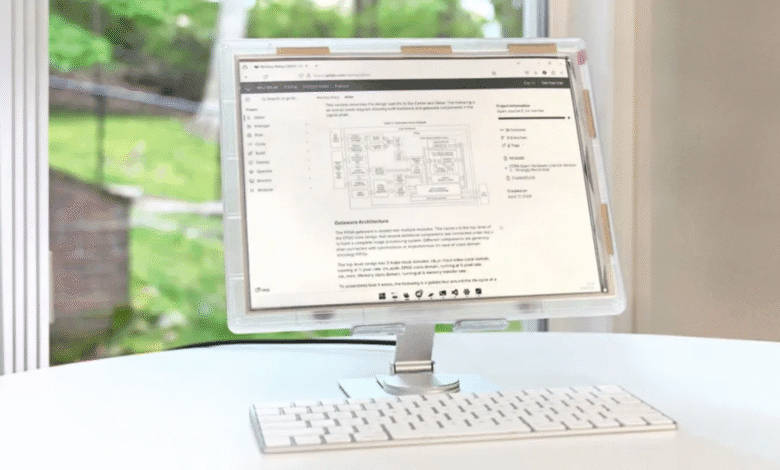
Modos’ groundbreaking 75Hz e-paper display technology promises to revolutionize how we interact with screens by tackling the persistent issue of eye strain and digital fatigue. Unlike conventional monitors that bombard users with harsh backlighting and rapid refreshes, this innovative solution leverages the natural readability of e-paper while achieving unprecedented responsiveness for productivity-focused workflows.
The secret lies in Modos’ open-hardware architecture, which replaces proprietary limitations with a custom-built system centered on the Xilinx Spartan-6 FPGA. Paired with a DDR3 framebuffer and STM32H750 microcontroller, this setup eliminates the sluggishness typically associated with e-paper, enabling smoother scrolling, typing, and even basic graphic interactions. Traditional displays often prioritize flashy visuals over user comfort, but Modos flips the script by optimizing for clarity and reduced cognitive load.
Designed for professionals who value focus, these developer kits cater to writers, coders, and accessibility advocates seeking an alternative to glaring LCDs. The displays support multiple grayscale levels and a hybrid rendering mode, though color capabilities remain unexplored for now. Connectivity is streamlined with USB Type-C and HDMI ports, ensuring compatibility across Windows, macOS, and Linux systems. While USB-C handles both data and power, HDMI users will need a separate power supply.
Available in 6-inch ($199) and 13.3-inch ($599) variants, these kits won’t replace high-performance monitors or tablets. Instead, they fill a unique niche for users sensitive to screen fatigue or overwhelmed by visual clutter. Crowdfunding through Crowd Supply adds a layer of uncertainty, deliveries are slated for late 2025, with potential delays lurking in the hardware development cycle. Still, for those tired of trading comfort for functionality, Modos’ approach could mark a turning point in display technology.
(Source: techradar)