Antivirus vs. Ransomware: Is the Threat Real?
▼ Summary
– A user received a file from a suspected spam Discord account and opened it in a virtual machine.
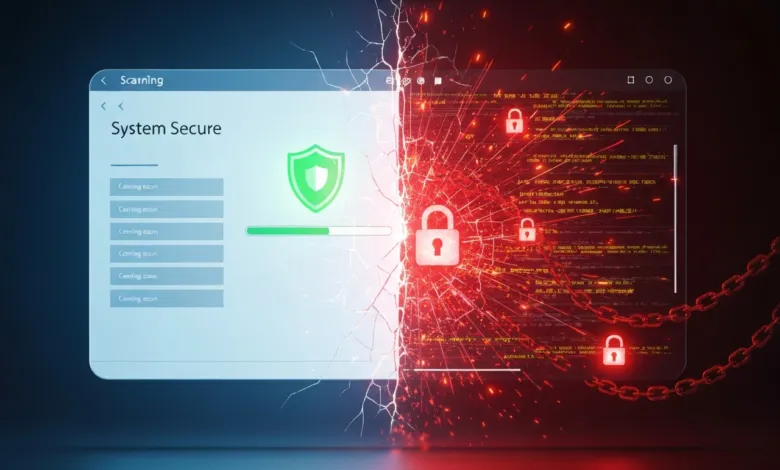
– The program displayed a user interface with scanning and security settings, though all settings were labeled “Coming soon.”
– It detected files, but all detections were for OneDrive on a clean Windows 11 installation, and none appeared to be malicious.
– The user did not download or test anything against the program.
– The user is uncertain whether the program is a real antivirus or ransomware.
A suspicious file was recently shared via a Discord spam account, and after examining it in a virtual machine, the results are puzzling. The file, uploaded to VirusTotal for analysis, presents itself as a functional security tool. When opened, it displayed a user interface that allowed scanning various system areas and even included settings menus for security options, though every option was marked as “Coming soon.” The scanner flagged several items, but none appeared to be actual threats , all detections were related to OneDrive files on a clean installation of Windows 11.
This raises a critical question: is this a legitimate antivirus application, or is it ransomware disguised as security software? The behavior so far is contradictory. On one hand, the tool runs and performs scans without immediately encrypting files or demanding payment. On the other, the fact that it only detected benign OneDrive components on a fresh system suggests the scan results may be fabricated to create a false sense of legitimacy.
The real danger lies in what happens next. Ransomware often employs a “slow burn” approach: it may appear harmless at first, only to activate encryption hours or days later, after establishing persistence. Alternatively, this could be a trojan that collects system information or serves as a backdoor for future attacks. The “Coming soon” labels on security settings are a telling red flag , a genuine antivirus would not ship with placeholder menus.
Until the file is fully reverse-engineered or observed over time in a controlled environment, the safest assumption is that it is malicious. Users who received this file should avoid executing it on any real system. Running unknown executables from spam accounts, even in a VM, carries risk, and the absence of immediate damage does not guarantee safety. Always rely on trusted, well-known security solutions rather than unsolicited software from unverified sources.
(Source: BleepingComputer)