AMD Extends AM5 Support to 2029; AM4 Still Going Strong

▼ Summary
– AMD announced new chips for both the AM5 and AM4 sockets at Computex, extending their lifespans to help with the high cost of PC upgrades.
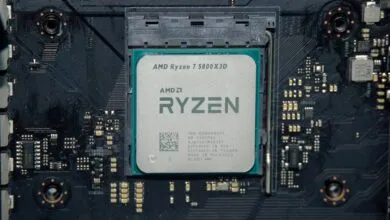
– The re-released Ryzen 7 5800X3D, called a “10th Anniversary Edition,” has 64MB of extra L3 cache that improves gaming performance.
– In general productivity tasks, the 5800X3D is slower than standard 8-core Ryzen 5000 CPUs but can prevent CPU bottlenecks with high-end GPUs on AM4 motherboards.
– The 5800X3D re-releases on June 25 with a suggested retail price of $349, which is cheaper than its current secondhand price.
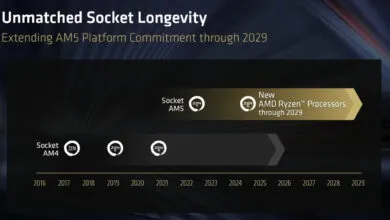
– AMD extended support for the AM5 socket to at least 2029, adding two to four more years beyond its original 2025 end date.
Building a PC with an AMD processor has long come with a distinct advantage: the company’s commitment to supporting its socket platforms far longer than Intel typically does. This means you can often swap in a newer CPU without replacing your motherboard or RAM, saving significant money over time. At Computex, AMD reinforced this reputation by unveiling new chips for both its current AM5 socket and the remarkably resilient AM4 socket, a clear acknowledgment of how costly building or upgrading a PC has become.
First up is a familiar face: the Ryzen 7 5800X3D is making a comeback. Originally launched in 2022 as AMD’s first commercial 3D V-Cache processor, it’s now being rebranded as a “10th Anniversary Edition” to celebrate the longevity of Socket AM4. While this 8-core chip trails standard Ryzen 5000-series CPUs in general productivity tasks, its extra 64MB of L3 cache provides a major boost in gaming performance. For anyone pairing a high-end GPU with an AM4 motherboard, this processor can help eliminate CPU bottlenecks in demanding titles. The 5800X3D returns on June 25 with a suggested retail price of $349, which is actually cheaper than its current secondhand market value.
Turning to the present, AMD officially confirmed that support for the AM5 socket will extend to at least 2029. This marks a significant expansion from earlier timelines: originally slated for support through 2025, then updated to “2027+,” the new commitment adds between two and four extra years of compatibility, depending on how you calculate it. For PC builders, this means more flexibility and lower upgrade costs down the line.
(Source: Ars Technica)