US Ebola Researchers Lose Funding After Trump Cuts
▼ Summary
– The Trump administration cut funding for the Centers for Research in Emerging Infectious Diseases (CREID) Network in part due to COVID-19 origin conspiracy theories, leaving it unable to assist with the Ebola outbreak in the Democratic Republic of the Congo.
– The CREID Network, established by the NIH in 2020, researched viruses that spill over from wildlife to humans, including Ebola, and operated 10 sites in high-risk regions like Central and East Africa.
– The network received about $82 million in five-year funding, but in June 2024, it received a stop-work order citing the research as “unsafe for Americans” and not aligned with agency priorities.
– Kristian Andersen, a virologist who led a CREID center in West Africa, can no longer conduct Ebola diagnostics and genomic sequencing due to the funding loss, limiting his support to data review.
– Robert Garry noted the entire network would have mobilized to help with the outbreak, but researchers are now unable to provide on-the-ground testing or sequencing support.
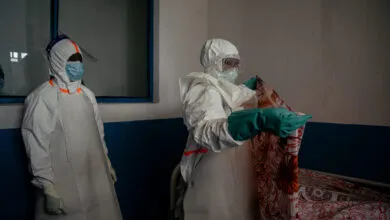
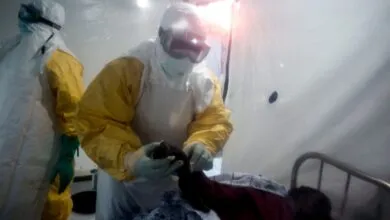
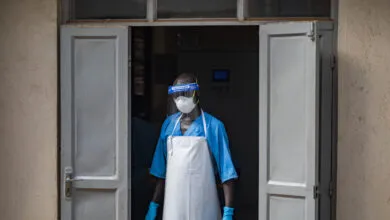
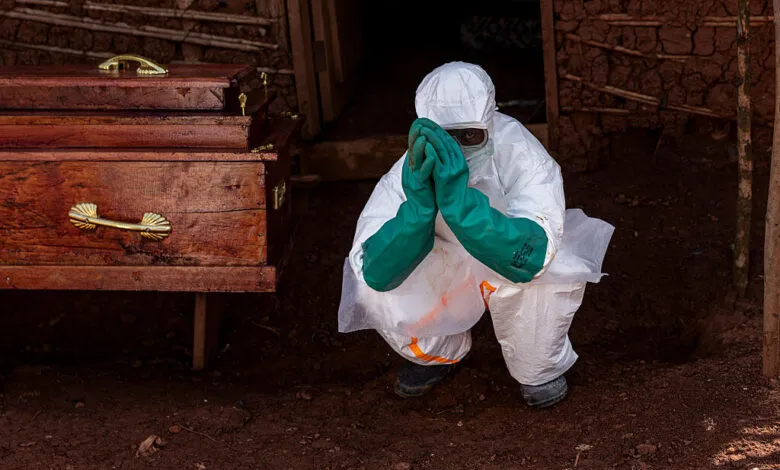
As the Democratic Republic of the Congo battles a rapidly escalating Ebola outbreak in Ituri Province, a once-ready network of research centers has been sidelined. The Trump administration pulled funding from the program last year, a decision driven partly by COVID-19 conspiracy theories about the origins of the pandemic.
Launched in 2020 by the National Institutes of Health, the Centers for Research in Emerging Infectious Diseases (CREID) Network focused on viruses that jump from wildlife to humans, including the filovirus family that includes Ebola. The network operated ten sites in high-risk regions like Central and East Africa, and also studied hantavirus, which caused a rare outbreak on a cruise ship earlier this year.
The NIH had committed roughly $82 million to CREID over five years, with renewal set for 2025. But last June, centers received a stop-work order. The reason given: the research was deemed “unsafe for Americans and not a good use of taxpayer funding,” and the agency’s priorities no longer aligned with the network’s mission.
“That reason is pretty rich, right? Because that was really the kind of pandemic preparedness research that we need to do,” says Kristian Andersen, an evolutionary virologist at Scripps Research in La Jolla, California. He co-led one of two CREID centers in West Africa, where he helped develop diagnostics and performed genomic sequencing of Ebola virus genomes during past outbreaks to track evolution and spread. He no longer has NIH support for that work.
Andersen says he stays in touch with colleagues in the DRC and reviews outbreak data, but cannot help with testing or sequencing. “We sit here in San Diego and see this unfold,” he says.
“The whole network would have mobilized,” adds Robert Garry, a professor of microbiology and immunology at Tulane Medical School, who led the center alongside Andersen.
(Source: Ars Technica)