Resident Evil: Requiem Confronts the Past to Save Tomorrow

▼ Summary
– Resident Evil Requiem is a game deeply concerned with its own legacy, viewing the series’ accumulated lore and iconography as an obstacle to new creative directions.
– The plot centers on “Raccoon City Syndrome,” a literal and metaphorical disease affecting survivors, symbolizing the franchise’s inability to escape the shadow of its foundational event.
– The game critiques the industry’s reliance on nostalgia, exemplified by Capcom’s own remakes and other franchises’ tendency to revisit past successes instead of innovating.
– To purge this past, the game forces players to confront and destroy familiar enemies and locations, performing a ritual cleansing reminiscent of games like Metal Gear Solid 4.
– The ultimate goal, mirrored by a character’s quest for a cure, is to violently excise the series’ entrenched elements to allow for future growth and avoid creative stagnation.
Resident Evil: Requiem presents a series grappling with its own legacy, forcing a violent confrontation with the past to carve out a future. The game operates under the weight of its own history, treating accumulated lore and iconic imagery not as treasures but as obstacles. This creates an experience intensely focused on the identity of Resident Evil itself. To move forward, the solution offered is brutally direct: arm yourself and destroy the familiar.
Discussing a game as being “about” itself can feel abstract. While many titles reference their own mechanics or history, some delve deeper, becoming a meditation by their creators on the path taken and the changes needed. In Resident Evil: Requiem, this introspection manifests as a palpable anxiety, especially through the lens of veteran hero Leon Kennedy. The narrative suggests that the franchise’s long history has spawned a ghost, a spectral presence that stifles innovation and new directions.
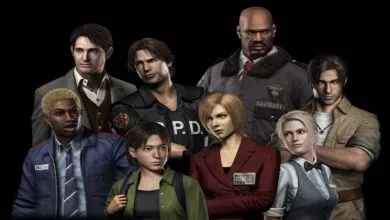
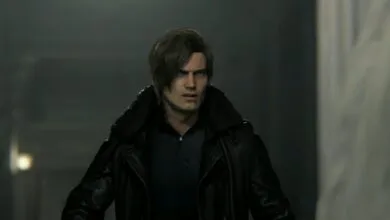
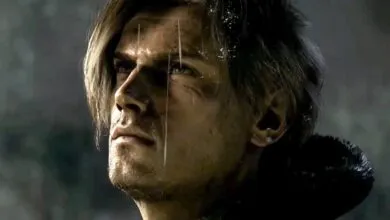
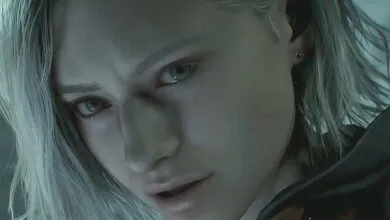
This concept is made physically real through the plot’s central affliction: Raccoon City Syndrome. Decades after exposure to the original T-Virus, survivors like Leon and Sherry Birkin are slowly dying from a creeping necrosis, a literal embodiment of the inescapable trauma from that foundational disaster. Leon’s mission becomes twofold: stop the immediate threat and cleanse this stain from his body. Nearly thirty years after his debut in the game that defined Raccoon City’s fall, neither he nor the franchise can escape its gravitational pull. Every attempt to leave it behind has, until now, failed.
That failure is evident in Capcom’s own recent history. Following the bold, isolated reset of Resident Evil 7, the company produced lavish remakes of the second, third, and fourth games, all deeply tied to the Raccoon City era. Even when the series later ventured into gothic horror with Resident Evil Village, it ultimately looped back, revealing connections to Umbrella’s founder, Ozwell Spencer. The past is a trap the series struggles to avoid.
Requiem positions Spencer himself as a parallel to Leon. Wracked with guilt, the Umbrella founder’s final act is creating Elpis, a serum designed to cure any T-Virus infection. His weariness with the monsters and violence he unleashed mirrors the game’s own apparent fatigue. Requiem orchestrates a scenario where players must dispose of the series’ congealed iconography, treating it like a dangerous clot blocking the flow of new stories.
This necessitates a return to familiar ground. The game’s middle section sends Leon back into the ruins of Raccoon City. There, he engages in a systematic purge, facing down shambling zombies, a plant beast echoing the first game’s horrors, and a grey-faced Tyrant reminiscent of Resident Evil 2’s relentless pursuer. This is not a nostalgic celebration. It functions as a ritual cleansing, a desperate effort to uproot the weeds choking the series’ garden. The approach recalls Metal Gear Solid 4, which similarly tasked its aging hero with disposing of accumulated legacy to save the world.
Both games share another powerful technique: revisiting a hallowed location to witness its decay. For Leon, it’s the crumbling wreck of the Raccoon Police Department, a space players know intimately from the recent remake. Once a fortress of challenge and memory, it is now just dust and ruins. Returning there underscores a sobering truth: even the most significant places fade, leaving behind only the need for one final sweep to ensure nothing dangerous remains lurking.
The culmination of this purge is a climactic battle against a tenacious enemy known only as the Commander, strongly implied to be HUNK, the legendary Umbrella operative known as “Mr. Death.” Their fight is a raw, one-on-one melee. Like a surgeon removing a tumor, Leon excises this seemingly eternal icon from the franchise. Examining the body reveals the Commander, too, was suffering from Raccoon City Syndrome. Not even an unkillable super soldier could escape the literal and metaphorical poison at the series’ core.
This perspective might sound severe. It isn’t a dismissal of the classic games that built the franchise. Instead, it reacts to a broader media landscape drowning in nostalgia, where rehashes and collections often replace genuine innovation. The game industry frequently stumbles backward, remastering and remaking proven successes rather than forging untested paths. In this context, the past can feel like it’s killing creativity.
Whether Resident Evil will permanently escape its own tropes remains uncertain. Requiem, however, poses a vital question to the franchise: hasn’t this all gotten a bit out of hand? It proposes a visceral answer. Fight. Slash through the familiar. Bleed the old wounds dry. Find the cure for the infection. Only through this violent, necessary work can there be any hope for a true future.
(Source: Kotaku)