How Seabird Guano Powered the Rise of Peru’s Chincha Kingdom
▼ Summary
– The Chincha Kingdom was a wealthy pre-Inca civilization whose prosperity has been linked to seabird guano, which dramatically boosted maize production.
– This agricultural surplus fueled the kingdom’s economy, trade, population growth, and influence, and shaped its alliance with the Inca Empire.
– A mysterious site known as the “Band of Holes,” likely built by the Chincha, consists of around 5,200 precisely aligned holes whose purpose was long debated.
– Analysis of the site revealed traces of ancient maize pollen and reeds, indicating plants were deposited there in woven baskets or bundles.
– Researchers interpret this as evidence the site was a pre-Inca marketplace for exchanging local goods with the wares of mobile traders.
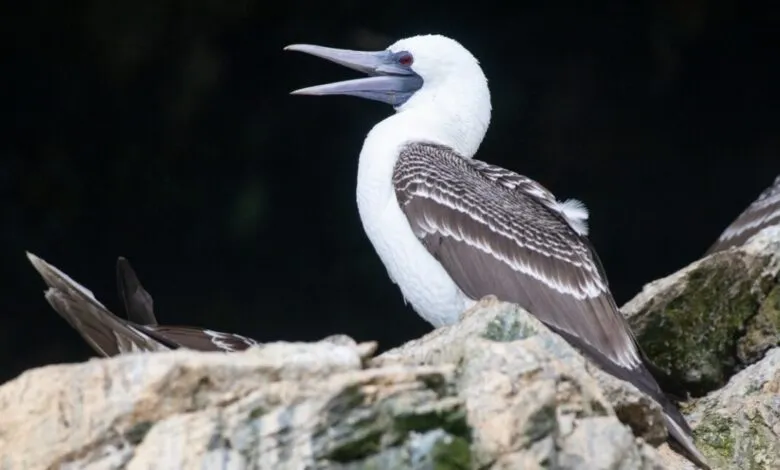
The remarkable wealth and influence of the pre-Inca Chincha Kingdom, which flourished along Peru’s southern coast for centuries, appears to have been built on a surprisingly potent natural resource: seabird guano. A new study reveals that this powerful fertilizer was a cornerstone of the kingdom’s economy, fueling agricultural surpluses that drove trade, population growth, and strategic political alliances. This discovery provides a compelling explanation for the prosperity of a civilization that thrived long before the rise of the Inca Empire.
“Seabird guano may seem trivial, yet our study suggests this potent resource could have significantly contributed to sociopolitical and economic change in the Peruvian Andes,” explained co-author Jacob Bongers, a digital archaeologist. The research indicates that guano dramatically increased maize production. This agricultural bounty was not merely about food security; it was an economic engine. The surplus maize could be traded, stored, or used to support a larger population, ultimately translating into regional power and influence.
This understanding of the Chincha economy also sheds light on other archaeological mysteries. Bongers recently investigated the so-called “Band of Holes” on Mount Sierpe, a site featuring thousands of precisely aligned depressions first spotted in aerial photos from the 1930s. Scholars had long debated its purpose, proposing theories ranging from defensive structures to water collection systems. By analyzing sediment samples from the holes, Bongers’ team found microscopic traces of ancient maize pollen and reeds used in basket weaving.
This botanical evidence suggests the holes were used to hold plants transported in woven containers. Bongers interprets the site not as a fortress or reservoir, but as a bustling pre-Inca marketplace. Here, local agricultural goods, bolstered by guano-fertilized harvests, were likely exchanged for the wares of traveling merchants. The kingdom’s agricultural wealth, therefore, did not just support its people, it created a hub for commerce and interaction. This economic vitality ultimately shaped the Chincha Kingdom’s strategic decision to form an alliance with the expanding Inca Empire, a partnership that defined the region’s history before the Spanish conquest.
(Source: Ars Technica)