▼ Summary
– Ancient Egyptian opiate use was discovered in an alabaster vase residue, suggesting it was integrated into daily life and culture.
– Archaeological pharmacology reveals historical hallucinogenic substance use across many cultures, including Greek, Vedic, Maya, Inca, and Aztec societies.
– A 2023 analysis of a ceremonial mug depicted with the deity Bes identified residues of Syrian rue, blue water lily, and a fermented alcoholic concoction.
– The residues contained psychoactive substances like harmine and harmaline from Syrian rue and a sedative alkaloid from blue water lily.
– A 2024 follow-up study confirmed earlier findings and added traces of pine nuts or oil, licorice, tartaric acid salts, and medicinal spider flowers.
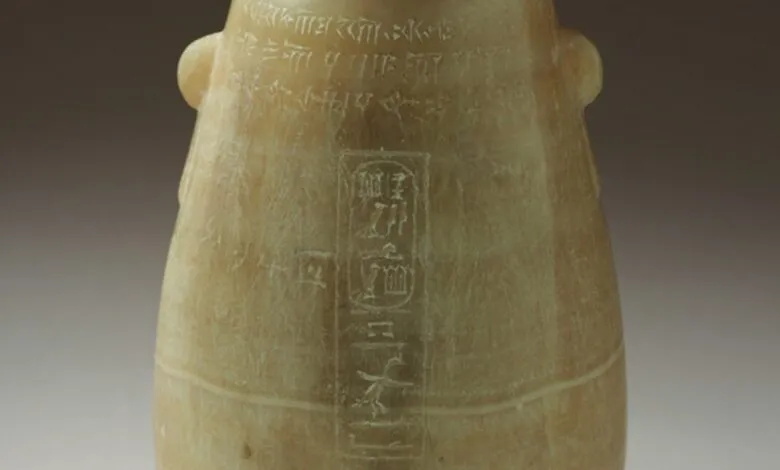
Scientists have uncovered compelling evidence that ancient Egyptians incorporated opium into their daily routines, a discovery that reshapes our understanding of their cultural and medicinal practices. Residue analysis from an alabaster vase reveals traces of opiates, pointing toward widespread use rather than occasional indulgence. A recent paper in the Journal of Eastern Mediterranean Archaeology supports this, suggesting opium was a familiar substance in Egyptian society.
Archaeologists are increasingly applying pharmacological techniques to artifacts from global collections. Historical records show many civilizations, including those of ancient Greece, the Vedic period, and Mesoamerican cultures like the Maya and Aztecs, used hallucinogenic compounds in spiritual or shamanic rites. Even today, the Urarina of the Peruvian Amazon employ ayahuasca, a psychoactive brew, in their ceremonies, a practice that has attracted interest from Western seekers of alternative experiences.
In one notable case from 2023, University of South Florida researcher David Tanasi analyzed a ceremonial mug adorned with the likeness of Bes, a protective deity associated with households and family welfare. Tanasi collected residue samples from the vessel and employed advanced methods such as proteomic and genetic testing, along with synchrotron radiation-based Fourier-transform infrared microspectroscopy, to identify the substances present.
His investigation revealed residues of Syrian rue, a plant whose seeds contain the alkaloids harmine and harmaline, known to produce vivid, dream-like hallucinations. The analysis also detected blue water lily, which has sedative effects due to its psychoactive alkaloids, and a fermented alcoholic mixture comprising yeast, wheat, sesame, fruit such as grapes, honey, and what researchers described as “human fluids”, possibly including breast milk, mucus, or blood. A subsequent 2024 study corroborated these findings and identified additional components: pine nuts or Mediterranean pine oil, licorice, tartaric acid salts likely from the alcoholic base, and medicinal spider flowers.
(Source: Ars Technica)