Egyptian Exhibits Now Feature the “Scent of the Afterlife”
▼ Summary
– In 2023, scientists analyzed the complex balms used to mummify an ancient Egyptian noblewoman’s organs, finding they contained non-local ingredients.
– Researchers, including Barbara Huber, recreated the scent of these balms, calling it “the scent of eternity,” for use in museum exhibits.
– Egyptian embalming likely began when people observed the desert’s natural preservation of bodies, evolving into a religious practice.
– The mummification process involved removing organs, treating the body with substances like natron, and a 40-day dehydration period.
– After dehydration, the body was wrapped in linen with protective amulets, sealed with resin, and placed in a coffin.
The ancient practice of Egyptian mummification has long captivated historians and scientists, but a recent breakthrough now allows us to experience it with a new sense. Researchers have successfully recreated the “scent of eternity,” a fragrance based on the complex balms used to preserve a noblewoman’s organs, and museums are incorporating this aroma into their exhibits to offer visitors a uniquely immersive historical encounter.
In 2023, a scientific team pinpointed the specific compounds within the embalming balms applied to the organs of an ancient Egyptian woman. Their analysis revealed these recipes were remarkably sophisticated, incorporating ingredients that were not locally sourced, indicating extensive trade networks. Beyond the chemistry, the researchers collaborated with a professional perfumer to reconstruct the aroma, a project led by Barbara Huber of the Max Planck Institute of Geoanthropology. This reconstructed scent provides a tangible, sensory link to the past, transforming abstract archaeological data into an evocative experience.
The mummification process itself evolved over centuries. It likely began in the Predynastic era when people observed how the dry desert heat naturally preserved bodies buried in the sand. As burial practices shifted to rock tombs, which lacked the sand’s desiccating properties, Egyptians developed a chemical approach. They employed substances like natron salt and various plant-based resins to artificially achieve the preservation the desert once provided.
The detailed procedure was both meticulous and ritualistic. After placing the deceased on a slab, embalmers would remove most internal organs, carefully leaving the heart in place, as it was considered the seat of intelligence. Historical accounts describe using a hooked instrument to extract brain matter through the nasal cavity, followed by rinses with palm wine and spices. The body cavity was then packed with aromatic materials and natron before being left to dehydrate for approximately forty days.
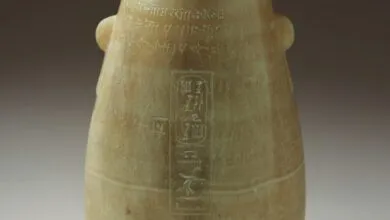
Once thoroughly dried, the preserved organs were either sealed in ceremonial canopic jars or returned to the body. The next stage involved wrapping the corpse in layers of linen, with protective amulets strategically placed within the bindings. Finally, the completed mummy received a coating of resin to act as a moisture barrier before being placed in a coffin, which was also sealed with resin. This entire practice was deeply intertwined with spiritual beliefs, ensuring the body remained intact for its journey to the afterlife.
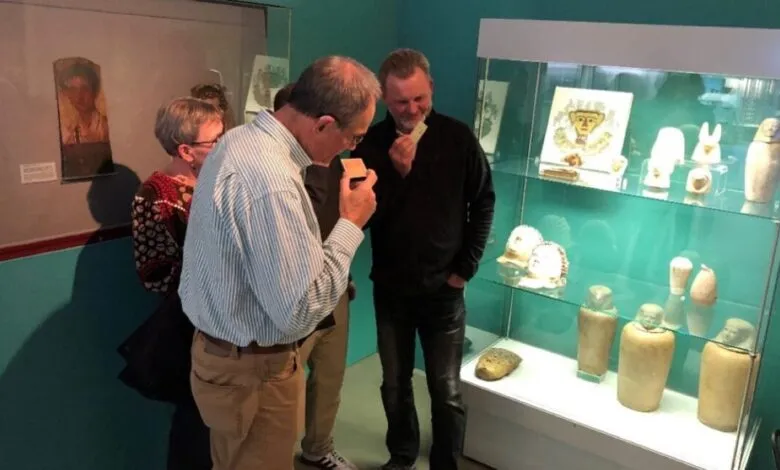
By introducing the scent of these ancient resins and balms into museum settings, curators are creating a powerful, multi-sensory narrative. Visitors are no longer just looking at artifacts behind glass; they are surrounded by the very aroma that accompanied these sacred rites. This innovative approach bridges a gap of millennia, making the cultural and spiritual significance of mummification more immediate and comprehensible than ever before.
(Source: Ars Technica)