1971 Boss 351 vs. 429 Cobra Jet: The Ford Feud That Still Burns
▼ Summary
– A 1971 Motor Trend comparison unfairly tarnished the reputation of the Ford Mustang 429 Cobra Jet by pitting it against a Boss 351 under unequal conditions.
– In acceleration tests, the 429 CJ lost decisively to the Boss 351 despite having significantly more horsepower and torque on paper.
– The Boss 351 benefited from performance advantages like a shorter final drive ratio, a four-speed manual transmission, and no air conditioning.
– The 429 CJ was handicapped by a taller final drive, a three-speed automatic transmission, and the added weight and drag of air conditioning.
– The article argues the test was not a fair fight, and the resulting performance data has been taken out of context to diminish the 429 CJ’s legacy.
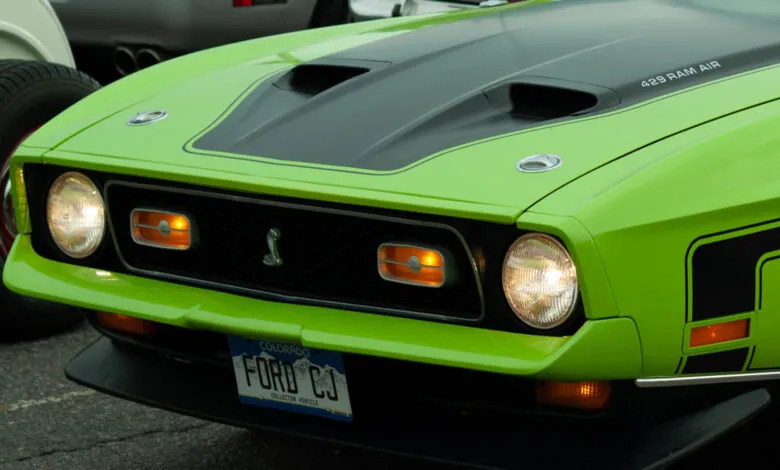
When a single magazine review can define a car’s reputation for decades, the details matter immensely. This is precisely what happened with a famous 1971 comparison test by Motor Trend, which pitted a Boss 351 Mustang against a Mach 1 equipped with the mighty 429 Cobra Jet engine. On paper, the contest seemed lopsided in favor of the larger engine, but the stopwatch told a different story, sparking a debate that enthusiasts still argue over today. The results appeared to show a clear winner, but a closer look at the specifications reveals a test that was far from an even match.
The acceleration numbers from that test are legendary. The Boss 351 sprinted from zero to sixty miles per hour in just 5.8 seconds and blitzed the quarter-mile in 13.8 seconds at 104 mph. Meanwhile, the 429 Cobra Jet, rated at a formidable 370 horsepower, lagged behind with a 6.5-second zero-to-sixty time and a quarter-mile pass of 14.61 seconds at 96.8 mph. On the surface, this suggested the smaller, high-revving Boss engine was vastly superior, making the big-block Cobra Jet look almost lethargic.
However, the mechanical specifics explain this performance gap. The comparison was fundamentally flawed because the two cars were not equipped similarly. The Boss 351 benefited from a steep 3.91:1 rear axle ratio and a close-ratio four-speed manual transmission, allowing the driver to keep the engine in its optimal power band. Conversely, the 429 Cobra Jet test car was fitted with a tall 3.25:1 rear gear and a three-speed Cruise-O-Matic automatic transmission, which sapped power and hampered acceleration. Furthermore, the Mach 1 was burdened with power-robbing air conditioning, an option not present on the spartan Boss 351.
The test was essentially a matchup between a lightweight, track-focused machine and a heavier, more comfortably equipped grand tourer. The Boss 351 was engineered for rapid acceleration and precise handling, while the 429 Cobra Jet Mach 1 was built for effortless highway cruising with ample torque. Judging them by the same stopwatch metrics ignored their intended purposes. The Motor Trend article created a lasting perception that the Boss 351 was the outright performance champion, but it did so without acknowledging the significant handicaps placed on the big-block car. For many, this single test cemented the Boss 351’s legend while unfairly tarnishing the 429 Cobra Jet’s capabilities, a narrative that has persisted for over fifty years.
(Source: JALOPNIK)