Adata XPG Mars 980 Blade 2TB SSD: Affordable Luxury Storage
▼ Summary
– The Adata XPG Mars 980 Blade is an affordable PCIe 5.0 SSD that delivers next-generation speeds while being the lowest-priced drive in its class.
– To achieve its low cost, the drive uses older, 232-layer Micron TLC flash memory, which results in some performance quirks and prevents it from being a top-tier performer.
– It offers strong sequential read/write speeds up to 14,000/13,000 MB/s and comes with a five-year warranty and higher-than-typical endurance ratings.
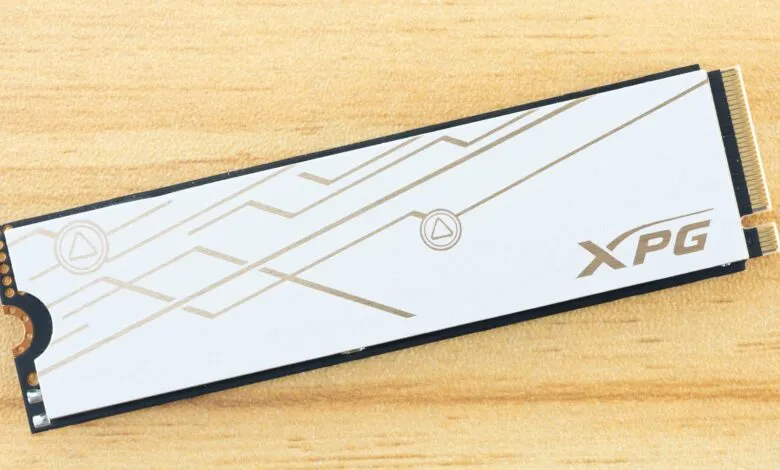
– The drive features a simple, double-sided design with a basic heatspreader, making it more universally compatible than previous models with bulky coolers.
– Its pricing and value are highly competitive, but the article cautions that market volatility means better deals on comparable drives may appear.
Finding a high-performance PCIe 5.0 SSD that doesn’t break the bank can feel like a challenge. The Adata XPG Mars 980 Blade emerges as a compelling solution, delivering next-generation speed at a price point that makes premium storage surprisingly accessible. It achieves this by making a strategic compromise on the type of flash memory used, opting for a proven, older generation to keep costs down. The result is a drive that excels in power efficiency and offers strong sequential performance, all wrapped in a simple, effective heatspreader. For users looking to step into the PCIe 5.0 era without the usual premium, this drive warrants serious consideration.
Available in 1TB, 2TB, and 4TB capacities, the Mars 980 Blade’s pricing is a major part of its appeal. At roughly $160 for the 2TB model reviewed, it undercuts many competitors in its class. This aggressive pricing is especially notable given recent trends in the storage market. While costs and availability can fluctuate, this drive currently represents one of the most affordable entry points to PCIe 5.0 performance. It even comes in cheaper than some drives with similar core hardware, like the Lexar NM1090 Pro.
On paper, the performance specifications are impressive for the price. The drive is rated for sequential read speeds up to 14,000 MB/s and writes up to 13,000 MB/s, with random performance reaching 2,000K read and 1,650K write IOPS. Adata backs the drive with a robust five-year warranty and an endurance rating of 740 terabytes written per terabyte of capacity, which is above the industry standard. This higher endurance could be a deciding factor for power users who consistently move large amounts of data.
The physical design is refreshingly straightforward. The drive features a basic, double-sided heatspreader, a welcome departure from some overly bulky solutions that can cause compatibility issues. While a single-sided design is often preferred for tight spaces, the Mars 980 Blade is clearly aimed at desktop systems where its form factor is less of a concern. The controller’s heat is the primary concern, and the included spreader should be sufficient for most scenarios, even in some laptops.
Underneath that spreader lies the hardware that defines its performance profile. The drive uses the capable Silicon Motion SM2508 controller, a power-efficient and popular choice for this generation. It’s paired with 2GB of Samsung DDR4 DRAM. The key component choice is the NAND flash: Micron’s 232-layer TLC. This is a previous-generation flash that doesn’t offer the peak performance of newer 276-layer or competing BiCS8 memory. This is the trade-off that enables the attractive price. It provides ample bandwidth for strong sequential numbers but introduces some performance characteristics that prevent it from being a top-tier contender in raw speed.
This combination positions the Mars 980 Blade smartly in the market. It handily outperforms older PCIe 5.0 drives based on controllers like the Phison E26, while costing significantly less than drives equipped with the latest flash. The double-sided design and simpler cooling solution further signal its budget-conscious engineering. In essence, it’s built to deliver the essential Gen 5 experience, excellent sequential throughput and low power draw, at the lowest possible cost.
For software, Adata provides the standard XPG SSD Toolbox for drive management, health monitoring, and firmware updates. The company often bundles a utility for drive cloning and backup as well, which is helpful during system upgrades.
Ultimately, the Adata XPG Mars 980 Blade succeeds in its mission. It is not the absolute fastest drive you can buy, but it brings PCIe 5.0 speeds within reach for many more users. If your priority is blazing sequential transfer rates for large files and games, coupled with strong power efficiency and a great warranty, all for a surprisingly low price, this drive makes a very strong case for itself. It’s a pragmatic choice that offers luxury-level performance on a sensible budget.
(Source: Tom’s Hardware)