Beatles References in Science: Scientists Can’t Let It Be
▼ Summary
– A new study published in PLoS ONE identifies The Beatles as the most frequently referenced musical group in scientific literature.
– Researchers found playful allusions to Beatles lyrics in various fields, such as quantum computing and Long COVID research.
– Previous studies highlighted scientists’ habit of inserting Bob Dylan lyrics into papers, often as part of long-running bets.
– Comparative analyses show that while Dylan was popular in earlier decades, The Beatles maintain a dominant presence in modern biomedical references.
– The pervasive influence of The Beatles extends beyond citations to naming conventions in drug discovery challenges and NASA projects.
The Hidden Pop Culture in Academic Journals
Research papers are often viewed as sterile documents, but scientists possess a playful side that frequently breaks through the formal tone. This creativity is most evident in the use of popular culture references, particularly song lyrics, within academic publications. A new study published in the journal PLoS ONE identifies The Beatles as the most commonly cited musical group in scientific literature, surpassing other iconic bands in frequency and variety.
“Some of these are genuinely brilliant,” said co-author Gabriel Budel of Delft University of Technology in the Netherlands. “‘The lung and winding road’ is a paper on Long COVID that changes one vowel of the more than 3,000 references they found to The Beatles. ‘Here comes the SU(N)’ turns ‘Here Comes the Sun’ into a quantum computing paper about mathematical groups. Someone was having a very good day at their desk.”
A History of Musical Bets and References
The tradition of embedding music in science dates back years. In 2014, researchers at the Karolinska Institute in Sweden disclosed that they had been intentionally inserting Bob Dylan lyrics into their work as part of a long-standing wager. Their first major insertion appeared in a 1997 Nature review titled “Nitric Oxide and inflammation: The answer is blowing in the wind.” This prank led to a 2015 investigation into Dylan’s presence in biomedical texts, revealing that “The Times They Are A’Changin’” and “Blowing in the Wind” were the most frequently referenced songs.
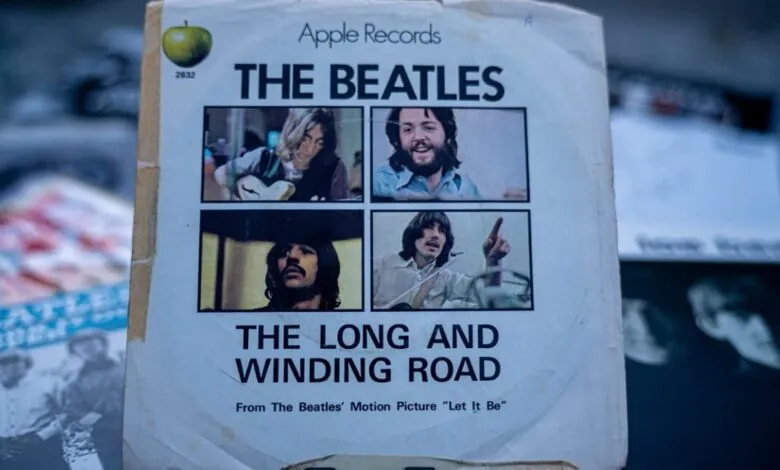
Meteorologists and climate scientists also showed a fondness for Dylan’s work. However, when a 2017 study compared the prevalence of Dylan versus The Beatles in biomedical literature, The Beatles emerged as the clear winner. This trend continued with a 2023 analysis focusing on The Clash. That research highlighted the widespread use of “Should I Stay or Should I Go,” which dominated with 408 references. By comparison, The Beatles’ “The Long and Winding Road” appeared 236 times, while Dylan’s “The Times They Are A’Changin’” reached 128 citations.
Permeating Scientific Fields
Budel and his colleagues joined the fun by documenting the pervasive influence of their favorite band across various scientific disciplines. As avid fans, the authors noticed how deeply The Beatles had integrated into the scientific lexicon. A search of the Nature website in July 2025 alone uncovered 116 articles specifically mentioning the band.
In the pharmaceutical industry, the difficulty of developing new drugs that offer significantly greater benefits than existing treatments is colloquially known as the “better than The Beatles” problem. Even space agencies have adopted the band’s legacy. NASA named a project investigating ice-cored hills, known as pingos, after the group. The initiative, called Pingo STARR (SubTerranean Aquifer Reconnaissance and Reconstruction), serves as another testament to the enduring cultural footprint of The Beatles in the world of science.
(Source: Ars Technica)