Wizards of the Coast Announces New Trading Card Game
▼ Summary
– Wizards of the Coast announced a new trading card game called Mood Swings, designed by Magic: The Gathering head designer Mark Rosewater, who first conceived the idea in 1998.
– Mood Swings is a fast, simple game for 2–4 players where players cast emotions at each other, with games lasting 5–10 minutes in a first-to-three format.
– The game has no resource system, uses a single rule card, and relies on dice motifs for all numerical values, with each card’s interactions explained in one or two sentences.
– Mood Swings is sold exclusively through Wizards’ Secret Lair platform as complete 45-card decks for $25, with randomized card selections from a pool of 133 cards, rather than traditional boosters.
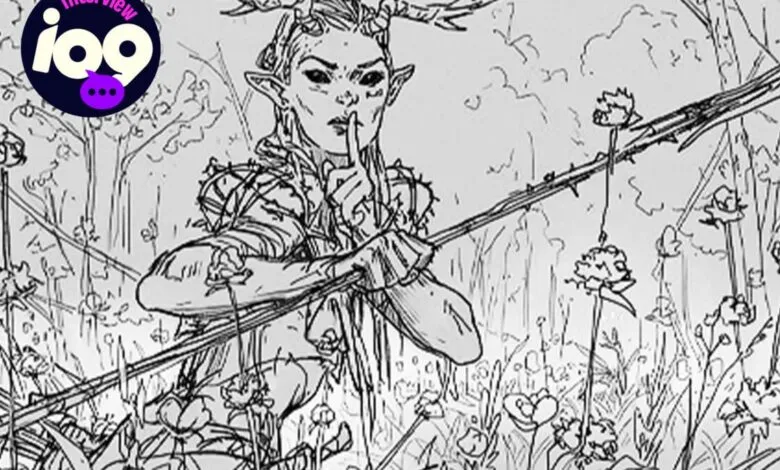
– The cards reuse “sketched” versions of artwork from published Magic cards to evoke an experimental prototype state, though future editions may use original art.
After decades of dominating the trading card game scene with Magic: The Gathering and, briefly, the Pokémon TCG, Wizards of the Coast is finally stepping outside its comfort zone. While Magic continues to thrive through constant expansions and crossovers, the publisher has now officially revealed its next major project: a brand new trading card game called Mood Swings, designed by longtime Magic head designer Mark Rosewater.
The announcement ends weeks of speculation surrounding a “redacted” preview planned for this weekend’s MagicCon in Las Vegas. During a recent Zoom briefing with press, Rosewater shared the game’s surprisingly long history. “I originally came up with Mood Swings in 1998,” he explained. “And for 28 years, I’ve been trying to make this game.”
For dedicated Magic fans, Mood Swings isn’t entirely new territory. Rosewater has spent much of the past three decades not only pitching the idea to Wizards but also dropping hints about a radically different TCG experience. He contrasted it directly with Magic’s complexity. “Magic is an amazing, amazing game,” he said. “But Magic is a complicated game… we were talking about the idea of complexity in gaming. And the idea is, some games are so complex you kind of have to play them a bunch of times. Others… you play it once, you understand the game.”
He continued, “It’s a spectrum. I think Richard [Garfield] had three genius ideas when he made Magic. One is the color pie, which I love. One is the mana system. And one is the concept of a trading card game. So I was looking at trading card games, and I said ‘well, obviously Magic’s on the complicated side. What’s on the other side?’”
What Rosewater found on the other side is Mood Swings, a game designed for two to four players (though it can scale up). Players cast emotions at each other, counting their values to see who holds more. Matches follow a first-to-three format and are built to finish in roughly five to ten minutes. Complexity has been stripped away to make the game strategic yet instantly accessible, even for those unfamiliar with TCG mechanics.
The emotional theme was a deliberate choice. “I wanted to make something that’s a little more universal, that was something that everybody could relate to,” Rosewater said. “My mom is a psychologist. In college I wrote a play called Leggo My Ego, where all the characters were emotions… there’s a lot of top-down design, the cards represent what they are, and I just liked emotions as being something super universal that,a lot of people know what fantasy is, but everybody knows what happiness is, or sadness, or just, you know, the human experience. That’s another fun part of the game, the game is a little bit lighter [compared to Magic’s tone].”
The mechanics are refreshingly simple. There is no resource system to manage. Each deck includes a single rule card explaining the entire concept, and only one deck is needed to play. All numerical values use a dice motif for clarity, and every card explains its interactions in a sentence or two. A color system groups moods together, but these colors are unnamed, avoiding the named color pie of Magic. The cards themselves reuse “sketched” versions of existing Magic artwork to evoke a prototype feel, though Rosewater noted that future editions could feature entirely original art.
Even the trading card game model itself has been reimagined. Mood Swings will not have traditional booster packs or preconstructed decks. It will not be sold in local game stores. Instead, it will be available exclusively through Wizards’ Secret Lair platform, though with much broader availability than the platform’s usual limited-run Magic cards. The game will be sold as a “complete” experience in individual decks of 45 cards. However, each deck contains a randomized selection from the full set of 133 cards: 23 commons (from a pool of 48), 14 uncommons (of 40), 6 rares (of 30), and 2 mythics (of 15). This means deck building and trading are optional but still possible for those who enjoy them.
For Rosewater, Mood Swings is the culmination of a decades-long dream. “Normally when I make a Magic set, I work about three years ahead of time,” he said. “It’s very exciting when it comes out, because I’ve been waiting for years for people to see all the work I’ve done. [Mood Swings] has truly been a passion project for me. I came up with it in 1998, and the reason that I didn’t give up on it is that I really, really, to the core of my soul, believed in it.”
He added, “I tried every which way that you could imagine to get the game made. I did not give up on it. Aaron Forsythe, my boss [and vice president of Magic design at Wizards], says that my superpower is persistence-slash-stubbornness. I’m really, really, really excited.”
Mood Swings decks will be available for $25 beginning June 1 through Secret Lair. The game’s extended rules are already online for those eager to learn more.
(Source: Gizmodo.com)