Fed Reserve CISO: Balancing Cyber Risk & Transparency for Trust
▼ Summary
– The Federal Reserve uses a scenario-based, intelligence-driven approach to assess cyber threats that could disrupt financial stability, prioritizing risks like ransomware and supply chain compromises.
– Transparency and security are balanced through governance engagement, rigorous access controls, and continuous monitoring to maintain public trust while protecting sensitive data.
– Operational resilience at the Fed is measured by recovery times, detection capabilities, and cultural shifts, with a 70% improvement achieved by aligning security with business agility.
– The cyber threat intelligence sharing ecosystem needs more actionable data for smaller organizations, standardized formats, and bidirectional sharing to enhance collective threat response.
– Third-party and cloud service risks are managed through centralized vendor assessments, continuous monitoring, and vendor-specific contingency plans to ensure resilience.
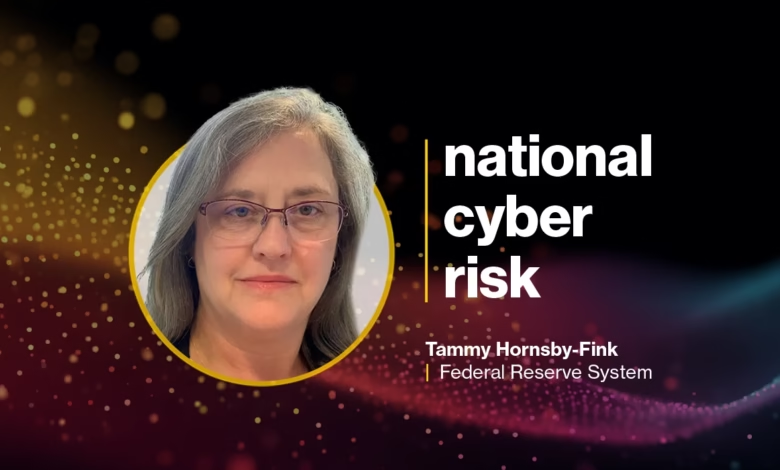
Tammy Hornsby-Fink, Chief Information Security Officer at the Federal Reserve System, sheds light on the organization’s proactive approach to cybersecurity, emphasizing resilience, collaboration, and strategic risk management in safeguarding financial stability.
When evaluating cyber threats with national implications, the Federal Reserve adopts a scenario-driven, intelligence-backed methodology. This involves analyzing emerging risks targeting financial services and critical infrastructure while maintaining close partnerships with federal agencies and industry leaders. A structured cyber risk register helps prioritize threats by assessing their potential operational and systemic impacts, whether ransomware, supply chain vulnerabilities, or cloud service failures. Regular simulations and exercises validate response strategies, ensuring agility in an unpredictable threat environment.
Balancing robust security with transparency presents unique challenges for institutions like the Fed. Hornsby-Fink views these priorities as synergistic rather than conflicting. Transparency is embedded in governance through active engagement with oversight bodies and stakeholders, while stringent controls, such as data classification and continuous monitoring, protect sensitive information. This dual focus reinforces public trust without compromising security.
Operational resilience is measured by the Fed’s ability to sustain critical functions despite disruptions. Key metrics include recovery time objectives, threat detection speed, and the robustness of backup systems. Beyond technology, resilience hinges on cultural alignment, integrating cybersecurity with business agility has reportedly boosted operational flexibility by 70%.
While threat intelligence sharing has improved, gaps remain. Hornsby-Fink advocates for more actionable insights tailored to resource-constrained organizations, standardized data formats, and stronger legal safeguards for contributors. Trusted cross-sector relationships, she notes, are vital for timely, bidirectional intelligence exchange.
Managing third-party and cloud risks demands a holistic vendor oversight program. The Fed employs centralized threat assessments, continuous monitoring, and contingency planning, particularly for cloud providers, to mitigate risks. Vendor-specific exit strategies ensure swift transitions if risk thresholds are breached.
For CISOs in critical infrastructure, Hornsby-Fink’s advice centers on resilience, people, and preparedness:
- Prioritize adaptability over mere compliance.
- Invest in workforce development through training and mentorship.
- Map critical dependencies to avoid blind spots during crises.
- Conduct regular response drills to build organizational confidence.
Leadership, she emphasizes, hinges on influence and communication as much as technical prowess. By fostering collaboration and proactive planning, security teams can navigate evolving threats while maintaining operational continuity.
(Source: HelpNet Security)


