Netflix Enters the Big Leagues
▼ Summary
– Warner Bros. has been acquired by Netflix in an $83 billion deal, marking Netflix’s evolution from a tech startup to a dominant Hollywood studio owner.
– The deal grants Netflix major assets like HBO, DC Studios, and a vast library of franchises, significantly expanding its operational footprint as a studio.
– Warner Bros. Discovery was forced to sell due to financial struggles, including debt from past mergers and declining cable TV profits, making a sale a viable option.
– Unlike previous Warner Bros. owners, Netflix is an established entertainment power with its own production infrastructure, seeking proven franchises to bolster its content.
– The merger raises concerns about industry consolidation, potential layoffs, theatrical release strategies, and future price increases for streaming customers.
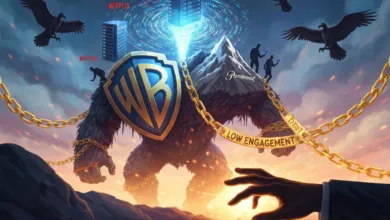
The entertainment landscape is poised for a seismic shift with Netflix’s landmark $83 billion acquisition of Warner Bros. This move catapults the streaming giant into the upper echelon of Hollywood, transforming it from a dominant platform into a full-fledged legacy studio powerhouse. The deal, pending regulatory approval, grants Netflix control over a vast portfolio including HBO, DC Studios, and Warner Bros.’ formidable film and television production arms. This strategic purchase provides Netflix with an immediate library of iconic franchises like Harry Potter and Game of Thrones, addressing a critical need for sustainable, subscriber-retaining intellectual property as some of its own flagship series conclude.
Warner Bros. Discovery’s decision to split and sell the studio culminates a period of significant financial strain. Despite paying down a substantial portion of the massive debt inherited from the AOL-Time Warner merger, the company’s struggling linear cable assets and a downgraded credit rating painted a precarious picture. A series of misguided rebrands and layoffs left selling to the highest bidder as one of the few viable paths to satisfy shareholders. While these underlying challenges will now transfer to Netflix, the dynamics of this acquisition differ markedly from Warner Bros.’ past mergers with companies like AOL and AT&T.
Unlike previous corporate owners, Netflix is already an entrenched Hollywood entity. It possesses not just a distribution platform, but a mature production infrastructure. This acquisition is less about a tech company reinventing itself and more about a streaming leader consolidating its empire. Netflix’s track record in building its own enduring franchises has been mixed, making Warner Bros.’ deep bench of proven IP an incredibly valuable asset. The streamer is effectively buying a proven engine for hit creation.
Inevitably, such a massive consolidation brings uncertainty, particularly for the workforce. Layoffs are anticipated as Netflix streamlines operations and eliminates redundancies. A more complex question surrounds release strategies. Netflix has historically prioritized streaming, offering only limited theatrical runs to qualify for awards. Warner Bros., however, has recent box office successes like A Minecraft Movie. Netflix leadership has stated it “expects” to continue theatrical releases for Warner Bros. films, but co-CEO Ted Sarandos has hinted at shortening theatrical windows to get content to subscribers faster, a potential point of contention for filmmakers and theater chains.
Another significant shift involves production methods. Netflix has been openly enthusiastic about utilizing generative AI to curb costs. While not mandatory for partners, the technology’s role will likely expand across the newly combined studio’s sprawling slate of projects. The broader industry impact, however, may be the most profound. Netflix effectively replaces Warner Bros. as one of the traditional “Big Five” studios, altering competitive dynamics. Consumers may feel this directly through potential price increases, justified by a more “premium” service, and the uncertain fate of the HBO and Max brands, which could eventually be folded into the Netflix interface.
This merger marks Netflix’s definitive arrival as a permanent Hollywood titan. While the integration will cause turbulence and some negative outcomes, the company’s deliberate pursuit of Warner Bros. suggests this is not a speculative gamble but a strategic conquest. Netflix has entered the big leagues; the challenge now is to successfully manage the immense responsibility and legacy it has just purchased.
(Source: The Verge)