How GM’s Innovative Quadrasteer Pickup System Became a Massive Failure
▼ Summary
– Four-wheel steering systems debuted in the late 1980s with Nissan’s HICAS, Mitsubishi’s 4WS, and Honda’s 4WS in the 1988 Prelude.
– These systems turn rear wheels in the same direction as the front for high-speed stability or opposite for low-speed maneuverability.
– The trend faded because early four-wheel steering offered inconsistent handling improvements and was expensive, like Honda’s $1,300 option.
– General Motors introduced Quadrasteer in the early 2000s for its GMT800 trucks, which greatly reduced the turning diameter to 37.4 feet.
– Quadrasteer’s high cost made it unappealing to consumers, despite its improved maneuverability for parking and towing.
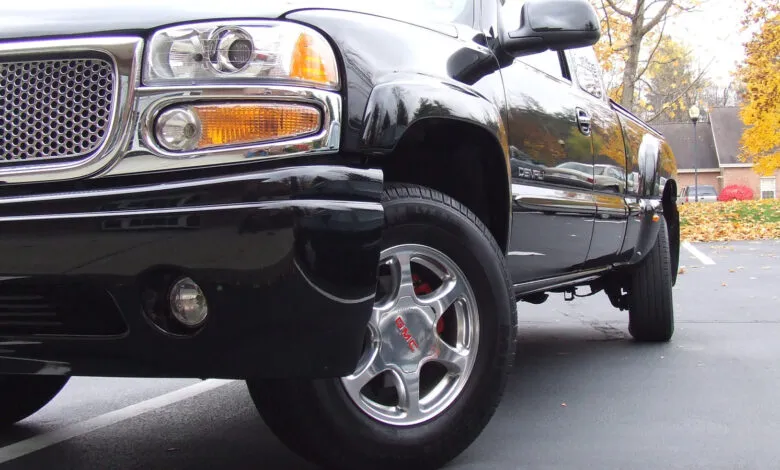
General Motors took a bold swing in the early 2000s by introducing Quadrasteer, a four-wheel steering system for its GMT800 pickup trucks and SUVs. Developed alongside Delphi Automotive, the technology was a marvel of engineering. It became standard on the 2002 GMC Sierra Denali, dramatically shrinking its turning circle. While conventional trucks of that era needed 43.7 to 52.3 feet to turn around, the Quadrasteer-equipped Sierra managed just 37.4 feet. This made parking and towing far less stressful. Yet, despite its clear advantages, the system was a commercial flop.
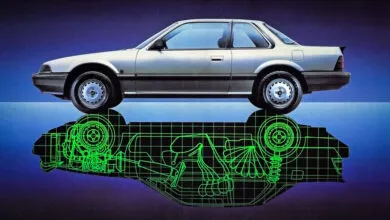
The idea of steering all four wheels wasn’t new. Nissan kicked things off in 1986 with the R31 Skyline GTS and its High Capacity Actively-controlled Suspension (HICAS). Mitsubishi followed in 1987 with the Galant VR-4, pairing a turbocharged four-cylinder engine with full-time 4WD and its own four-wheel steering (4WS). Then, in 1988, Honda brought Steering Angle Sensing Honda Four-Wheel Steering System (Honda 4WS) to the U. S. with the Prelude, making it the first American-market vehicle with the feature.
Each system had its own quirks, but the core principle was the same. At low speeds, the rear wheels turn opposite the fronts for tighter turning. At high speeds, they turn in the same direction to boost stability. However, the early buzz faded fast. Drivers found the handling improvements inconsistent compared to standard two-wheel steering. The cost was also a dealbreaker. Honda’s 4WS option added $1,300 to a Prelude that started under $20,000. That was a steep premium for a feature that didn’t always deliver a night-and-day difference.
GM hoped Quadrasteer would succeed where others had struggled. The system was genuinely impressive, especially for a full-size pickup. But the price tag was its undoing. Consumers balked at the extra expense, and the option never gained the traction GM needed. By the time the GMT800 platform was phased out, Quadrasteer had quietly disappeared, a reminder that even brilliant innovation can fail when the market isn’t ready to pay for it.
(Source: Jalopnik)