Invisalign: The World’s Largest 3D Printer User
▼ Summary
– Align Technology is the $12 billion company behind Invisalign, a clear plastic aligner system that straightens teeth as an alternative to traditional braces.
– The company is undergoing a major manufacturing shift to directly 3D print its aligners, which could lower costs, increase affordability, and make it the world’s largest user of 3D printers.
– Under CEO Joe Hogan, a manufacturing veteran, Align’s stock has tripled, it handled a record 2.6 million cases last year, and has served 22 million patients globally.
– Align controls nearly the entire treatment process, from its dental scanners and AI treatment-planning software to the machines that produce the aligners and retainers.
– Invisalign holds a dominant 60-70% share of the global clear aligner market, with Align generating roughly $4 billion in annual revenue primarily from aligner and scanner sales.
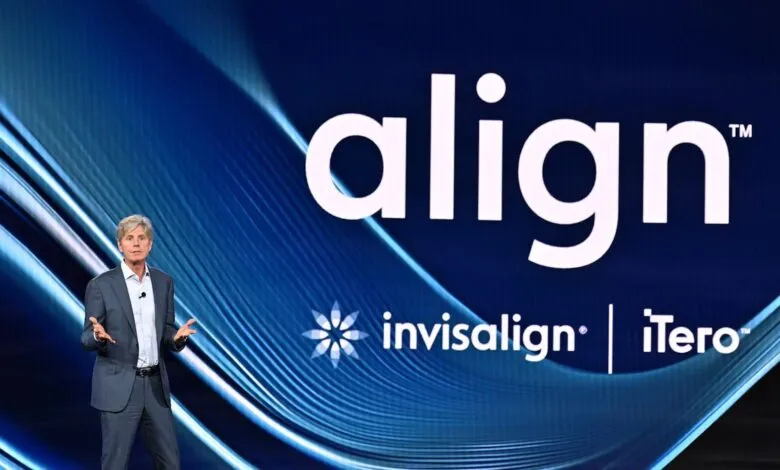
When people ask Joe Hogan where he works, he tells them Align Technology. The inevitable follow-up question, “What’s that?” gives him a chance to explain the company behind Invisalign, the clear plastic aligners that have transformed orthodontic treatment for millions. Hogan sees the results of that work in countless smiles, and he’s focused on a manufacturing shift that could make those smiles accessible to even more people. The company is moving to directly 3D print its aligners, a change that promises greater efficiency and could solidify its position as the world’s largest user of industrial 3D printing technology.
This overhaul represents the most significant manufacturing change since Align’s founding 29 years ago. The current process involves creating molds, which Hogan describes as longer and more wasteful. Shifting to direct 3D printing aims to streamline production, potentially lowering long-term costs. This efficiency could make treatment more affordable, expanding Invisalign’s customer base and boosting the company’s profitability. For Hogan, a manufacturing veteran with deep expertise in plastics and 3D printing, this transition is a logical next step.
Hogan’s tenure as CEO has seen remarkable growth. Company shares have tripled in value as Align outlasted early competitors and solidified its market dominance. Last year, the company managed a record 2.6 million cases, including 936,000 young patients. Globally, over 22 million people have used its products. Align maintains tight control over its ecosystem, developing the intraoral scanners that map teeth, the AI software that plans treatments, and the proprietary machines that fabricate the aligners. This vertical integration forms what Hogan believes is a foundation for decades of continued expansion.
In a recent conversation, Hogan reflected on his personal experience with the product. When he joined the company a decade ago, he knew little about dentistry. To educate himself, he immediately began Invisalign treatment. He admits he isn’t perfect about wearing his retainers, unlike his wife, who diligently follows the protocol. “I tell my wife sometimes, ‘Kate, you don’t have to wear them every night, like every other night,’” Hogan shared. “She goes, ‘You’re not a doctor, Joe. You just run the company.’”
Regarding market position, Hogan is clear about Align’s scope. “We’re not a dental company. We’re an orthodontic company,” he states. With annual revenue around four billion dollars, Align dominates the clear aligner segment, holding an estimated 60 to 70 percent of that global market. When measured against the entire orthodontic industry, which includes traditional wire and bracket braces, Hogan asserts there is no close competitor. The business breaks down to roughly three billion dollars in aligner sales, eight hundred million from scanners, and about three million from retainers, a scale unmatched by any other firm in the orthodontic space.
(Source: Wired)