Tesla Q4 Sales Plummet, Missing Expectations
▼ Summary
– Tesla’s Q4 2025 vehicle deliveries fell 15.6% year-over-year, missing Wall Street expectations and marking the company’s second consecutive annual sales decline.
– The sales drop is attributed to rising global EV competition, the expiration of a federal tax credit, and brand alienation from CEO Elon Musk’s divisive political activities.
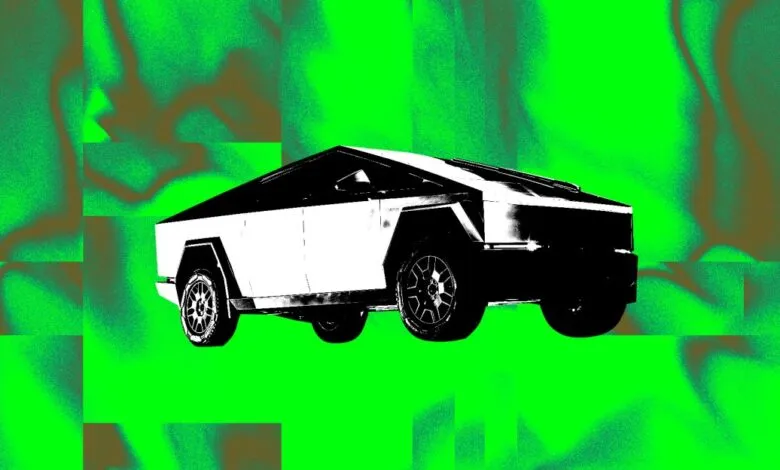
– Sales of Tesla’s “other” vehicles, including the Cybertruck, Model S, and Model X, plummeted by 50.7% in Q4 2025.
– Despite current struggles, CEO Elon Musk predicts a future rebound based on the development of AI-driven projects like robotaxis and humanoid robots.
– Tesla’s future plans, including Musk’s newly approved massive pay package, depend on achieving highly ambitious milestones like producing millions of robots and robotaxis.
Tesla’s fourth-quarter vehicle sales for 2025 fell significantly short of Wall Street expectations, marking a continuation of the company’s recent struggles. The electric vehicle pioneer reported delivering 418,227 vehicles between October and December, a sharp 15.6% decline from the same period in 2024. This result missed analyst forecasts and contributed to a full-year sales total of 1.636 million vehicles, an 8.5% drop compared to the previous year. This represents the second consecutive annual sales decrease for the automaker, signaling a challenging phase as it contends with intensifying global competition and shifting market dynamics.
The sales slump was not entirely unexpected, but its severity highlights the mounting pressures on Tesla’s business. Production figures also dipped, with the company manufacturing 1.654 million vehicles in 2025, a 6.7% year-over-year reduction. Notably, sales in the “other” vehicle category, which includes the Model S, Model X, and the Cybertruck, collapsed by over 50% in the fourth quarter. With only 11,642 units delivered in that segment, it suggests that the much-hyped Cybertruck has failed to generate sustained sales momentum, though Tesla does not provide a specific model breakdown.
Several key factors are driving this downturn. Legacy automakers in the United States, Europe, and China have aggressively rolled out more affordable electric models, eroding Tesla’s once-dominant market position. Concurrently, the expiration of federal EV tax credits in key markets has removed a crucial purchasing incentive for many buyers. Beyond market forces, the company faces significant brand image challenges. CEO Elon Musk’s increasingly polarizing public persona and political activities have alienated a portion of Tesla’s traditional customer base, adding a unique headwind to its sales efforts.
Musk has publicly acknowledged that the company is navigating a difficult period, citing macroeconomic conditions and the phasing out of incentives. However, he pins Tesla’s long-term recovery on the successful development of its ambitious artificial intelligence and automation projects. These include the deployment of a fully self-driving robotaxi network and the production of humanoid robots, technologies that have long underpinned the company’s lofty market valuation. Musk has made bold predictions, suggesting that half of the U.S. population could have access to Tesla robotaxis by the end of 2025, though current testing remains limited to small fleets in select cities.
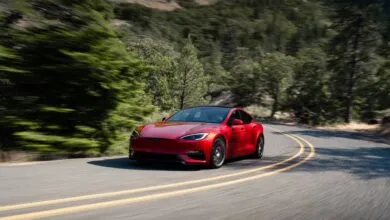
This sobering sales report arrives shortly after Tesla shareholders re-approved a monumental compensation package for Musk, which could potentially make him the world’s first trillionaire. The package is contingent upon achieving extraordinary milestones, such as producing millions of robots and robotaxis and creating trillions of dollars in shareholder value. Yet these futuristic goals stand in stark contrast to the present reality. Tesla is currently grappling with an aging vehicle lineup and a tarnished brand, despite recent attempts to stimulate demand by releasing cheaper variants of its Model 3 and Model Y. For now, these more affordable options have not been enough to halt the company’s declining sales trajectory.
(Source: The Verge)