Google’s $5,000 Secret: Measuring Incrementality with Bayesian Testing
▼ Summary
– Google Ads has made incrementality testing accessible to more advertisers by lowering budget requirements, now possible with as little as $5,000 in media spend.
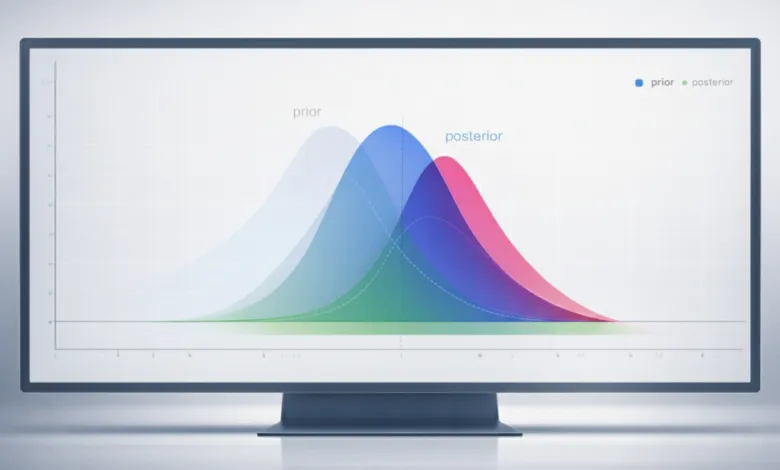
– This is enabled by a shift from traditional frequentist A/B testing to a Bayesian methodology, which uses probability and prior knowledge instead of requiring statistical certainty.
– Frequentist tests often fail with smaller budgets, as they demand large sample sizes for conclusive, statistically significant results.
– Google’s Bayesian approach leverages its vast historical campaign data to inform priors, stabilizing results and providing directional insights even with limited test data.
– This method outputs probabilistic likelihoods (e.g., an 80% chance of lift), which are more practical for decision-making than the binary outcomes of traditional testing.
Measuring the true incremental impact of advertising campaigns is now more accessible than ever, thanks to significant methodological advancements. Google has effectively lowered the financial barrier for reliable lift measurement, enabling advertisers to conduct meaningful incrementality tests with budgets as modest as $5,000. This shift moves beyond traditional constraints, offering a practical solution for businesses operating without enterprise-level media spends. The core innovation lies not in inflated claims, but in a sophisticated application of Bayesian statistical principles, which provides a more nuanced and actionable view of campaign performance.
For a long time, the marketing community operated under the assumption that trustworthy incrementality analysis demanded substantial budgets, extended timeframes, and a readiness to accept ambiguous outcomes. Conventional A/B testing, grounded in frequentist statistics, often left advertisers in a difficult position. These methods rely on concepts like p-values and rigid sample sizes to declare a result “statistically significant.” When working with limited data, a common scenario for many, these tests frequently fail to provide clear, conclusive evidence, leaving promising performance lifts categorized as potential random noise.
Consider a practical scenario with a $5,000 test budget, a $2 average cost-per-click, and a target cost-per-acquisition around $100. A standard split might yield 1,250 clicks per variant. If the control group generates 25 conversions (a 2% rate) and the treatment generates 30 (a 2.4% rate), the observed 20% lift in conversions looks encouraging. However, a frequentist statistical test would likely return a high p-value, indicating the result is not statistically significant. The advertiser is left with spent budget and suggestive data, but no definitive guidance, a frustrating and common dead end.
Bayesian testing fundamentally reframes the question from one of absolute certainty to one of practical probability. Instead of asking, “Is this result definitively proven?” it asks, “Given what we observe and what we already know, how likely is it that this improvement is real?” Applying a Bayesian model to the same $5,000 test data doesn’t magically create proof, but it yields a more decision-useful insight: there might be a 75-80% probability that the treatment is genuinely better. This probabilistic output allows for informed, risk-aware next steps, such as cautiously scaling a winning tactic or extending a test, even when traditional metrics are inconclusive.
The efficacy of these lower-budget tests hinges on two critical factors: informative prior knowledge and massive scale. This is where Google’s unique position becomes a powerful advantage. Unlike frequentist models that analyze test data in isolation, Bayesian methods incorporate prior beliefs. Google can leverage its vast repository of historical campaign performance data to establish informed starting points, or “priors,” for a new test. This prior knowledge acts as a stabilizing force, helping to interpret sparse early data more reliably.
This approach is not entirely new to Google’s ecosystem; it’s the same foundational principle behind Smart Bidding algorithms. These systems don’t start every campaign from zero. They use aggregated performance data across devices, locations, times, and verticals to set intelligent initial bids, which are then refined with real-time data. Google’s incrementality testing applies a similar logic, allowing a modest test to benefit from the learned patterns of countless similar campaigns that preceded it.
A key strength of the Bayesian framework is its dynamic nature. Initially, when test data is limited, the model leans more heavily on prior information to prevent overreaction to statistical noise. However, as the test accumulates its own conversion data, this observed evidence gradually outweighs the influence of the prior. With sufficient volume, the conclusion is driven almost entirely by the test’s actual results, ensuring the system remains responsive to genuine performance signals rather than being locked into historical assumptions.
While powerful, this methodology does introduce considerations for advertisers. Questions regarding the transparency of the priors used, the point at which they become negligible, and safeguards against irrelevant historical data influencing results are important. Advertisers should apply critical judgment when interpreting these probabilistic lift estimates, viewing them as robust directional guidance rather than immutable truth.
The pursuit of rigid statistical significance can be a limiting factor for modern marketers who must make timely decisions with constrained resources. Bayesian incrementality testing provides a more practical framework for navigating uncertainty, speaking directly to the risk-based nature of budget allocation decisions. When Google presents a lift estimate from a reasonably sized test, it represents a sophisticated synthesis of mathematics and aggregated market intelligence. This capability empowers a broader range of advertisers to move beyond guesswork, making smarter, more confident optimization decisions grounded in a deeper understanding of their campaign’s true incremental value.
(Source: Search Engine Land)