This $1,500 Robot Cooks Dinner While You Work
▼ Summary
– The Posha is a $1,500 countertop robot chef that autonomously cooks meals using AI vision, a robotic arm, and automated dispensers, requiring a $15 monthly subscription.
– It successfully produces high-quality, flavorful meals and saves significant time for users, allowing them to prepare ingredients and then leave the device to cook.
– Key drawbacks include its high cost, mandatory internet connection to start recipes, large countertop footprint, and occasional software bugs.
– The device requires user prep for ingredients and cleaning, and its recipe library, while over 1,000 strong, is currently strongest in Indian and Italian cuisines.
– It represents a glimpse into a future of home kitchen automation, reliably delivering restaurant-quality results but functioning as a niche, first-generation luxury product.
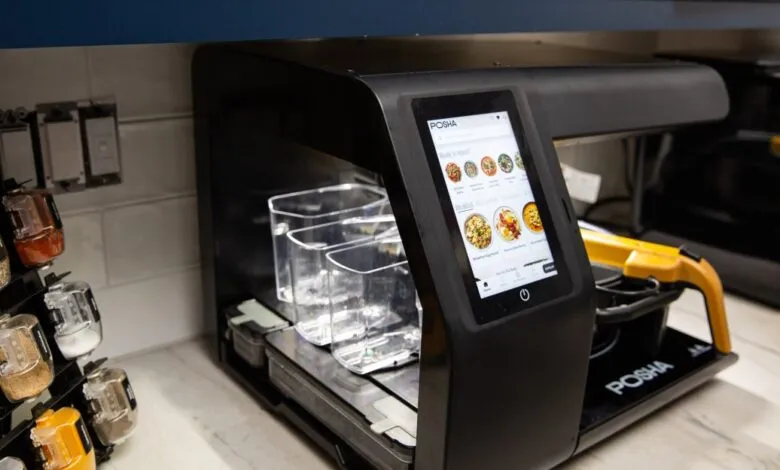
The enticing aroma of garlic and cheese drifting through the house isn’t coming from a frantic cook but from a fully autonomous robot chef quietly preparing dinner in the kitchen. For busy families, this represents a potential revolution in how home-cooked meals happen, trading hours at the stove for a few minutes of prep. The Posha is a $1,500 countertop appliance that uses a robotic arm, computer vision, and automated dispensers to cook complete meals from a library of over a thousand recipes, all managed through a touchscreen or companion app.
My personal experience transformed a typical workday. After spending less than five minutes loading ingredients, I could return hours later to a perfectly cooked macaroni and cheese, kept warm by a “copilot” mode. The result was a genuinely tasty, home-cooked meal ready precisely when my daughter returned from school, a significant upgrade from the usual microwaved alternative. This is the core promise: helping time-strapped households consistently put fresh food on the table.
Operating the device is straightforward. Pre-chopped ingredients go into designated containers, while spices are loaded into special pods. After selecting a recipe, the machine takes over completely. An induction cooktop heats the proprietary pan while a camera analyzes the food’s progress, adjusting temperatures and timing like a human chef would. The robotic arm stirs with swappable spatulas, and the system dispenses oil, water, and seasonings at precisely the right moments.
The food quality was consistently impressive, from rich butter chicken to flavorful shakshuka. The device’s patience and precision with layering spices turned out curries that rivaled restaurant quality, dishes I had previously struggled to master. It became a reliable kitchen partner, used three to four nights a week, which cut down on takeout costs and freed up precious evening hours for family time instead of cooking duty.
However, this glimpse into a robotic kitchen future comes with notable compromises. The substantial $1,500 price is just the start, as it requires a $15 monthly subscription to access the full recipe library and features. The unit itself is quite large, dominating counter space. While prep is minimal, cleanup is not; the pot, containers, and spatulas all need washing after each use. The recipe selection, though vast, leans heavily into Indian and Italian cuisine, with fewer options for other styles, and it’s limited to one-pot meals requiring pre-diced ingredients.
Technical dependencies present another hurdle. The Posha cannot start a recipe without an active Wi-Fi connection, as it relies on cloud-based AI. Software glitches occasionally prevented cooking sessions, and the touchscreen interface lacks physical controls, which can be frustrating. The mandatory post-meal rating system feels intrusive.
When compared to other premium kitchen robots like the Thermomix, the Posha’s strength is its true hands-off autonomy during cooking, though the Thermomix offers greater versatility in a smaller footprint. For those who can justify the cost, the Posha delivers on its primary function: it’s a remarkably capable cook that gives you back the clock. It feels like a first-generation product, expensive, internet-reliant, and niche, but it successfully proves that a future where our kitchens quietly cook dinner for us is not just possible, but already here and making delicious meals.
(Source: The Verge)