2026 Content Strategy: Drive Mentions, Citations & Clicks
▼ Summary
– Generative AI systems are taking over the initial discovery and top-of-funnel research stages, reducing direct website visits for early user queries.
– Content performance data shows a major shift, with high-intent content like pricing pages growing while top-of-funnel guides and tutorials decline sharply.
– Being cited within AI-generated answers is becoming a critical new visibility signal, as it builds user trust and can significantly increase click-through and conversion rates later.
– The role of website clicks is evolving, as AI agents may soon autonomously execute tasks like purchases, making technical optimization for machines essential.
– A successful future strategy requires both flawless bottom-of-funnel content for agent execution and a strong focus on top-of-funnel presence to earn mentions and trust during the AI-assisted research phase.
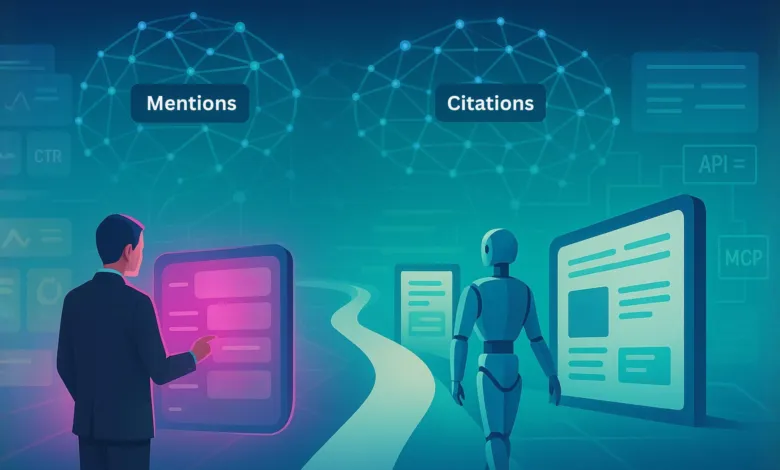
The digital landscape is fundamentally shifting as generative AI platforms like ChatGPT and Gemini reshape how people discover information. Visibility is no longer just about search engine rankings; it’s about being referenced within the very models that guide user decisions. Traditional metrics like clicks and sessions remain important, but they no longer capture the full picture. Mentions, citations, and structured visibility signals are emerging as the new levers of trust and the critical path to sustainable revenue. Understanding this shift is essential for any content strategy looking toward 2026.
Recent data reveals significant changes in what content performs. Analysis of over 7.2 million sessions shows that pricing pages, cost calculators, and comparison content have seen massive growth. In contrast, traditional top-of-funnel guides and how-to articles have declined sharply. This isn’t a simple replacement. It reflects an evolving user journey where initial research happens inside a conversational AI. Users then proceed to high-intent queries for pricing or specific comparisons as they near a decision point.
While bottom-of-funnel content shows higher engagement and conversion rates, abandoning top-of-funnel creation is a strategic mistake. The critical question is: where does a high-intent user first learn a brand exists before searching for it? The answer lies within the AI conversation itself. Generative engines now cover the entire top-of-funnel and much of the middle-of-funnel journey. Users stay within the chat interface for planning and learning, only clicking through to a website when they are ready to take a concrete action, like booking or buying.
This explains why studies show AI Overviews can reduce click-through rates by significant margins. With hundreds of millions of users turning to these platforms for initial research, a portion of website traffic is inevitably displaced. However, the commercial opportunity hasn’t vanished. The same number of people still take vacations and purchase products. The path to that sale has simply changed, often requiring fewer website visits.
The strategic importance of being cited in these AI conversations cannot be overstated. Research indicates that organic click-through rates can nearly double when a site is referenced in an AI Overview. Furthermore, traffic originating from ChatGPT has demonstrated a conversion rate vastly higher than standard organic search. This suggests users engaging with AI are more prepared to act; they have been effectively pre-sold during the research dialogue, building trust in the brands the system recommends.
Looking ahead, the current stability of bottom-funnel traffic is temporary. The rapid rise of autonomous AI agents will further disrupt the traditional click. Protocols like AP2 (Agent Payments Protocol) allow agents to execute payments, while models with computer-use capabilities can navigate websites directly. In this near-future scenario, an AI agent could research, select, and purchase a product without a human ever visiting the final pricing page. The click transforms from a human navigation step into a machine transaction.
This impending shift forces a reevaluation of content value. If the purchase is handled by an agent, the human’s decisive “moment of truth” occurs during the AI research phase. Winning doesn’t hinge on having the most persuasive pricing page copy. It depends on being the trusted brand the language model recommends when a user asks for a reliable option.
Therefore, a successful 2026 content strategy requires a dual focus. First, optimize for the agent’s execution. Ensure bottom-of-funnel pages are technically impeccable with clean schema, accessible data structures, and APIs to enable seamless machine transactions without friction. Second, and most crucially, double down on top-of-funnel authority. The battle for visibility will be won through mentions and citations that build trust within AI systems. Your content must establish your brand as the authoritative entity that both users and their AI agents learn to rely on.
As we approach 2026, the click is becoming a commodity increasingly managed by machines. The mention, however, remains rooted in human trust and algorithmic credibility. That is precisely where the next competitive frontier lies, making a continued and strategic investment in top-of-funnel content more vital than ever.
(Source: Search Engine Land)