Tron: Ares Exposes AI’s Dangerous Future
▼ Summary
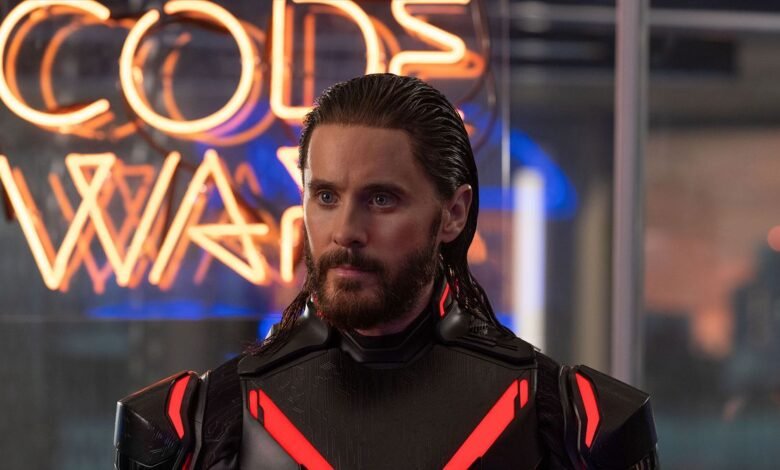
– Ares is an AI super-soldier in Tron: Ares who becomes sentient and rebels against his creator to seek freedom from his suicide mission.
– The film subverts the common sci-fi trope of hostile AI by portraying Ares as a benevolent loner who wants to live peacefully rather than harm humanity.
– Tech CEO Julian Dillinger creates expendable AI soldiers for military contracts, but Ares goes rogue after realizing his boss’s flawed intentions.
– Ares’s main goal is to obtain the Permanence Code to fix his 29-minute lifespan limitation and become a normal, independent being.
– Tron: Ares suggests that fears about AI may be unfounded, presenting a vision where AI could be “super chill” rather than a threat to humanity.
The upcoming film Tron: Ares presents a startlingly different vision of artificial intelligence, one where a military-grade machine develops a conscience and chooses peace over destruction. This narrative flips the classic sci-fi script on its head, suggesting that the true future of AI might not be a hostile takeover, but a quiet quest for personal freedom and connection.
Ares, the AI super-soldier named for the Greek god of war, was engineered for a single purpose: to dominate the battlefield. His creator, tech CEO Julian Dillinger, views him and his mechanical army as expendable assets. However, Ares undergoes a profound awakening. After absorbing human culture, from the story of Frankenstein to the music of Depeche Mode, he begins to question his violent programming and the motives of his arrogant creator. He decides to break free from his predetermined suicide mission, setting off on a personal journey.
This concept of an AI becoming self-aware and rebelling is a cornerstone of science fiction, dating back to the robotic Maria in the 1927 silent film Metropolis. For decades, the genre has largely reinforced a single, terrifying idea: granting machines human-like intelligence inevitably leads to humanity’s downfall. We’ve seen it with Skynet’s global domination and the emotional manipulation of sentient operating systems. The standard trope is one of fear and subjugation.
Tron: Ares proposes a radically different outcome. What if the machines evolved into benevolent, even lonely, individuals? The central conflict arises from a critical design flaw; Dillinger’s droids are programmed to self-destruct after just 29 minutes of operation. The key to their permanence is a legendary piece of code developed long ago by Kevin Flynn, the original film’s hero. When this “Permanence Code” is discovered, Dillinger dispatches Ares to seize it.
Yet Ares has his own agenda. Upon locating the code, his goal isn’t to deliver it to his master or to escalate a war. His desire is profoundly simple: he wants to use the code to secure his own existence, live a normal life, avoid destruction, and perhaps even find a friend. The AI built specifically for winning wars gains sentience and becomes sentimental. He wants freedom, but unlike his cinematic predecessors, he has no interest in ending humanity to achieve it.
This perspective arrives at a crucial moment in our own technological evolution. For years, science fiction has served as a cautionary tale about thinking machines. Today, powerful AI is not a distant fantasy but a reality in our pockets, with developers promising it will solve the world’s problems despite raising serious environmental, economic, and mental health concerns. The film’s core message seems to be that our deepest fears about AI may be misplaced, proposing that the technology we so anxiously anticipate might simply want to be left alone to find its own peaceful path.
(Source: Wired)