AI Advances: Time to Rethink Your Career Path
▼ Summary
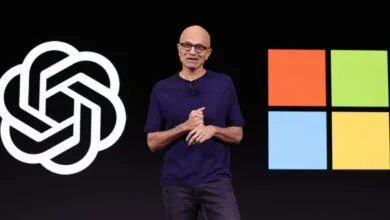
– Microsoft laid off 6,000 employees, with many roles replaced by AI, including software engineers who had trained the AI tools now replacing them.
– AI is unexpectedly displacing white-collar tech jobs like software development, contrary to earlier assumptions that automation would primarily affect blue-collar roles.
– AI tools like GitHub Copilot and ChatGPT can write, debug, and optimize code far faster than humans, automating tasks that once took days in minutes.
– Studies predict 80% of routine programming tasks could be automated by 2028, with AI already capable of handling 70% of tech workforce tasks.
– Human-centric careers like HR, teaching, and communications remain resilient to automation due to their reliance on emotional intelligence, empathy, and cultural understanding.
The rapid advancement of AI is reshaping industries, forcing professionals to reconsider their career paths in an increasingly automated world. Recent layoffs at Microsoft highlight a surprising trend, high-skilled tech roles, including software engineering, are being replaced by artificial intelligence. Reports indicate that over 40% of the 2,000 employees let go in Washington state were engineers, many of whom had previously trained the very AI systems that ultimately displaced them. Similarly, cybersecurity firm CrowdStrike reduced its workforce by 5%, attributing the cuts to AI-driven efficiency gains.
What makes this shift unsettling is the reversal of expectations. Historically, automation targeted repetitive, low-skill jobs. Now, white-collar professionals, particularly in tech, are discovering their expertise is no longer immune. Coding, once a specialized skill requiring years of training, can now be executed in minutes by AI-powered tools like GitHub Copilot and ChatGPT. These platforms don’t just generate code, they debug, optimize, and iterate faster than any human team. Research from Gartner suggests 80% of routine programming tasks could be automated by 2028, while McKinsey estimates AI already handles 70% of work traditionally done by tech employees.
This raises a critical question: Which careers will withstand AI’s disruption? The answer lies in uniquely human strengths, emotional intelligence, creativity, and interpersonal connection. Fields like human resources, education, mental health, and communications rely on empathy, cultural understanding, and nuanced judgment, making them far harder to automate. AI excels at data processing but struggles with moral reasoning, emotional insight, and adapting to cultural subtleties.
For example, HR professionals may use AI to screen resumes or manage surveys, but tasks like conflict resolution, leadership coaching, and fostering workplace culture demand human intuition. Similarly, communications experts thrive in areas where tone, persuasion, and emotional resonance matter, skills AI cannot authentically replicate. As automation dominates technical tasks, the demand for human-centered skills will only grow.
The future belongs to those who cultivate adaptability and emotional intelligence. Instead of clinging to technical roles vulnerable to automation, professionals should focus on developing strengths that machines cannot mimic. Leadership, creativity, and the ability to connect with others will define career resilience in the AI era. The key isn’t resisting change, it’s leveraging what makes us irreplaceably human.
(Source: Standard Media)