Brinqa Automates Exposure Management with AI Agents
▼ Summary
– Brinqa has launched two new AI agents, the AI Attribution Agent and the AI Deduplication Agent, to solve key enterprise security problems of unclear asset ownership and duplicate exposure signals.
– These agents operate on a trusted data foundation to reduce manual effort and resolve ambiguity, but keep human judgment in the loop for final decisions.
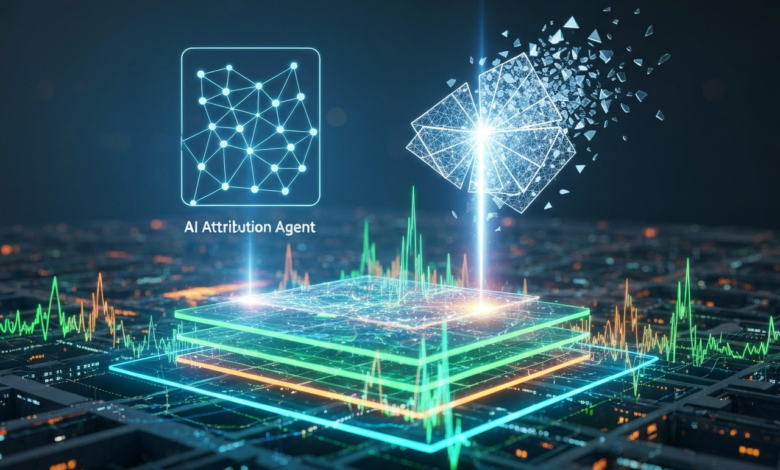
– The AI Attribution Agent infers missing or stale asset ownership details using machine learning, providing transparent reasoning and confidence scores for review.
– The AI Deduplication Agent intelligently consolidates duplicate findings from various security tools into a single record, providing a more accurate view of risk.
– The agents are embedded into a three-layer platform architecture (Data, AI, and Orchestration) designed to unify data, provide actionable intelligence, and enable automated remediation.
In the complex world of enterprise cybersecurity, the greatest challenge often isn’t a shortage of data, but the overwhelming volume of it. Organizations struggle to make swift, confident decisions when their tools produce conflicting signals, duplicate findings, and lack clear ownership for critical assets. Brinqa’s latest platform enhancements directly confront these issues by introducing two specialized AI agents designed to automate and clarify exposure management. These agents target the structural inefficiencies that paralyze security programs, bringing much-needed speed and accountability to environments operating at a massive scale.
The core of the problem lies in manual bottlenecks. Security teams waste countless hours sifting through incomplete data, trying to assign remediation ownership, attribute assets correctly, and manage tags across thousands or even millions of assets. At this volume, minor inefficiencies snowball into years of lost productivity. Brinqa’s new AI agents are built to break these logjams, operating continuously across a unified data foundation to reduce manual toil while keeping human oversight firmly in the loop.
The first agent, the AI Attribution Agent, tackles the pervasive issue of unclear asset ownership. When crucial details like an asset’s owner, business unit, or environment are missing or outdated, this agent steps in. It uses machine learning models trained on an organization’s existing data patterns to infer the missing information. Crucially, every recommendation it makes comes with transparent reasoning, a confidence score, and full traceability. This allows security personnel to review, validate, and approve suggestions, ensuring the AI learns from feedback over time without ever removing human judgment from the process.
The second, the AI Deduplication Agent, consolidates redundant alerts from various scanners and security tools into a single, enriched record. It moves beyond simple CVE matching, intelligently correlating findings that point to the same underlying security issue even when different tools use conflicting taxonomies or severity ratings. The result is a far more accurate picture of true exposure. This eliminates phantom findings, reduces conflicting tickets, and ensures risk metrics reflect reality instead of scanner overlap. Together, these agents streamline collaboration across security, IT, and engineering teams by ensuring every exposure is clearly defined, accurately represented, and routed to the correct owner for timely remediation.
These are not superficial add-ons but are deeply embedded into a re-architected Brinqa platform. The system operates through three integrated layers that function as a cohesive, learning unit. The Data Layer unifies siloed exposure, asset, and threat information into a single trusted foundation. This data feeds into the AI Layer, where the agents transform it into actionable intelligence for faster, more accurate decisions. Finally, the Orchestration Layer turns that intelligence into action through continuous automation, enabling guided remediation and cross-team workflows. This architecture grounds every AI recommendation in reliable data and makes outcomes both explainable and measurable.
The platform’s robust foundation is its purpose-built Data Layer, engineered for high-scale cybersecurity analytics. Central to this is the proprietary CyberRisk Graph, a dynamic data model that maps the relationships between exposures, assets, and threats. Unlike static models, it adapts as IT environments change, normalizing and contextualizing diverse data types to support confident risk analysis. The cloud infrastructure scales dynamically to process growing data volumes from vulnerability scanners, cloud environments, and application security tools without sacrificing performance.
Further extending this capability is BrinqaDL, an intelligent data lake that retains historical exposure and remediation data. By preserving years of contextual history rather than just snapshots, it empowers teams to conduct audits, analyze trends, and understand the long-term impact of remediation efforts. This historical visibility supports both forensic analysis and more informed, AI-driven decision-making, all while ensuring customers retain ownership and control of their data.
The Orchestration Layer is where insight meets action. Pre-configured dashboards offer immediate visibility into critical priorities, from OWASP Top 10 vulnerabilities to top findings by team or business unit. Automation is supercharged by SmartFlows, a no-code orchestration engine. Through a simple drag-and-drop interface, teams can build and modify workflows to automatically trigger alerts, create tickets, and route issues based on specific conditions. This empowers remediation owners and program managers to act faster, slash manual effort, and consistently drive measurable risk reduction outcomes.
As one company executive noted, the expanding attack surface and proliferation of security tools often leaves leaders with more data but less confidence, a fundamental trust issue. This platform release confronts that problem directly with AI-native agents built into a system designed for artificial intelligence from its core. The focus on transparent deduplication, intelligent ownership attribution, and automated workflows aims to transform exposure management from a reactive chore into a trusted, disciplined system for continuously reducing genuine business risk.
(Source: HelpNet Security)

