Unlock AI-Powered CTV Ads at Streaming Media Connect
▼ Summary
– A panel titled “All About Context: Leveraging AI for Contextual CTV Advertising” will be held at Streaming Media Connect on February 26.
– The discussion will focus on using AI to analyze data and make real-time decisions for more relevant and effective CTV (Connected TV) ads.
– Panelists argue that AI-driven contextual advertising improves brand safety and viewer experience by logically pairing ads with content.
– Experts note that AI enables precise, privacy-first ad targeting based on content, time, and location, which is key for performance.
– The growth of CTV advertising is creating opportunities for more advertisers to use TV as both a brand awareness and performance-based channel.
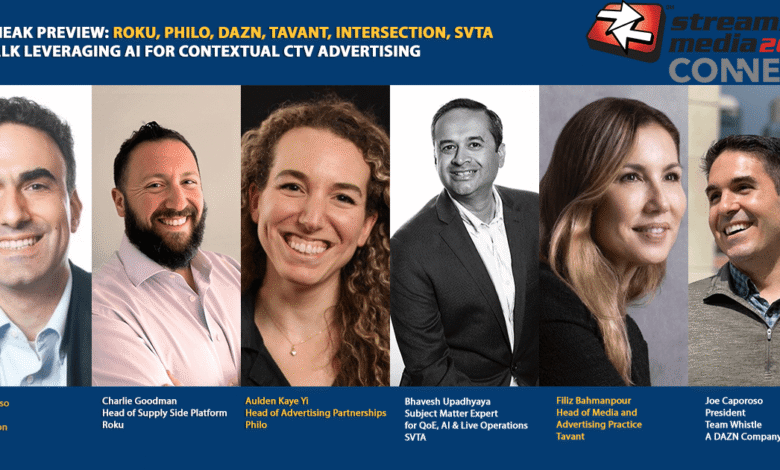
The upcoming Streaming Media Connect panel, “All About Context: Leveraging AI for Contextual CTV Advertising,” promises a deep dive into how artificial intelligence is revolutionizing ad delivery on connected television. Moderated by industry veteran Bhavesh Upadhyaya, this session will bring together leading monetization experts to discuss how AI-powered audience data, metrics analysis, and real-time decisioning are creating more relevant and engaging advertising experiences. The core premise is that non-targeted ads waste viewer attention, while contextualized ads earn it by delivering the right message to the right person at precisely the right moment, ultimately boosting engagement and revenue.
Bhavesh Upadhyaya, a consultant and subject matter expert volunteering with the SVTA, brings extensive experience from companies like Warner Bros. Discovery and Verizon Digital Media. He co-chairs the SVTA’s AI Committee and helps coordinate innovative industry projects.
Joining him is Aulden Kaye Yi, Head of Advertising Partnerships at Philo. She focuses on driving innovation within Philo’s premium streaming environment. Yi emphasizes the dual benefit of AI for brand safety, noting it allows publishers to control their environment thoughtfully. “We are working on tools to improve the viewer experience and ad receptivity by using finer instruments to align appropriate content with appropriate advertising,” she explains.
Charlie Goodman, Head of the Roku Ad Exchange, drives ad serving strategy for The Roku Channel. He points to the essential role of privacy-first signals and contextual intelligence in achieving real results for advertisers. “This ‘stickier’ messaging is no longer optional, it’s the key to performance,” Goodman states.
Joe Caporoso, President of Team Whistle, sees a major opportunity in using technology to curate better viewer experiences. “For any publisher that emphasizes brand safety and curating an intentional experience for both advertisers and viewers, leaning into opportunities that maximize this type of logical, technology-driven targeting is good business,” he says.
Filiz Bahmanpour, Head of Media and Advertising Practice at Tavant Technologies, works with media companies on AI-powered transformation. She observes that the growing volume in CTV opens the market to more advertisers. “While TV has always been a brand awareness channel, it’s also becoming performance-based,” Bahmanpour notes.
Chris Grosso, CEO of Intersection, highlights how AI elevates contextual targeting beyond traditional content pairing. “In an increasingly privacy-centric world, context becomes king,” Grosso notes. He illustrates that AI can tailor messages to specific locations and moments in real time, using digital out-of-home media as an example where every screen in a city could display a uniquely customized ad.
This panel represents a critical convergence of thought leadership on the future of advertising, where AI-driven contextual targeting is shifting from an innovative advantage to a fundamental requirement for success in the streaming ecosystem.
(Source: Streaming Media)
