OpenAI’s Sora App Faces Challenges After Stellar Launch
▼ Summary
– OpenAI’s Sora app, an AI video-generation social network, saw rapid initial success with over 100,000 day-one installs and reaching 1 million downloads faster than ChatGPT.
– However, the app has since experienced significant declines, with downloads dropping 45% month-over-month in January 2026 and consumer spending falling 32%.
– The app’s features include creating AI videos from prompts, casting users as characters, and allowing others to remix shared videos with music and effects.
– Key factors for the decline include fierce competition from apps like Google’s Gemini and Meta AI, and challenges with copyright infringement that led to stricter controls.
– Despite a recent deal with Disney to allow character use, Sora has not seen a recovery in downloads or spending, and its future depends on potential new features or copyright deals.
Following a spectacular launch that saw it rocket to the top of the App Store charts, OpenAI’s video-generation app Sora is now facing a significant slowdown. New market data reveals concerning declines in both user downloads and in-app spending, suggesting the initial excitement around this AI-powered social network is beginning to wane.
The app, driven by OpenAI’s Sora 2 model, enjoyed a phenomenal debut. It achieved over 100,000 installations on its very first day, even while operating as an invite-only platform. It quickly captured the number one position on the U.S. App Store and reached one million downloads faster than ChatGPT did. This early success was particularly notable given its exclusive iOS availability and restricted access.
Recent trends, however, paint a different picture. Information from market intelligence firm Appfigures shows a 32% month-over-month drop in Sora’s downloads during December. This timing is especially problematic, as the holiday season usually provides a major boost for mobile applications thanks to new device activations and increased leisure time. The downward spiral accelerated in January, with installs falling another 45% month-over-month to approximately 1.2 million. Consumer spending within the app has also contracted, declining by 32% as of January.
Sora functions as a sort of AI-driven version of TikTok, enabling users to generate videos from simple text prompts. A standout feature allows people to insert themselves and their friends as central characters in these AI creations. Shared videos can be remixed by others, and users can add music, sound effects, and dialogue to build out their scenes.
To date, the Sora app has accumulated 9.6 million downloads across iOS and Android, generating $1.4 million in consumer spending. The United States leads this revenue, contributing $1.1 million, followed by Japan, Canada, South Korea, and Thailand. Current monthly spending sits at around $367,000, a notable decrease from December’s peak of $540,000.
The app’s standing in key marketplaces has also slipped. On the U.S. App Store, Sora has fallen out of the Top 100 free apps overall, currently holding the 101st position, though it remains 7th in the Photo & Video category. Its performance on Google Play is weaker, ranking 181st among top free apps in the U.S. While these numbers are still substantial, the consistent decline is a cause for concern.
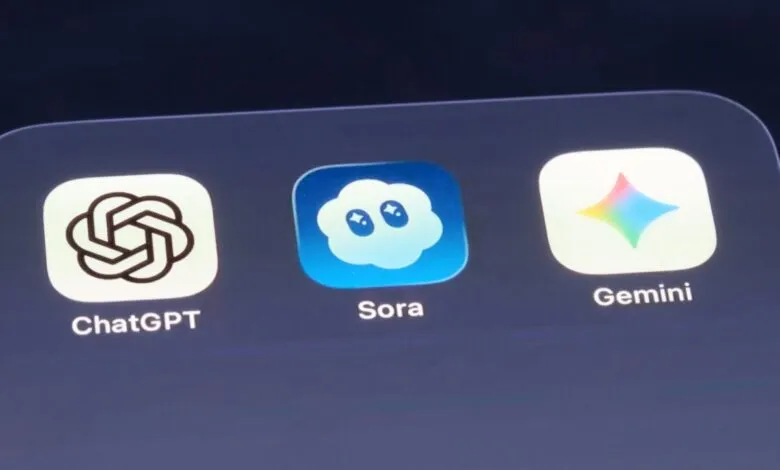
Several interconnected factors are likely driving this loss of momentum. Fierce competition from rivals like Google’s Gemini, particularly its Nano Banana model, and Meta AI’s video features has drawn users away. Simultaneously, OpenAI has grappled with significant copyright challenges. The company initially informed Hollywood studios that their intellectual property would be included in Sora’s training data unless they opted out, a policy that sparked immediate backlash. Early lax controls allowed users to create videos with popular characters, which fueled initial growth. In response to legal pressure, Sora shifted to a stricter opt-in model and tightened app restrictions.
A recent partnership with Disney aimed to reintroduce popular characters under a licensed framework, but this announcement has not yet reversed the downward trends in downloads or spending. Furthermore, the core social premise of Sora, allowing friends to use each other’s likenesses, failed to resonate with a broad audience. Many users showed little interest in this feature, and without the draw of familiar faces or unrestricted use of commercial IP, engagement has dwindled. The future of the app now hinges on whether new copyright agreements or innovative features can reignite user interest and stage a meaningful recovery.
(Source: TechCrunch)