Scale Your Content Reach with Multi-Channel Distribution
▼ Summary
– Multi-channel content distribution is a strategy that publishes and promotes content across multiple platforms simultaneously to maximize audience reach.
– It works by creating a core piece of content and then adapting its format and style to suit the specific requirements of each channel, such as social media, email, or video platforms.
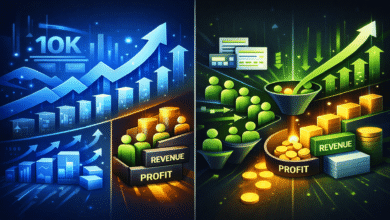
– This approach drives revenue by creating more conversion opportunities through repeated brand exposure across the buyer’s journey and improves lead quality and attribution.
– Effective execution relies on automation tools and a modular content strategy, where a single pillar asset is repurposed into various channel-specific formats without proportional increases in resource investment.
– Success requires tracking performance metrics across channels to identify what works, enabling continuous optimization and compound growth over time.
Let’s address the uncomfortable truth many marketers face: simply creating excellent content is no longer sufficient for meaningful growth. The real opportunity lies in strategically amplifying that content across the diverse platforms where your audience spends their time. Multi-channel content distribution is the systematic approach to publishing and promoting your core assets across multiple platforms simultaneously, transforming a single piece of content into dozens of touchpoints. This strategy moves beyond reliance on one channel, using unified data and automation to maximize reach, improve lead quality, and directly attribute revenue to your marketing efforts.
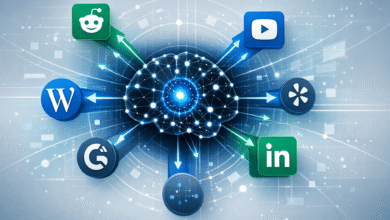
Multi-channel content distribution is a marketing methodology that involves publishing and promoting content across several platforms at once to meet audiences wherever they are. This stands in contrast to single-channel tactics that limit your visibility. A robust strategy places your content on a mix of platforms including your website, social media, email newsletters, podcasts, video sites, digital communities, and even AI-powered search engines. The focus is on expanding reach through channel-specific optimization, adapting formats and messaging to fit each platform’s unique requirements rather than creating a seamless, unified customer journey across all touchpoints.
The process typically involves several key steps. It begins with creating a substantial core piece of content, like a comprehensive blog post or research report, designed for easy repurposing. Next, you identify where your target audience actively consumes information. The core content is then adapted into formats suitable for each selected channel, turning a blog post into a LinkedIn carousel, a podcast clip, or a short-form video. Using scheduling tools and automation, this content is deployed across channels in a coordinated manner. Finally, performance is tracked across each platform to measure engagement, conversions, and overall impact, providing data to refine future efforts.
Within modern marketing frameworks like Loop Marketing, multi-channel distribution powers the amplification stage. The objective shifts from merely ranking in search results to getting your brand actively recommended. Performance data from these distributed efforts then feeds into a continuous cycle of experimentation, helping to identify winning channels and inform future campaigns for compound growth over time.
So, how does this approach directly contribute to revenue? It places your content in front of potential buyers at multiple points in their decision-making journey, creating numerous pathways to a purchase instead of relying on a single channel. B2B buyers typically interact with over ten pieces of content before making a decision; a multi-channel strategy ensures your brand is present across those touchpoints. Different channels serve distinct roles: search and AI engines capture high-intent researchers, social platforms build awareness, email nurtures relationships, and communities establish peer credibility. When prospects encounter consistent, valuable messaging across these various platforms, trust accumulates, which significantly accelerates purchasing decisions.
Furthermore, proper measurement and attribution are critical. They connect channel performance directly to pipeline and revenue, revealing which platforms generate the highest-quality leads and how content sequences influence deal velocity. Automation tools are essential for scaling this process without a proportional increase in headcount, enabling small teams to maintain a presence on numerous platforms by streamlining repurposing and scheduling workflows.
Implementing a successful strategy requires a structured approach. Start by auditing your existing channels and understanding your audience’s behavior on each. Create “pillar” content that is deep, modular, and evergreen to serve as a repurposing foundation. Map the derivatives of this content to specific channels based on format fit and the buyer’s stage in the journey, awareness, consideration, decision, or retention. Crucially, adapt the content format for each channel, respecting the different algorithms and user expectations. Establish a coordinated publishing cadence and leverage automation for scheduling and workflow management to ensure consistent execution.
A powerful tactic within this framework is modular content repurposing combined with personalization. Structure your pillar content as a collection of standalone blocks, core thesis, supporting points, data, quotes, examples. These modules can then be extracted and reformatted for different channels. Personalization takes this further by adapting messaging for specific audience segments based on industry, company size, or funnel stage, not just the channel itself. Using dynamic content and templatized frameworks maintains brand consistency while enabling this scalable, tailored approach.
Tracking the right metrics is non-negotiable for optimization. Focus on a blend of reach metrics (like impressions and share of voice in AI search), engagement metrics (click-through and engagement rates by format), and conversion metrics (conversion rate and cost per acquisition by channel). Most importantly, implement multi-touch attribution models to understand how various channels work together to influence a single conversion, as this provides a far more accurate picture than crediting only the first or last touchpoint.
Common questions arise when adopting this strategy. It’s important to distinguish it from omnichannel marketing; multi-channel prioritizes reach and platform-specific optimization, while omnichannel focuses on creating a seamless customer experience across interconnected touchpoints. For driving new audiences quickly, consider channels with built-in discovery like paid ads, AI search tools, and relevant online communities. The best attribution method depends on your sales cycle length, but multi-touch attribution is generally most revealing for B2B. The frequency for resurfacing content varies by channel, but a good rule is to reshare evergreen social posts every 30-90 days and update high-performing blog posts every 6-12 months. While a dedicated multi-channel CMS can simplify execution, it’s not strictly necessary; teams can start with a combination of their existing CMS and standalone scheduling tools, graduating to more integrated platforms as channel volume and complexity grow.
Mastering multi-channel distribution future-proofs your marketing by ensuring your brand reaches buyers across the fragmented digital landscape. It creates a synergistic system where search captures intent, social builds brand, email nurtures leads, and communities build credibility. By leveraging integrated platforms that centralize content creation, publishing, and analytics, you can transform one core asset into a scalable growth engine that drives measurable business results.
(Source: HubSpot Marketing Blog)