The Top PPC Columns of 2025: Expert Insights from Search Engine Land
▼ Summary
– The most-read PPC articles of 2025 focused on helping advertisers stay competitive and reduce wasted spend in a changing landscape.
– Key strategies included shifting optimization mindsets for keywords, Performance Max, and audience targeting to stand out.
– Advertisers were advised to manage rising costs by comparing CPC inflation to broader economic indicators.
– A major theme was integrating SEO and PPC to boost visibility as AI-driven search blurs the line between organic and paid results.
– Practical guidance covered adopting new tools like vibe coding and generative AI while phasing out outdated practices in automated environments.
The digital advertising landscape saw significant shifts in 2025, with pay-per-click (PPC) strategies evolving to meet new challenges and leverage emerging technologies. Advertisers focused on refining their approaches to maintain competitiveness, eliminate wasteful spending, and harness automation effectively. The most impactful columns of the year provided actionable answers to these pressing questions, offering a roadmap for businesses of all sizes to connect with customers and drive meaningful results.
A standout piece emphasized that a well-crafted strategy enables even the smallest business to stand out and make a lasting impact, proving that budget size is less important than strategic precision. Another essential read encouraged a fundamental shift in optimization thinking, presenting fresh tactics for managing keywords, Performance Max campaigns, and audience targeting in the modern ad ecosystem.
Financial planning became more critical as advertising costs continued their upward trend. A deep analysis compared the rate of cost-per-click (CPC) inflation to broader economic indicators like the consumer price index, giving marketers a clearer framework for budgeting and forecasting. This financial awareness is crucial for sustaining profitable campaigns.
The convergence of paid and organic search accelerated with the rise of AI-driven search experiences. Leading experts argued that a unified SEO and PPC strategy is no longer optional for maximizing visibility and brand authority, as the lines between the two disciplines continue to blur. This holistic approach captures user intent more effectively across the entire search journey.
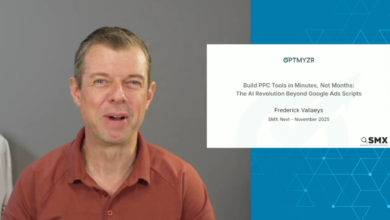
On the technical front, traditional PPC scripting began to show its limitations. Innovative concepts like “vibe coding” were introduced as solutions to overcome these barriers, transforming complex seasonal data into straightforward planning tools. This evolution in automation allows for more agile and data-responsive campaign management.
Content creation also transformed with the adoption of generative AI. Best practices emerged for using these tools to accelerate ad copy production while preserving brand voice and relevance, ensuring messages remain personalized and compelling. Furthermore, advanced filtering techniques were highlighted for their power to refine audience targeting, reduce spend on unproductive clicks, and reveal hidden keyword opportunities.
Practical automation remained a cornerstone, with detailed guides on utilizing Google Ads scripts to streamline campaign management and uncover performance insights. As the total volume of clicks in some markets decreased, the emphasis shifted to winning valuable visibility through precision targeting and value-based bidding strategies.
Finally, the year concluded with a critical evaluation of outdated practices. A definitive guide outlined which legacy PPC tactics to phase out in an automated environment and identified the new priorities advertisers must adopt to succeed in the coming year.
(Source: Search Engine Land)