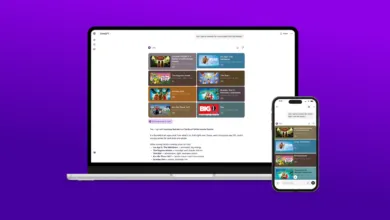
Why Your Approved Web Pages Aren’t Live & How AI Fixes It

▼ Summary
– By 2026, generative AI is predicted to significantly alter 70% of design and development work by removing the coordination bottlenecks that delay launching new web pages.
– The primary launch bottleneck in large organizations is not technology but the coordination work between separate teams and systems like design tools, content systems, and data platforms.
– AI removes this coordination by creating an end-to-end workflow that can interpret a brief, generate compliant page compositions using existing design systems, and connect to data sources without manual developer tickets.
– This acceleration from weeks to hours for a first launch enables faster campaign execution, more A/B testing, and allows martech investments to deliver value sooner by collecting real-time data.
– Implementing this AI-driven workflow requires foundational capabilities like AI agents that understand a company’s tech stack, pre-built integrations, and encoded brand/compliance guardrails.
Getting a new web page from an approved design to a live site is often a painfully slow process, especially in larger organizations. While the technology to build and manage pages exists, the real bottleneck is the coordination work between teams and systems. This is where artificial intelligence is poised to make a dramatic impact, not by creating content, but by automating the technical translation and integration work that currently delays launches for weeks or months.
The challenge isn’t a lack of tools. Marketing teams have sophisticated design software, while developers manage powerful content and data platforms. The issue is that these systems don’t communicate. Approved designs in Figma cannot talk to the content management system, which in turn doesn’t connect to customer data platforms. Each department operates with different priorities, marketing focuses on pipeline, development on system stability, and design on quality, and no one is typically measured on how quickly a page goes live.
AI addresses this by collapsing a series of manual handoffs into a single, streamlined workflow. It functions as a technical translator, turning campaign goals described in plain language into fully structured pages. For instance, you could instruct an AI agent to “create a pricing page with three tiers and ROI calculators for enterprise clients.” The system would then generate the page using approved brand components, connect the calculators to the correct data APIs, and set up the necessary analytics tracking, all before a developer writes a single line of code.
This doesn’t eliminate developers but redefines their role. They shift from repetitive configuration tasks to building and governing the AI-ready design systems and data connections that ensure quality and compliance. Their expertise remains critical for security reviews, validation, and final deployment, allowing them to focus on higher-value engineering work.
The benefits of accelerating launch from weeks to hours are substantial. Campaigns designed for specific market windows can actually meet them. Marketing teams gain the agility to test more variations and collect real-time behavioral data, which fuels faster learning and iteration. Most importantly, it drastically improves marketing technology return on investment. Sophisticated personalization and testing features in your digital experience platform only generate value once an experience is live to collect data. AI fixes the launch problem, thereby activating every other martech investment.
Implementing this vision requires specific foundations. Organizations need visual workspaces where AI agents understand their unique tech stack, pre-built integrations for key systems, and clearly encoded brand and compliance guardrails. The initial setup to map design systems and establish reliable connections requires dedicated effort, but the long-term payoff is a fundamental shift in operational speed. When the barrier to launching the first page disappears, teams can finally focus on what matters: learning, optimizing, and delivering value to customers faster than the competition.
(Source: MarTech)