After a $112 Billion Drop, What’s Next for Apple?
▼ Summary
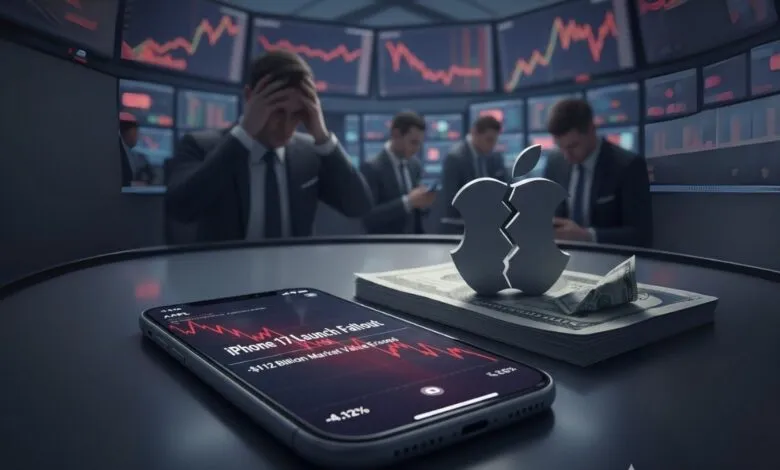
– Apple’s stock dropped over 4% after the iPhone 17 launch, erasing about $112 billion in market value.
– The decline was partly due to the “sell-the-news effect,” as the event lacked major surprises beyond widely leaked features.
– Investors are concerned Apple is lagging in AI, especially after delaying a major Siri overhaul until 2026.
– Profitability fears arose as Apple will absorb over $1 billion in tariffs without raising iPhone prices, squeezing margins.
– Despite the downturn, Apple’s strong ecosystem and large base of users due for upgrades offer long-term growth potential.
The moment a new iPhone is unveiled, the world watches. For Apple, the September 9 “Awe-Dropping” event was no different, showcasing the iPhone 17 lineup with a new, slimmer iPhone Air and other notable updates. Yet, for Wall Street, the reaction was more muted than a standing ovation. In the days that followed, Apple’s stock slid by more than 4%, wiping out approximately $112 billion in market value. While this post-launch turbulence is a recurring theme for the company, the latest decline highlights a deeper set of concerns from investors.
The immediate reaction was a classic case of what analysts call the “sell-the-news effect.” Many of the key features of the iPhone 17 had been widely rumored in the weeks leading up to the event. The details of the new A19 Pro chip, the titanium frame, and the ultra-thin design were already known to those paying close attention. When the official reveal lacked any significant surprises or truly unexpected announcements, it created a vacuum where a large number of traders, who had bought into the stock based on anticipation, chose to take their profits.
Beyond that initial market churn, two more fundamental issues appeared to be weighing on investor sentiment. First, there was the topic of artificial intelligence (AI). In a year where tech giants like Microsoft and Google have made bold, headline-grabbing moves in the AI space, Apple’s announcements were seen as less ambitious. The company confirmed that a major overhaul of Siri, its voice assistant, would be delayed until 2026. This left some investors concerned that Apple is lagging behind its rivals in a technological race that many see as central to future growth.
Secondly, the iPhone 17 launch brought fresh scrutiny on Apple’s profitability. The company confirmed it would absorb over $1 billion in tariff costs without raising the prices of its new phones. While this is a decision that benefits consumers, it fueled investor fears of squeezed profit margins. The combination of what some analysts saw as incremental hardware changes and the pressure on profits led to a cautious response, with some firms downgrading their ratings for Apple stock.
Despite the immediate downturn, a balanced perspective is essential. Apple’s long-term strength is built on its formidable ecosystem and a massive user base. Analysts point to the fact that hundreds of millions of existing iPhone users have not upgraded their devices in years, representing a significant and ready-made upgrade opportunity. For these analysts, the recent stock slide is seen as a typical short-term fluctuation that has historically preceded longer-term gains. The true test for Apple will be the real-world demand for the iPhone 17 and how the company addresses its long-term AI strategy.