Pope Leo’s first encyclical blends tech regulation with theology
▼ Summary
– Pope Leo XIV’s first encyclical, *Magnifica Humanitas*, is being read by financial and policy leaders as a tech-regulation analysis rather than a theological document.
– The encyclical directly addresses governments, parliaments, and executives of major AI companies.
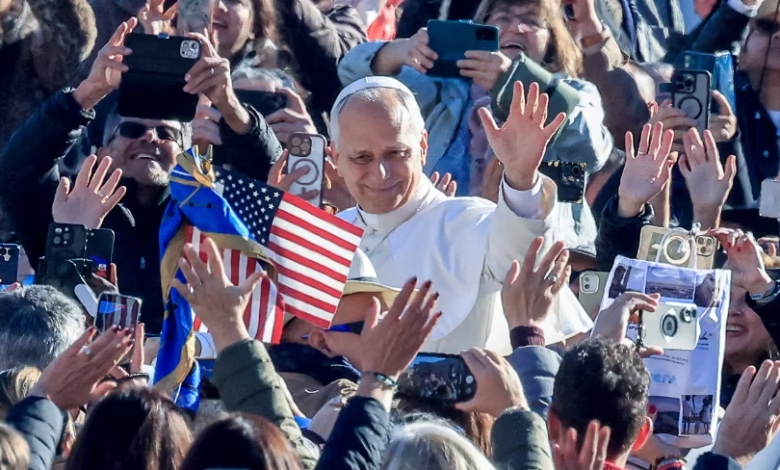
In the past 24 hours, Pope Leo XIV’s debut encyclical, Magnifica Humanitas, has sparked a rare convergence of attention from both financial markets and government policy circles,not as a theological treatise, but as a serious piece of tech regulation analysis. The document directly addresses governments, parliaments, and top executives at leading AI companies, marking a bold departure from traditional papal messaging. Its core argument weaves together digital ethics, human dignity, and the urgent need for oversight of artificial intelligence, blending spiritual doctrine with practical governance. The encyclical calls for a global framework to ensure AI development remains aligned with human welfare, warning against unchecked corporate power and the erosion of privacy. By framing technology as a matter of moral responsibility rather than mere innovation, the Pope positions the Vatican as an unexpected but authoritative voice in the debate over AI governance. Reactions from Silicon Valley have been mixed, with some executives acknowledging the document’s nuanced approach, while others push back against its implicit call for stricter regulation. As the text circulates through capitals from Brussels to Washington, it is clear that Magnifica Humanitas has achieved what few papal documents have: it is being read as a blueprint for policy, not just a sermon.
(Source: The Next Web)