YouTube Expands 24/7 Streaming TV Stations
▼ Summary
– YouTube is introducing “Stations” for Coachella, which are 24/7 preprogrammed linear streams of artists’ videos for passive viewing.
– Stations are YouTube’s version of popular FAST channels, designed to offer hands-free, leanback entertainment without the need to search.
– Creators can easily set up a Station by selecting a playlist in YouTube Studio, and the system automatically generates the continuous livestream.
– YouTube is rolling out conversational AI on its TV app, allowing viewers to use voice commands to ask questions and get information about the video they are watching.
– A forthcoming “TV Companion” feature will let users on a phone see and interact with content playing on their TV, without manual pairing, using cloud-based identity.
When Coachella streams on YouTube next week, it will offer more than live sets. The platform is introducing a new feature called Stations, which are 24/7 linear video streams programmed with content from festival artists. Designed for background play or casual viewing, this move represents YouTube’s formal entry into the FAST channels arena, mirroring the free, programmed streams popular on services like Pluto TV and The Roku Channel.
The appeal of linear streaming lies in its simplicity. It revives passive, leanback viewing by eliminating the endless search for something to watch. As YouTube consumption on television screens has grown, the demand for this effortless experience has increased. “I want to put something on,” explains Kurt Wilms, YouTube’s senior product management director. “I want it to be hands-free. I want it to stay in the same lane.”
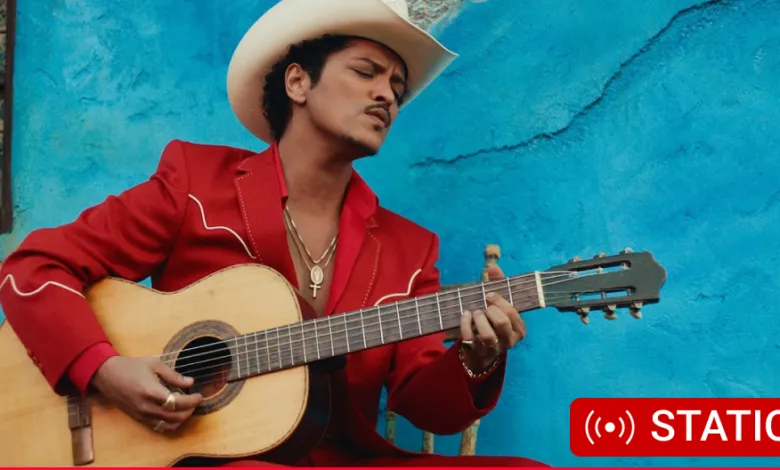
YouTube has been quietly testing Stations with roughly 40 artists in recent weeks, with plans for a broader rollout. An early adopter is Bruno Mars, who is using a dedicated station to promote his latest album. To a viewer, a Station resembles a live broadcast, complete with a live chat. While some creators have manually built similar feeds using 24/7 livestreaming software, the new feature simplifies the process dramatically.
“A creator can come onto YouTube, go into our studio product, set up a playlist of videos,” Wilms says. “They click ‘Start Station,’ and we’ll do all the work to start the livestream for them.” Although a public timeline isn’t available, the goal is to eventually democratize the tool. “Anyone will be able to go in, make a playlist, and click ‘Start a Station.’ That’s what we want to get to, ultimately,” he adds.
Stations are part of a broader push to enhance YouTube’s living room presence. This week, the platform launched its conversational AI tools within the TV app, a feature previously available on web and mobile. Using their TV’s voice remote, viewers can now ask contextual questions about the video they’re watching. They might request ingredient substitutions in a cooking tutorial, find the timestamp of a soccer goal, or learn more about a creator’s background.
Answers appear alongside the video, often with deep links to specific moments. For more information, YouTube sometimes surfaces links to third-party websites, accessible via a QR code. “The sky is the limit on how you can use it,” Wilms notes, emphasizing that the Gemini-powered feature isn’t limited to predefined queries.
Rolling out this AI across all TV platforms is a significant achievement, highlighting YouTube’s clout in the living room. TV platforms typically guard their voice search functions closely. However, with YouTube now accounting for 12.5 percent of all TV viewing, it has secured rare permission to control the microphone within its app, an exception not granted to most streaming services. “We’ve worked hard over the years with our partners to do voice routing for search,” Wilms states.
Beyond AI and Stations, YouTube is developing a second-screen feature called TV Companion. This allows users to open the YouTube app on their phone and instantly see supplementary information about the video playing on their TV. They can comment, browse the creator’s other clips, or control playback without any manual pairing. The connection is cloud-based and identity-driven, working even if the phone is on a different Wi-Fi network.
“You don’t need to do any kind of dance with networking,” Wilms explains. While traditional casting remains supported, YouTube expects TV Companion to boost engagement. Although no official launch date is set, Wilms indicates it will arrive relatively soon: “It’s going to start rolling out soonish.”
(Source: The Verge)